Mini Split Installation in St. Joseph, MO
A new system here will heat from October through April and cool from June through September every year. Tell us about the house, and a licensed contractor who covers Buchanan County will get in touch.
Tell us about the job
It takes about a minute.
Eleven months of work for a mini-split here
St. Joseph asks for heat from October through April and cooling from June through September, 11 months of the year with the system doing something. Winter nights average 21°F, cold enough that a heat pump spends much of the night leaning on its compressor to keep up. Summer afternoons average 86°F, real work but not extreme heat.
Any mini-split installed new has to meet the federal minimum for a split-system heat pump, 14.3 SEER2 for cooling and 7.5 HSPF2 for heating. That is the floor, not a special ductless rating. Missouri sees enough winter storms and wind events that power loss is a real possibility here, and most mini-splits come back on by themselves once power is restored, with nothing to reset.
- 7 months
- October through April, your system heats
- 4 months
- June through September, it cools
- 21°F
- the average winter night it heats against
- 86°F
- the average summer afternoon it cools against
NOAA nClimDiv, 1991–2020 normals
- Is a mini split worth it?
- For most homes here, yes, especially if a room runs hot or cold without ductwork to fix it. A mini split heats and cools the same space, so it covers both your winter lows near 21°F and summer highs near 86°F with one system. It also makes sense for an addition, a garage, or any room a furnace or central air unit does not reach well. A contractor can look at the space and tell you whether it fits what you need.
- How many rooms can a mini split cover?
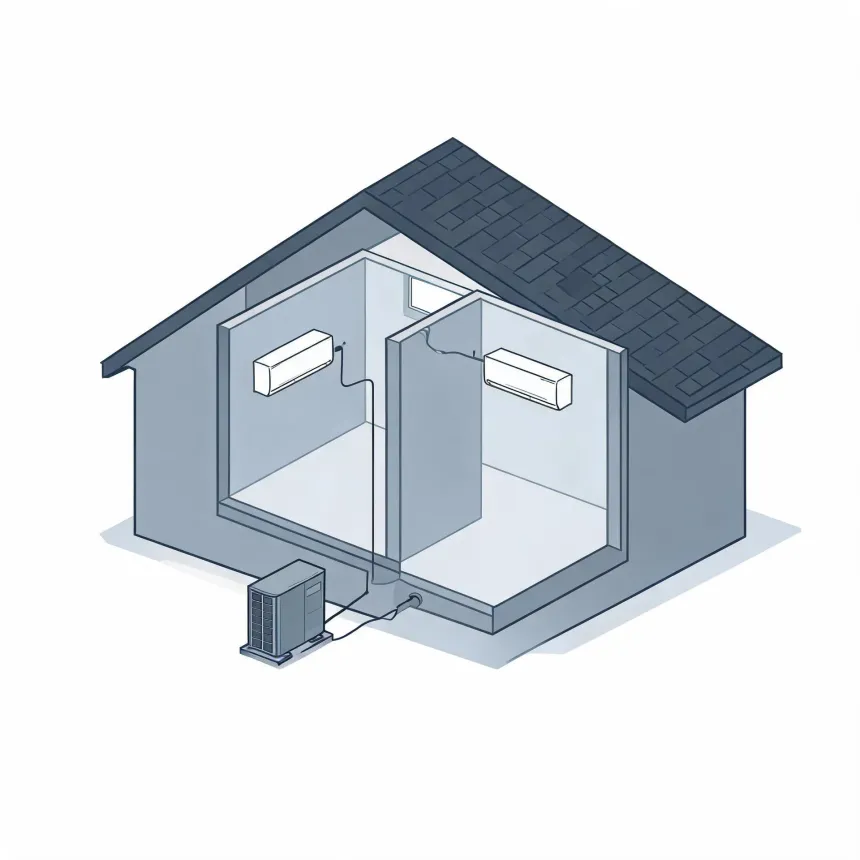
- A single outdoor unit can run one indoor head or several, depending on the system. Multi-zone systems commonly support two to eight indoor heads, each one set to its own room and its own temperature. The number that makes sense for a given house depends on room sizes and layout, so a contractor should size it room by room rather than guess at a number.
- Can a mini split heat a whole house?
- It can, if there are enough indoor heads placed to cover every room, and the system is sized for winter nights that average 21°F here. A single head in one room will heat that room, not the house around it. Whole-house coverage takes planning around your layout, so a contractor should work out placement and capacity before you count on it as your only heat from October through April.