
HVAC Installation in Kansas City, MO
A new system here will heat from October through April and cool from May through September every year. Tell us about the house, and a licensed contractor who covers Jackson County will get in touch.
Tell us about the job
It takes about a minute.

Jackson County asks a lot of a heating and cooling system
Your system runs almost year round here. Heat from October through April, cooling from May through September, only a handful of weeks in between where it gets to rest. Winter nights average 23°F across December through February, cold enough that a furnace is working hard most nights it runs. Summer afternoons average 86°F, so the air conditioner isn't coasting either.
That kind of use is also why the system needs to keep running when the weather turns rough. Jackson County has seen 212 damaging wind events and 10 winter storms over the past ten years, and statewide, almost one in five households lost power for at least a day in 2024. A new install is a chance to plan for that, not just for the next mild afternoon.
- 7 months
- October through April, your system heats
- 5 months
- May through September, it cools
- 23°F
- the average winter night it heats against
- 86°F
- the average summer afternoon it cools against
NOAA nClimDiv, 1991–2020 normals
- When should I replace my HVAC system?
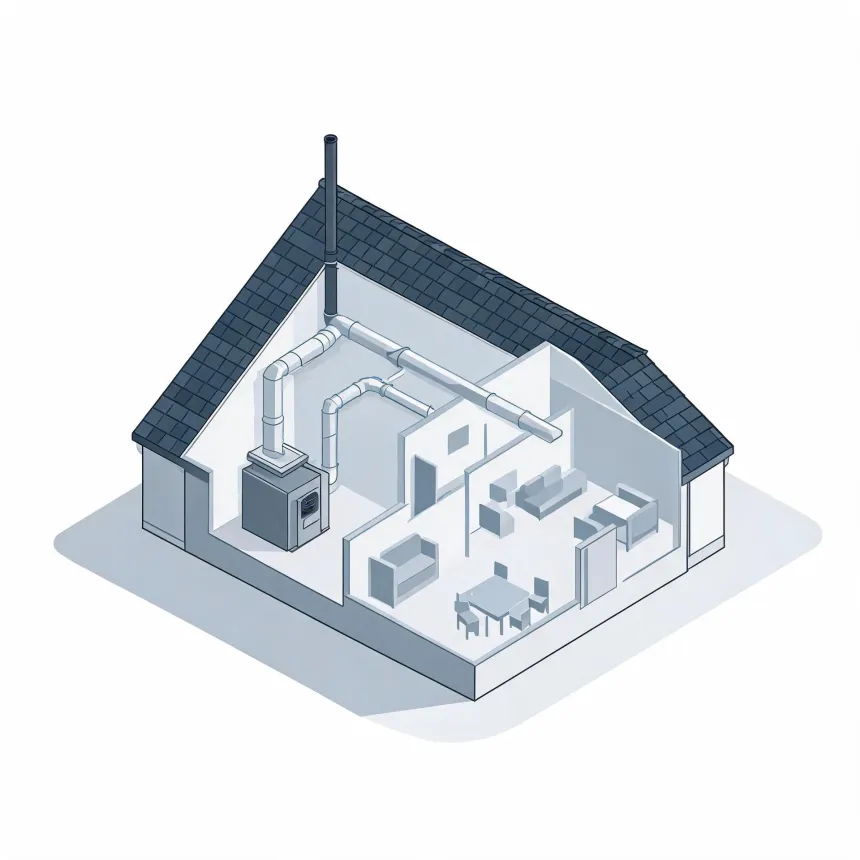
- Replace it when repairs get more frequent, the unit is old, or it can't keep up on the coldest or hottest days. A furnace or air conditioner nearing the end of its life has worn parts throughout, not just the one failing now, and a contractor called for a repair can tell you how much life is left in it. With heat needed October through April here and cooling needed May through September, a system that struggles in either season is working most of the year with no real break to recover.
- Should I replace my furnace and air conditioner at the same time?
- If both are old, replacing them together often makes sense, but it depends on the condition of each one. A furnace and air conditioner installed at different times can still work fine together as long as the newer one matches up with what's staying. A contractor can look at the age and condition of both and tell you whether replacing one now and planning for the other later is reasonable, or whether doing both together is the better call for your setup.
- What happens during an HVAC installation?
- A contractor removes the old equipment, sets the new furnace, air conditioner, or both in place, and connects them to your ductwork, gas line or electrical, and the vent or drain lines they need. They'll check the ducts for leaks or sizing problems, since a new system connected to bad ductwork won't perform the way it should. Once it's running, they test it, check refrigerant levels or gas pressure, and walk you through the thermostat and any new controls before they leave.