
HVAC Installation in Liberty, MO
A new system here will heat from October through April and cool from May through September every year. Tell us about the house, and a licensed contractor who covers Clay County will get in touch.
Tell us about the job
It takes about a minute.

Liberty asks for seven months of heat and five of cooling
Winter nights here average 22°F from December through February, and your furnace has to answer that every night from October through April. That's seven months of heating. Summer afternoons averaging 86°F bring the other load, five months of cooling from May through September. Between the two, a system here is rarely off duty for long.
Most homes in this area heat with gas, so the furnace and the air conditioner usually get sized and installed together. New equipment has to meet the federal minimum efficiency standard, and it has to handle both a 22°F night and an 86°F afternoon, not just one of them. Power matters too. Statewide, close to one in five households went at least a day without power in 2024, and this area has seen its share of damaging wind and winter storms over the past ten years. A new system should come back on by itself once the power does.
- 7 months
- October through April, your system heats
- 5 months
- May through September, it cools
- 22°F
- the average winter night it heats against
- 86°F
- the average summer afternoon it cools against
NOAA nClimDiv, 1991–2020 normals
- When should I replace my HVAC system?
- Once your furnace or air conditioner is old enough that repairs are getting frequent, or one breaks down in the middle of a Liberty winter or summer, it is time to think about replacement instead of another repair. Homes here need heat or cooling every month of the year, so there is no real off season to put it off. If a contractor tells you a part is failing and the unit is old, ask what replacement would look like before you pay for another repair.
- Should I replace my furnace and air conditioner at the same time?
- If both are old, replacing them together is often worth considering, since a furnace and air conditioner installed years apart can end up mismatched in how they perform together. A contractor can tell you whether your current pair is still working well as a system or whether one is dragging the other down. If only one has failed and the other is newer, there is no need to replace both.
- What happens during an HVAC installation?
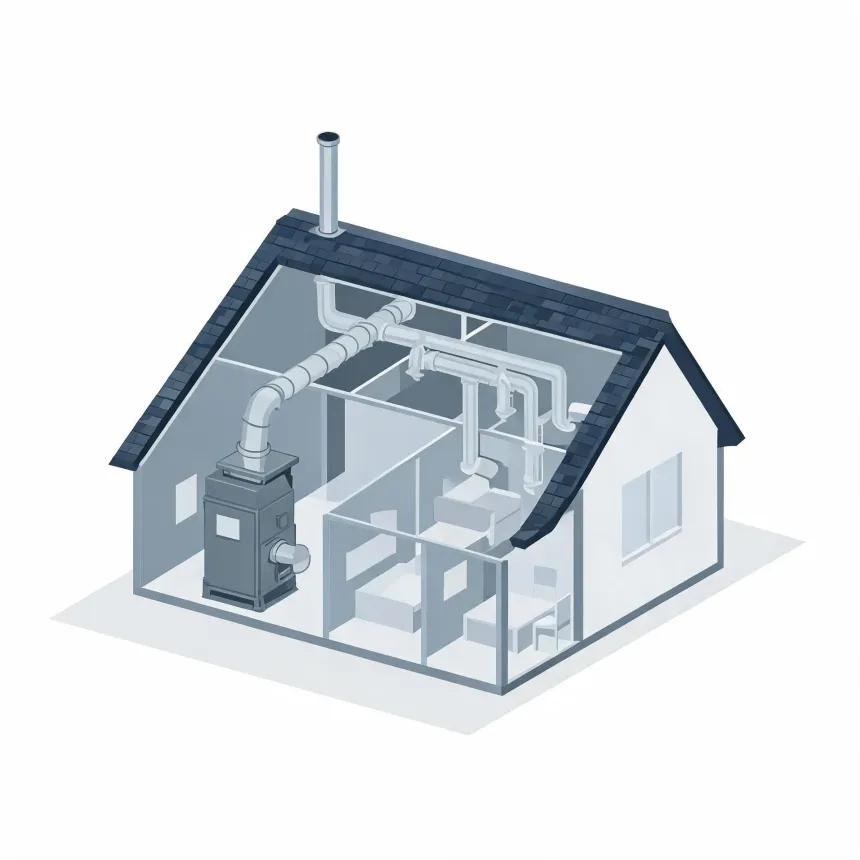
- A contractor removes the old furnace or air conditioner, sets the new equipment in place, and connects it to your ducts, gas line or refrigerant lines, and electrical. They test the system once it is running, checking things like airflow and temperature to make sure it is working the way it should. For a gas furnace, that includes checking the venting and the gas connection before they leave. The exact steps depend on what you are replacing and how your current setup is laid out, which is something a contractor will walk through for your house.