Mini Split Installation in Arnold, MO
A new system here will heat from October through April and cool from May through September every year. Tell us about the house, and a licensed contractor who covers Jefferson County will get in touch.
Tell us about the job
It takes about a minute.
What a mini-split in Arnold has to handle
Your mini-split runs almost the whole year here. Heat from October through April, cooling from May through September, with only a few weeks in between when it does neither. Winter nights average 25°F, so the heat pump side has to carry real heating load on the coldest nights, not just take the edge off. Summer afternoons average 87°F, and the compressor works through five full months of that.
Any new mini-split has to meet the federal minimum for a split-system heat pump, 14.3 SEER2 for cooling and 7.5 HSPF2 for heating. That is the floor, not a feature, so it is worth knowing what rating the unit going on your wall or in your closet actually carries. 57.5% of homes here already heat with electricity, the same way a mini-split does, so for most of this area it is one electric heating system replacing another.
- 7 months
- October through April, your system heats
- 5 months
- May through September, it cools
- 25°F
- the average winter night it heats against
- 87°F
- the average summer afternoon it cools against
NOAA nClimDiv, 1991–2020 normals
- Is a mini split worth it?
- For a lot of homes here, yes. Arnold needs heat from October through April and cooling from May through September, so a mini split earns its keep most of the year instead of sitting idle. It also gives you heat and cooling in a room that never had good ductwork, or in an addition that would cost a lot to tie into an existing system. Winter nights average 25°F here, and a mini split heat pump has to meet a 7.5 HSPF2 minimum for heating, so it can carry real cold, not just take the edge off.
- How many rooms can a mini split cover?
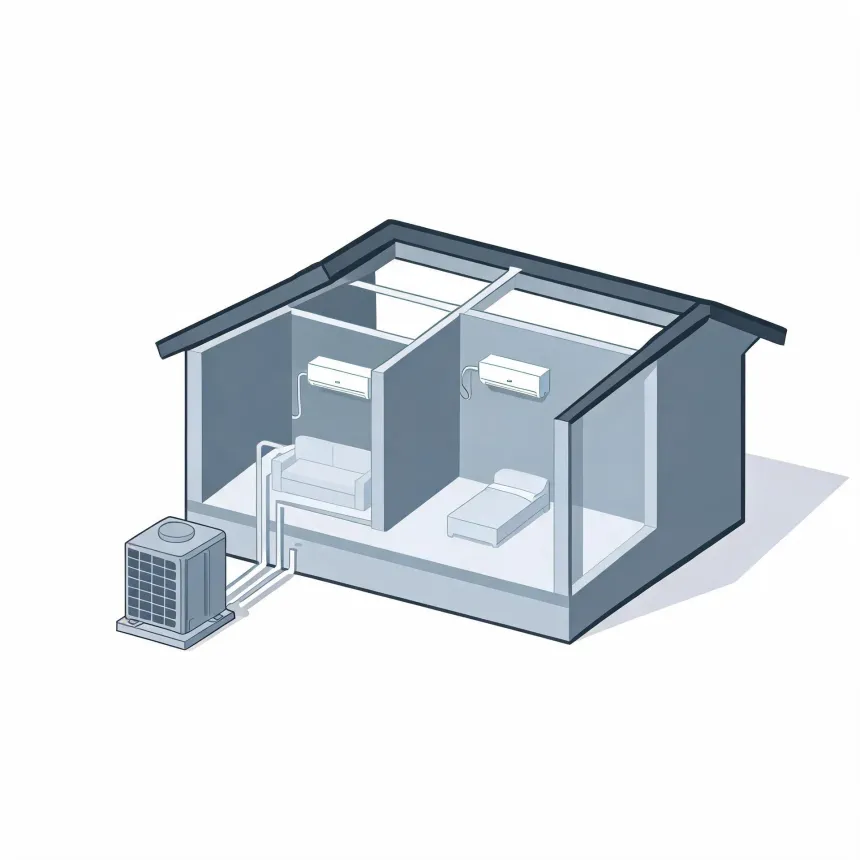
- One outdoor unit can run more than one indoor head, so it depends on how many heads are paired with it, not on the technology itself. A single-zone system covers the one room or open area it's installed in. Multi-zone systems can run several indoor heads off one outdoor unit, each with its own thermostat, so you can cover a handful of rooms without separate outdoor units for each. A contractor can look at the layout and tell you how many zones the house actually needs.
- Can a mini split heat a whole house?
- It can, if it's sized and placed to reach every room, but that usually means a multi-zone setup with an indoor head in each area rather than one unit trying to cover the whole footprint. Arnold winters average 25°F at night, and a mini split heat pump built to the current 7.5 HSPF2 minimum can handle that kind of cold. Whether whole-house coverage makes sense for a given home, or works better paired with existing ductwork, is something a contractor needs to walk through room by room.