Mini Split Installation in Washington, MO
A new system here will heat from October through April and cool from May through September every year. Tell us about the house, and a licensed contractor who covers Franklin County will get in touch.
Tell us about the job
It takes about a minute.
Franklin County asks a mini-split to work all year
Your mini-split runs from October through April to keep the house warm, then switches over and runs May through September to keep it cool. That is 12 months of work, with winter nights averaging 24°F and summer afternoons averaging 87°F. Whatever gets installed has to hold up at both ends of that range.
More than two thirds of homes here heat with electricity, so the heat pump side of a mini-split is doing real work on those 24°F nights, not just backing up a furnace. Franklin County has also seen 9 winter storms and 72 damaging wind events over the past ten years, and statewide, almost one household in five lost power for a day or more in 2024. A new mini-split installed on or after January 1, 2023 has to meet 14.3 SEER2 for cooling and 7.5 HSPF2 for heating, the federal minimum for split-system heat pumps.
- 7 months
- October through April, your system heats
- 5 months
- May through September, it cools
- 24°F
- the average winter night it heats against
- 87°F
- the average summer afternoon it cools against
NOAA nClimDiv, 1991–2020 normals
- Is a mini split worth it?
- For most homes it is, especially if the rooms it serves don't have ductwork already running to them. A mini split heats and cools the same space with one system, and it puts the temperature control right in the room instead of relying on a duct run from somewhere else in the house. Washington homes need heat or cooling all year, with winter nights averaging 24°F and summer afternoons averaging 87°F, so the system has real work to do most months. Whether it makes sense for your house depends on which rooms need it and what's there now, and a contractor can walk through that with you.
- How many rooms can a mini split cover?
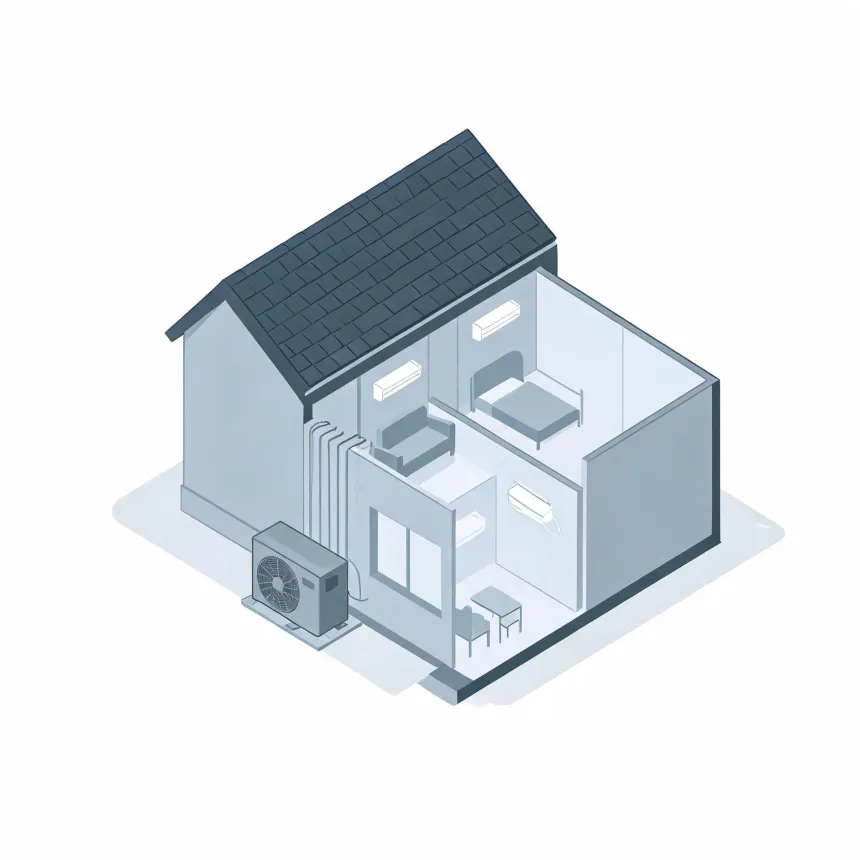
- A single outdoor unit can run one indoor head or several, depending on the system. Single-zone systems serve one room or open area. Multi-zone systems run several indoor heads off one outdoor unit, each with its own thermostat, so bedrooms and living areas can be set differently at the same time. More zones on one outdoor unit means less heating and cooling power available to each one, so a contractor sizes the system around the rooms you actually want covered rather than just the room count.
- Can a mini split heat a whole house?
- It can, if enough zones are installed to reach every room and the system is sized for the coldest nights, not just the mild ones. Washington winters average 24°F from December through February, and a mini split has to be matched to that low, not to a typical fall or spring day. Homes here need heat from October through April, so the system is doing that job most of the year. Getting this right means going room by room through the house, which is something a contractor does before recommending equipment.