
AC Maintenance in Washington, MO
Air conditioners here run from May through September, so April is the time for a tune-up. Tell us about your system, and a licensed contractor who covers Franklin County will get in touch.
Tell us about the job
It takes about a minute.

Five months of real heat, every year
Your air conditioner runs from May through September here, and on a lot of those afternoons it's pushing against 87 degrees outside. That's five straight months of the compressor cycling on and off to keep the house cool.
Franklin County also sees its share of rough weather, 43 hail events and 72 damaging wind events over the last ten years, with hailstones up to 4 inches. Hail that size can bend the fins on an outdoor coil, and bent fins make the unit work harder to move air across it. A tune-up is when a contractor checks the coil, the refrigerant charge, and the electrical connections before a stretch of heat finds the weak spot instead.
- 5 months
- May through September, your air conditioner is on duty
- 87°F
- the average summer afternoon it cools against
- 43 hail events
- in ten years, and hail bends the fins on outdoor coils
- 72 wind events
- in ten years, and wind drives debris into outdoor units
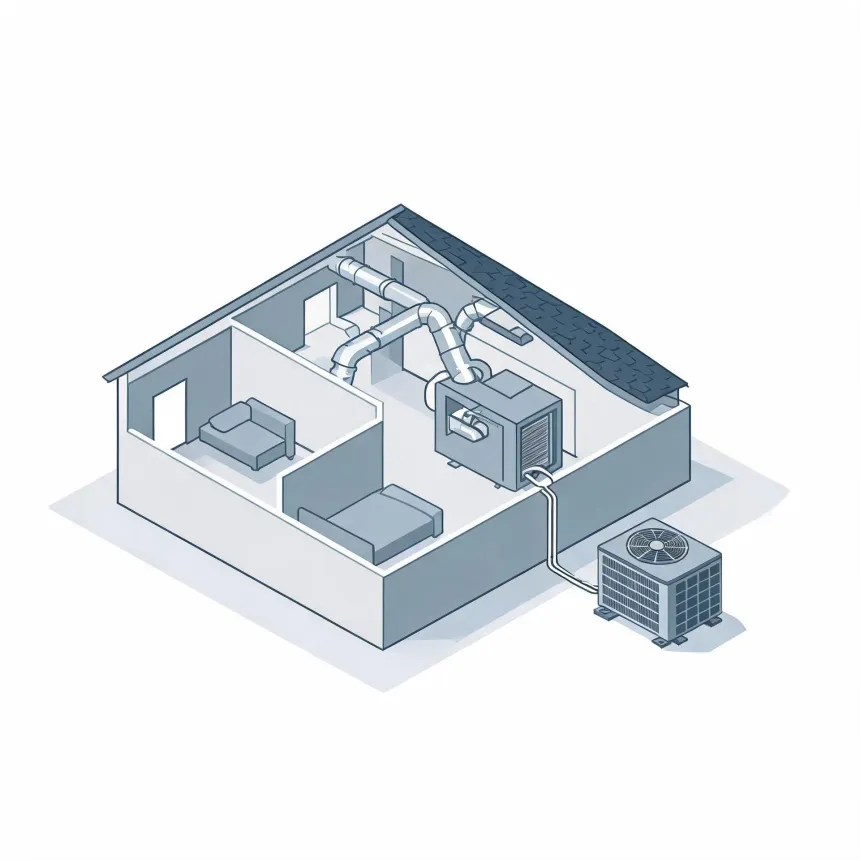
NOAA nClimDiv, 1991–2020 normals

Book your AC tune-up in April, before homes here start needing cooling in May.
- Jan
- Feb
- Mar
- Apr
- May
- Jun
- Jul
- Aug
- Sep
- Oct
- Nov
- Dec
A tune-up checks the refrigerant charge, cleans the coils, tests the capacitor and tightens the electrical connections.
- What does AC maintenance include?
- A technician cleans the condenser coil, checks the refrigerant charge, and tests the capacitor and contactor in the outdoor unit. Inside, they check the evaporator coil and the condensate drain, since a clogged drain line can back up and shut the system down. They also check the thermostat calling for cooling correctly and the airflow through the ducts. A dirty coil or a low charge makes the system run longer to cool the same house, so catching those early matters.
- How often does an air conditioner need maintenance?
- Once a year is enough for most systems, ideally in spring before the cooling season starts. Homes here run their AC from May through September, five months of real work for the system, so getting it checked before that stretch begins catches problems before the hottest afternoons arrive. A system that sat idle all winter can have a stuck contactor or a coil that collected dust, and neither shows up until the unit's asked to run hard.
- Is AC maintenance worth it?
- Yes, because most AC failures trace back to something a yearly check would have caught, like a dirty coil, a weak capacitor, or a low refrigerant charge. Summer afternoons here average 87°F, and a system that's losing efficiency has to work harder through all five months of cooling season to keep up. It also matters after storms. This area has seen 72 damaging wind events and 43 hail events over the past ten years, and hail up to 4 inches has been recorded, so an outdoor unit can take a hit without it being obvious from the ground. A maintenance visit is a chance to catch that kind of damage before it becomes a bigger repair.