



Why your house is so dusty in Kansas City, MO

One request and the duct cleaning stops waiting on you.

Hand off the search

Why is my house so dusty in Kansas City?

You dust the shelves on Saturday and by the following weekend it's back, a gray film on every flat surface in the house. It's not just you keeping a messy house. Something is putting that dust into the air faster than normal, and in Jackson County that usually traces back to the duct system and the furnace running almost nonstop through a long, cold winter.

Your ducts are moving more dust than your filter can catch

A furnace that runs for hours at a time pulls air through the return ducts over and over, and every pass carries dust, skin cells, and fine debris along with it. If the filter is the wrong size, loose in its slot, or overdue for a change, a share of that dust slips past and gets pushed right back into the rooms. Leaky ducts make it worse, pulling in dust from the attic or crawlspace and adding it to what's already circulating. With gas furnaces running long stretches most winters here, the air in the house passes through that system many times a day, so even a small gap in filtration shows up fast as dust on the furniture.

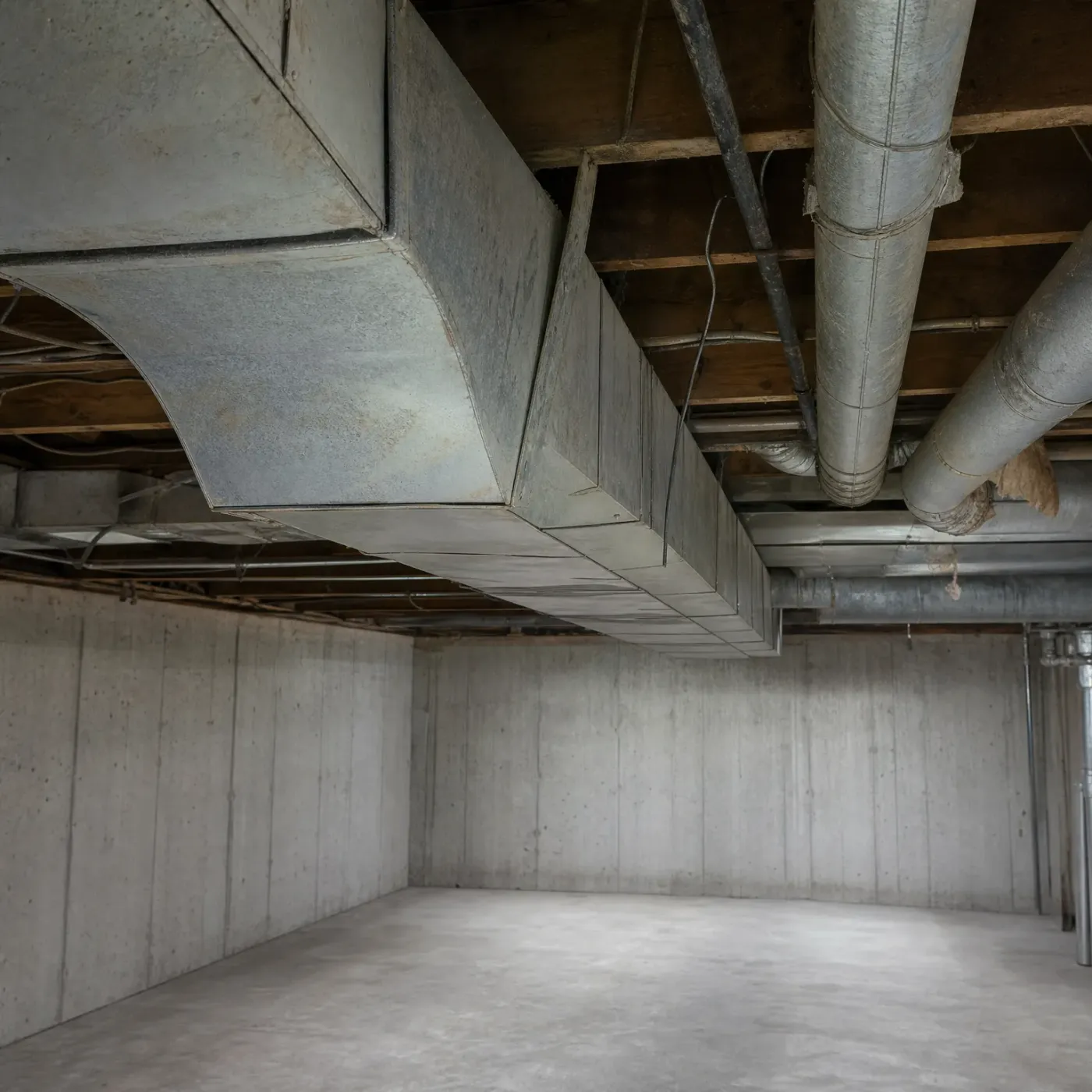
Empty unfinished basement with bare concrete floor and wall, wood-framed stud walls, exposed joists, galvanized HVAC ducts and pipes overhead, a steel beam and red support column, and a single bare bulb light.
Clean ductwork moves air without adding to what's already drifting through your house.
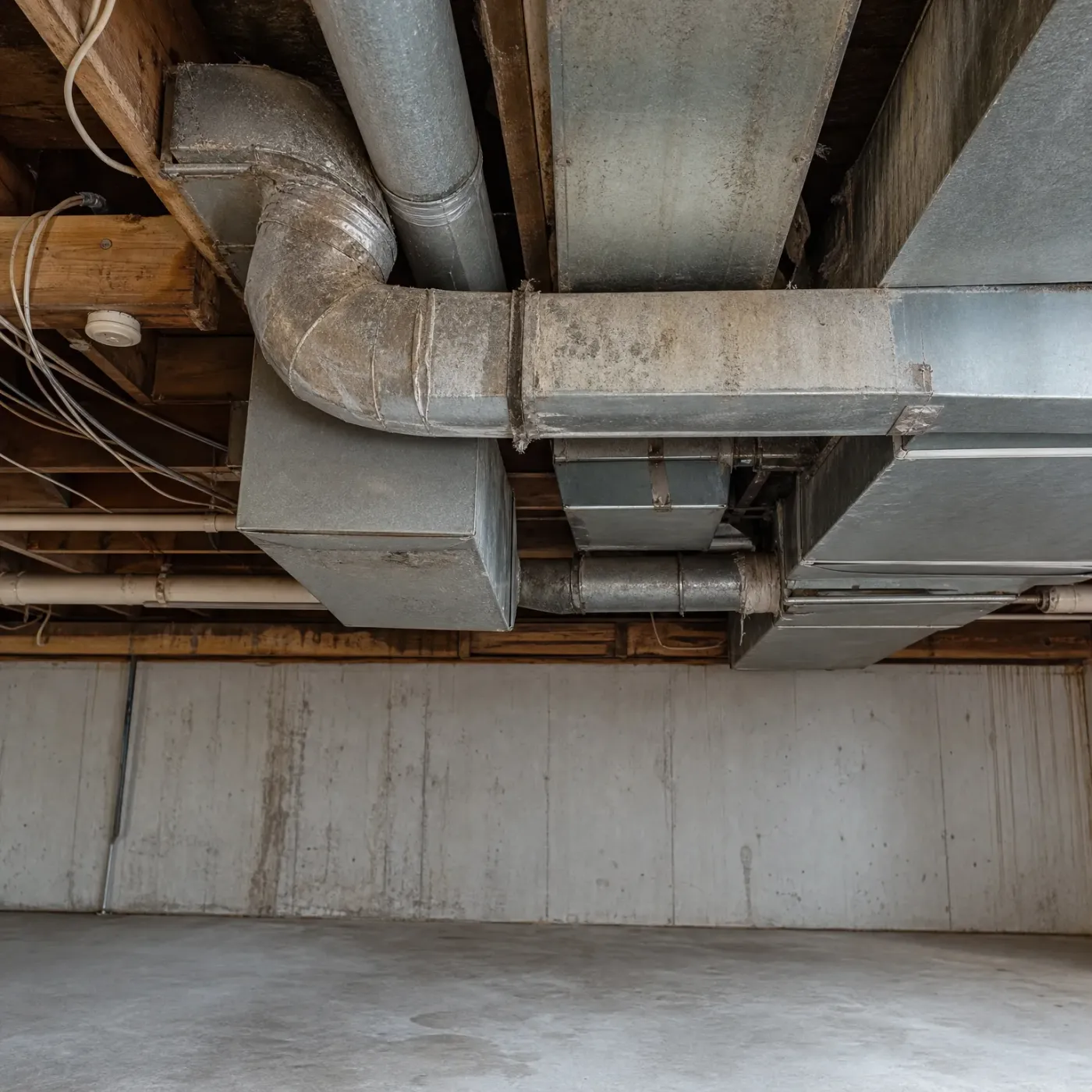
Empty concrete-walled basement with bare floor, showing large galvanized sheet-metal HVAC ducts, insulated pipes, wiring and wooden floor joists overhead.
Dust clinging to the inside of the ducts breaks loose and rides the air into every room.

What's making your house so dusty here?

  • Half the homes here were built by 1970

    Half the houses in Jackson County went up in 1970 or earlier. Older duct systems have had more years to gather dust, and more years for seams and joints to loosen.

  • Heat runs October through April

    Furnaces here run about seven months a year, October through April. That's seven months of air getting pushed through the ducts and out into your rooms, dust and all.

  • Cooling runs May through September

    Cooling runs about five months, May through September. Add it to the furnace months and the system is moving air through those ducts most of the year.

ACS 2020-2024 · NOAA nClimDiv 1991-2020

Every pass of air through a dirty duct system picks up loose dust and fiber from the coil, the blower wheel, and the inside walls of the ducts themselves, then carries it straight into the rooms you live in.

A furnace running seven months a year pushes that air through the house thousands of times before spring, so even a thin layer in the ducts turns into a steady supply of dust on your furniture.

A smiling bearded man in a dark blue henley shirt sits leaning back on a light grey sofa in a living room, with a bowl of popcorn on a wooden coffee table and a large window behind him.
A bearded man in a dark quarter-zip sweater sits smiling on a brown sofa in a dimly lit living room, with a bowl of popcorn and a mug on a table in the foreground and a potted plant near a window behind him.
A smiling man with graying dark hair and a beard, wearing an olive sweater, sits on a sofa in a living room beside a bowl of popcorn on a wooden table.
A smiling man in a dark green henley shirt sits on a gray sofa in a living room with a lit table lamp, wooden shelving unit, and a bowl of popcorn in the foreground.

What that dust does in your house

Dust that keeps coming back settles on more than the shelves. It gets into the filter faster, so you're changing it more often than you expect to. It settles on the coil inside your furnace and your air conditioner, and a dirty coil makes both run longer to do the same job. People with allergies or asthma in the house notice it first, because that dust is riding the same air they're breathing in every room it reaches. None of this is about how well you keep the house. It's about what the duct system is adding to the air before it ever gets to your living room.

What it costs you to chase down on your own

Finding someone to clean a duct system means more than one phone call. You'd be looking up companies, asking what's actually included, and comparing quotes that don't describe the same job twice. Some outfits clean the main trunks and skip the branch runs. Others don't touch the coil or the blower wheel, where a lot of this dust starts. Sorting that out on your own means asking the right questions over and over to each one. Send the form here and that search is off your plate. You'll be matched with someone who can tell you straight what your system needs.

Galvanized sheet-metal ductwork and round pipes run beneath wooden floor joists in a basement with concrete walls and floor.
Before you get your ductwork cleaning
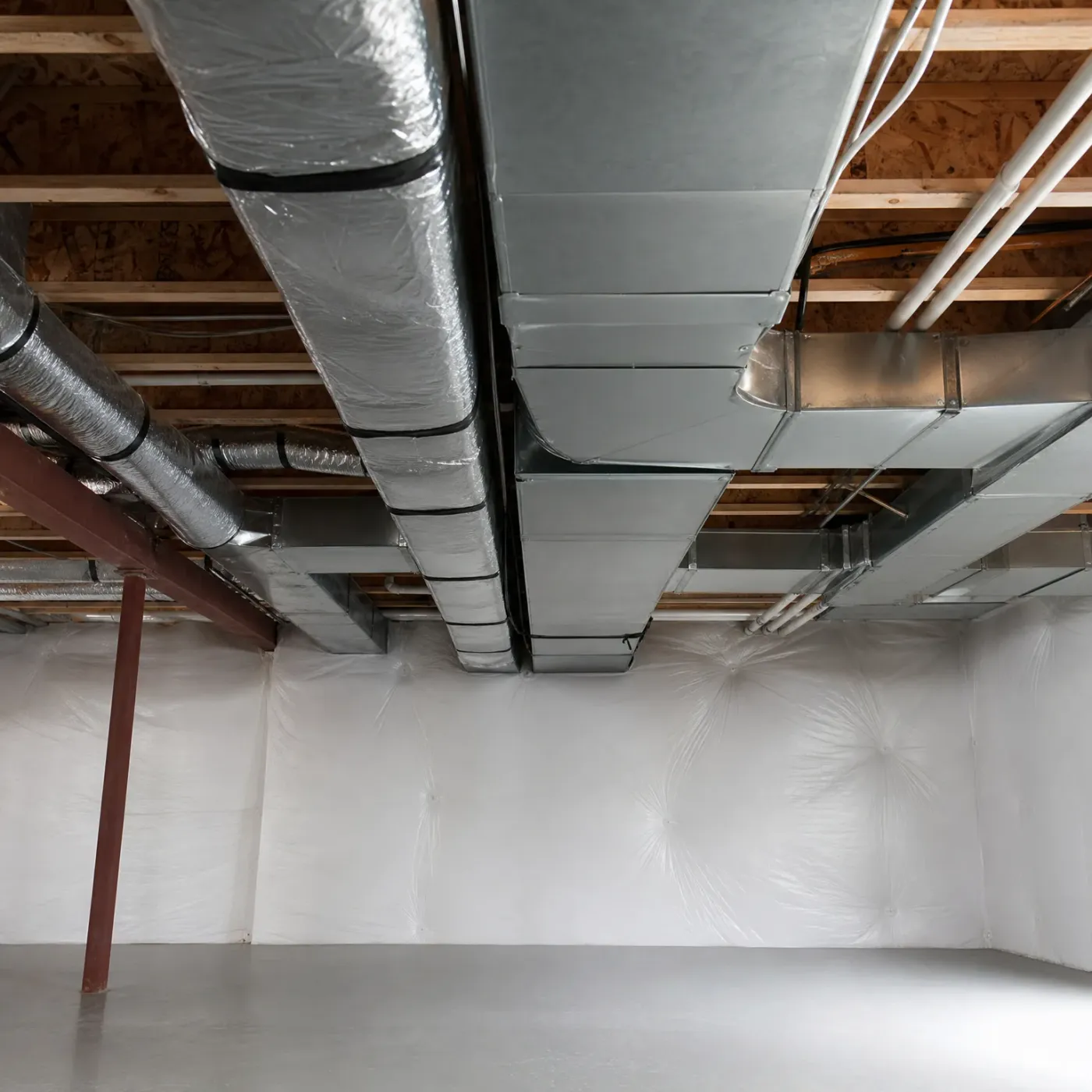
Unfinished basement with exposed wood joists, sheet metal and insulated flexible ductwork, white pipes, a steel support post, plastic-covered walls, and a bare concrete floor.
After you get your ductwork cleaning

One request and it's handed off

You've already changed the filter early, wiped the shelves twice in one week, and still watched the film come back. Finding someone to look at the ducts means calling a few companies, describing the same gray dust story each time, and waiting to see who calls back with a number worth trusting. That's the part you can hand off. A system that's been pushing air through the same ducts for years, in a house built decades ago like a lot of Jackson County, isn't going to clear itself up on its own, and another round of dusting won't tell you what's actually loose in there. Sending the request means you stop being the one who has to track down and vet a contractor on top of everything else dust is already costing you, the filters, the coil, the extra cleaning. That part of it is off your plate once it's sent.

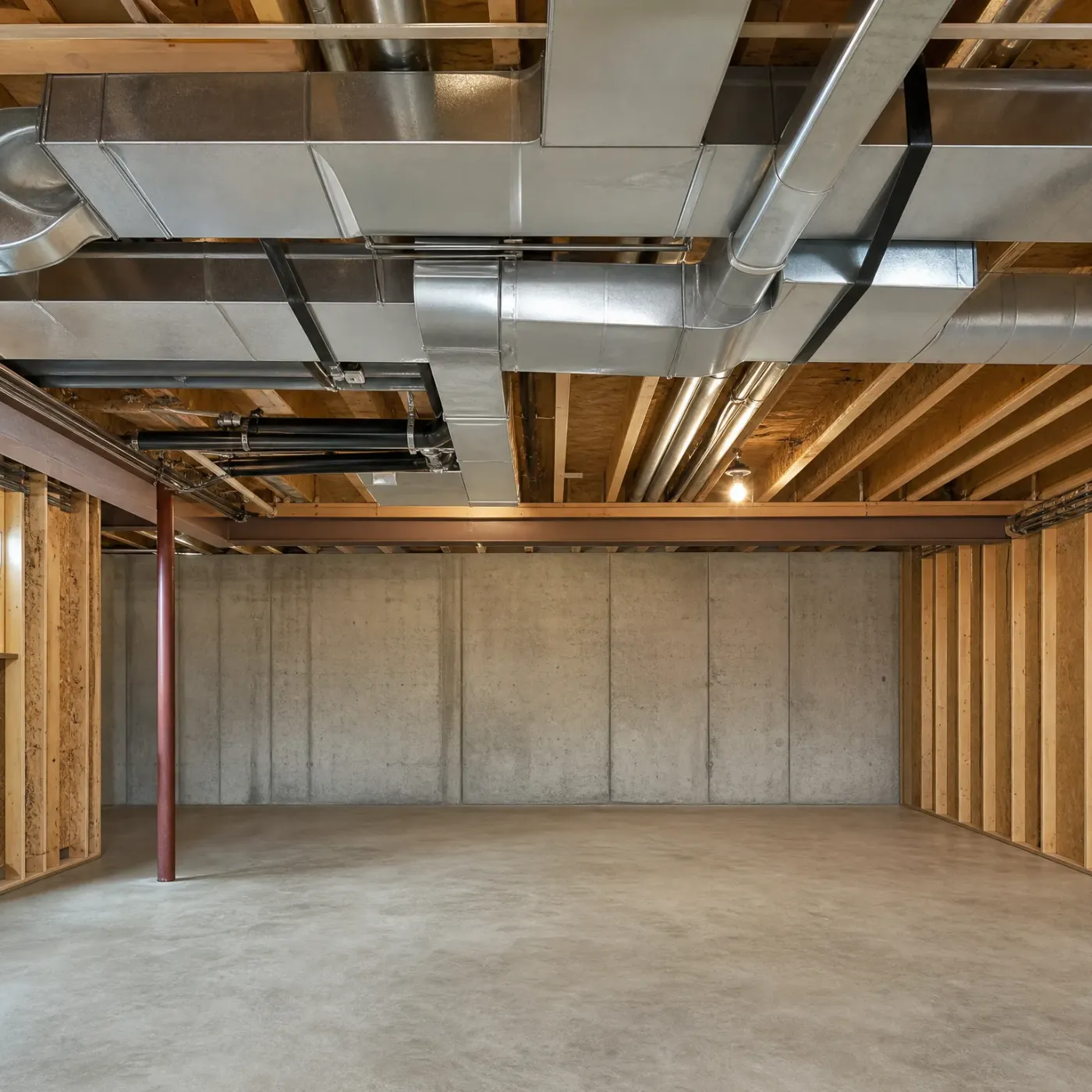
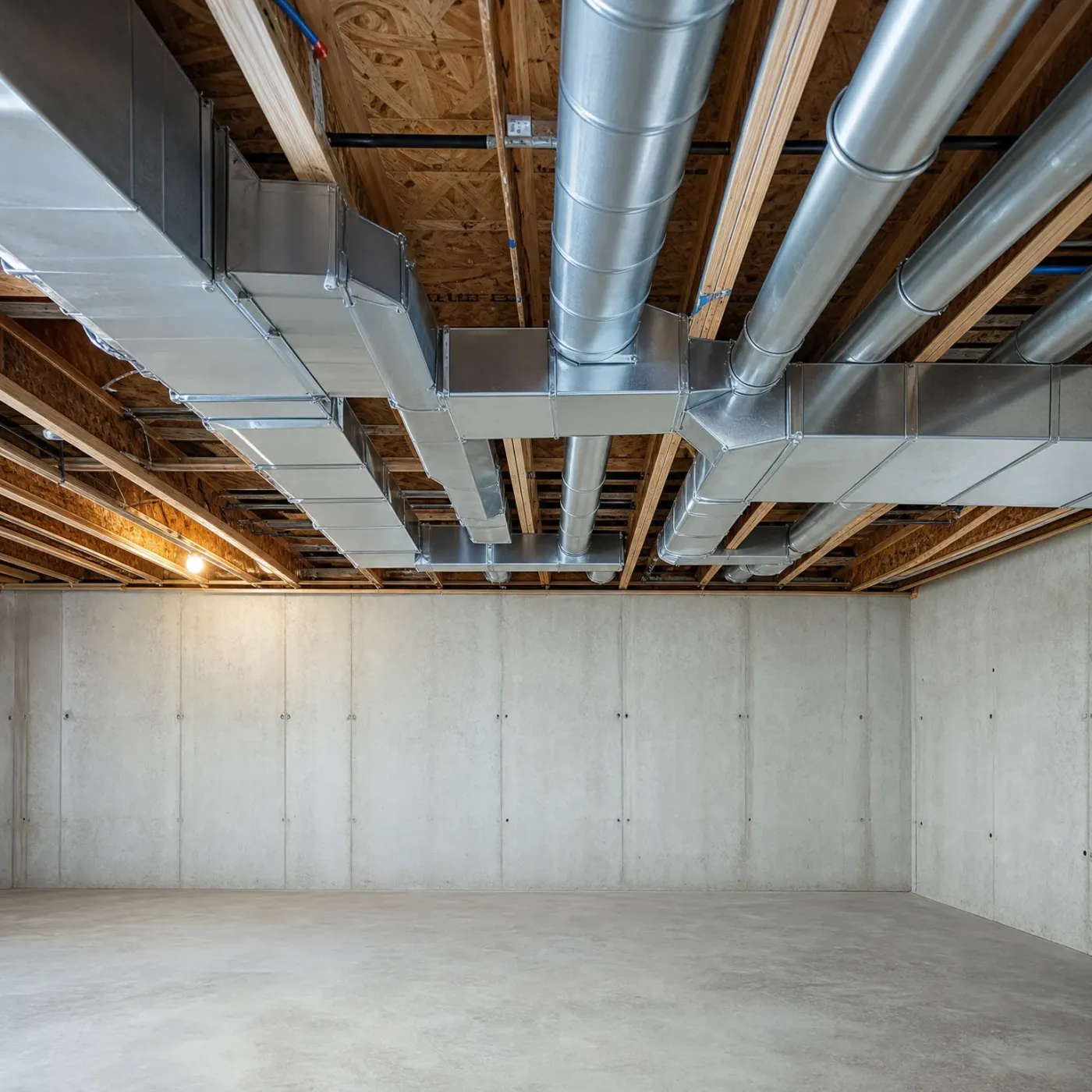
Empty concrete-walled basement room with bare floor and an exposed wood-joist ceiling carrying galvanized rectangular and round sheet-metal ducts, black pipes, and wiring.

Ductwork in good shape

This is what ductwork looks like when it isn't adding to your dust problem. The metal is clean, the seams are tight, and air moves through without picking up anything loose along the way. Nothing here is breaking down into the air you breathe.
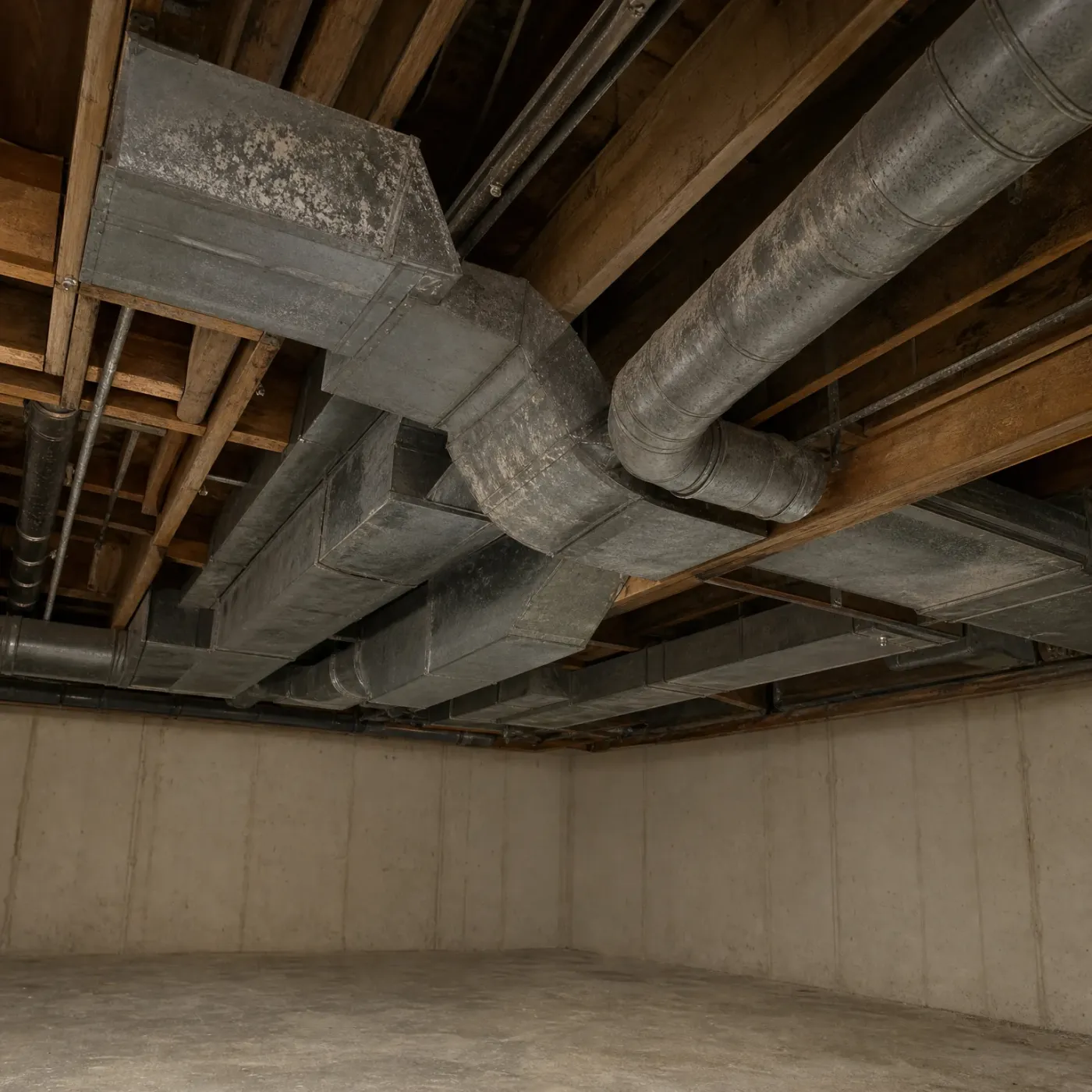

Empty concrete-walled basement room with exposed wooden joists and galvanized rectangular and round ductwork plus pipes running across the ceiling.

Ductwork past its prime

Years of use have left this ductwork coated and oxidized on every surface. Loose material sits in the trunk lines and branch pipes, ready to break free the next time the blower kicks on. Every run of the furnace pushes more of it into your rooms.

What are you noticing in your own house

You see it on the TV stand and the piano lid first, since flat surfaces near a vent show it fastest. Ceiling fan blades carry a gray edge. Sunlight through a window shows it hanging in the air, not just sitting on the furniture. Socks feel dusty by evening even on days you vacuumed. If anyone in the house has allergies or asthma, you may notice more sneezing or a stuffier nose once the furnace or AC has been running a while. The vent covers themselves often tell the story, with a dark ring of buildup around the edges where air is forcing its way past something it's picking up on the way out.

  1. Loose dust and debris get knocked free from every duct run.

  2. A high-powered vacuum pulls it out through an access point.

  3. Agitation tools scrub the coil, blower wheel, and duct walls.

  4. Every supply and return vent gets cleared before the system runs again.

A closed silver laptop and a white cup of coffee on a saucer sit on a wooden table in front of a wooden chair, a plain beige wall, a potted leafy plant and a window with greenery outside.

What this is doing to your house day to day

Think about what's actually riding that air. Pet hair, dead skin, fabric fibers from the couch, all of it getting pulled into the return vent and pushed right back out into the room you're sitting in. Your air purifier can only catch so much of it. The rest lands on your furniture, your floors, your lungs. If anyone in the house has allergies or asthma, this is the part that matters most, since that's the air they're breathing all night in the bedroom.

You've already tried the usual fixes. Changed the filter early, wiped down the shelves twice in one week, maybe run the vacuum more than you used to. None of it holds. The dust keeps coming because the source isn't the room, it's the ductwork feeding every room in the house. Finding someone who actually cleans ducts, rather than just vacuums a vent cover, usually means calling around, explaining the gray film story more than once, and sorting through quotes that don't compare to each other. That part of it is the part you can skip.

A living room with a cream sofa and knit throw beside a window, with a wooden coffee table in the foreground holding a round woven tray, a small bowl, and a speckled vase of green leafy branches.
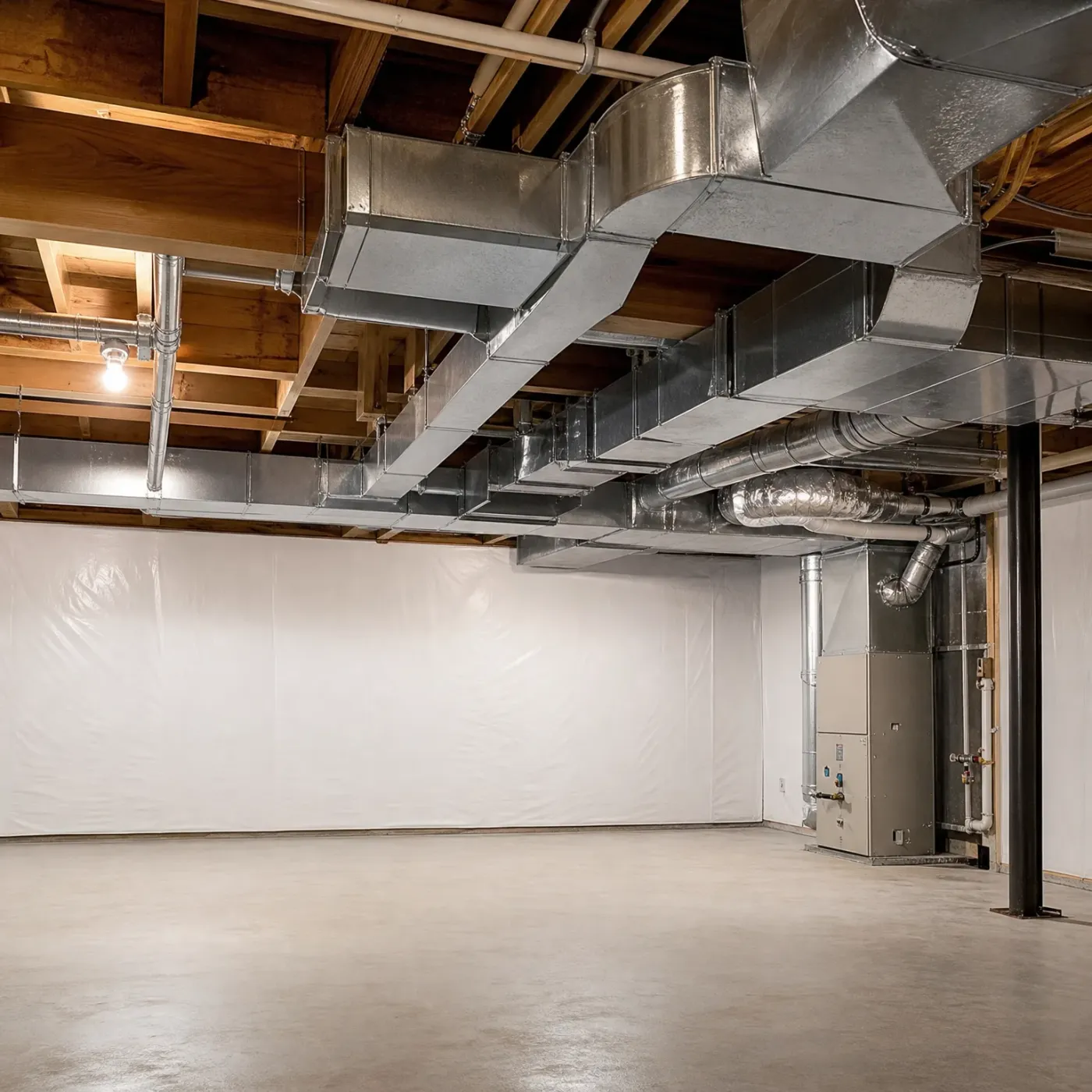
Empty basement with bare concrete floor, white plastic sheeting over one wall, exposed wood joists, galvanized sheet-metal ductwork and pipes overhead, and a furnace unit with a steel support column at right.

Ductwork in working order

This basement system is tight to the joists, seams closed, metal clean. Air moves from the furnace through the trunk lines and out to the registers without picking up anything along the way. The vapor barrier on the walls keeps the space around the ducts dry, too.

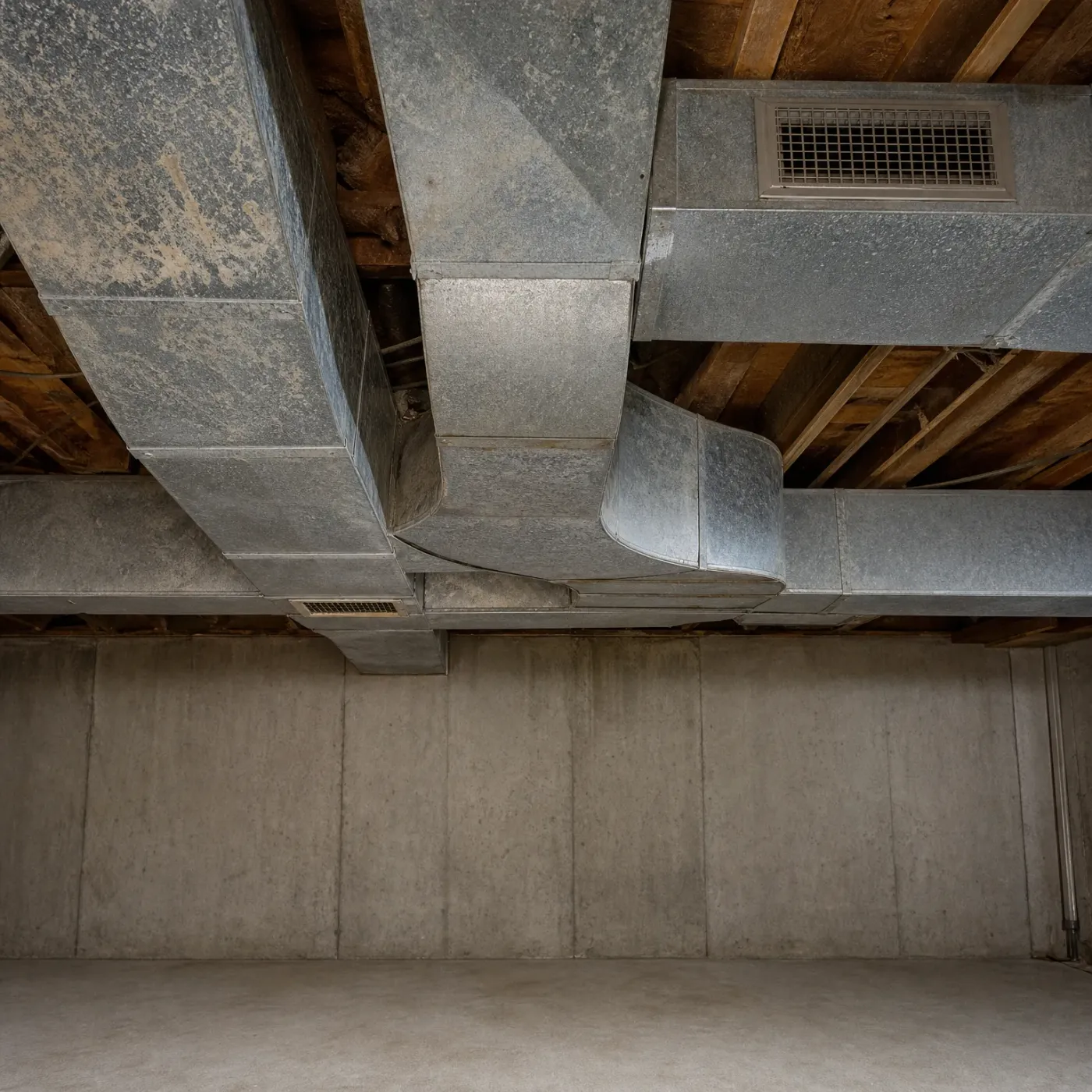
Galvanized sheet metal HVAC ducts with vent grilles run along a wooden floor joist ceiling above bare concrete walls and floor in an unfinished basement.

Ductwork feeding the dust

Same kind of run, same galvanized metal, but years of buildup inside means every right-angle turn knocks loose more than it should. What collects on the duct walls between the joists doesn't stay there. It rides out through those two registers and into the rooms above.

Power here costs 13.55 cents per kilowatt-hour

At 13.55 cents a kilowatt-hour, running the blower longer than it needs to doesn't cost much here. That's worth knowing, because dirty ducts make a furnace or AC work harder to push air through, and cleaning them out is what brings that workload back down, not a lower rate.

EIA-861 2025

A woman with dark hair in a bun sits on a beige sofa under a knit blanket with her eyes closed and an open book in front of her, with a lit lamp and houseplant in the background.
A smiling bearded man in a dark sweater sits at a dinner table with lit candles, a glass of red wine, and bowls of food, in a dimly lit room with a lamp and houseplant behind him.

Where this leaves you

  • Dust that keeps coming back after a few days points to the duct system, not your cleaning habits.
  • Jackson County's long gas heating season, roughly seven months, gives ducts more time each year to load up and circulate dust.
  • A cleaning clears loose dust and fiber from the coil, the blower wheel, and the duct walls themselves.
  • Once ducts are clean, the air moving through them stops picking up material and carrying it into your rooms.
  • Finding a contractor on your own means calling around, repeating the same gray dust story, and sorting through quotes yourself.
  • Sending the form here replaces that search with one step, and the rest of the legwork stops being yours to do.

The gray film coming back week after week was never a sign you're falling behind on cleaning. It's the duct system moving dust through your house every time the furnace or the AC runs, and in Jackson County that furnace runs about seven months of the year. Loose dust and fiber sitting on the coil, the blower wheel, and the duct walls gets picked up by that moving air and carried straight into the rooms you spend your evenings in. A cleaning removes that material at the source, so the air passing through afterward isn't adding to what's already settling on your shelves and fan blades. That's the full answer to why your house has been dusty, and it's not a habit you need to fix.

What's left is finding someone to do the work, and that part has its own weight to it. On your own, that means calling a handful of companies, explaining the same dust problem to each one, and then sitting with a stack of quotes trying to tell them apart. Sending the form here replaces all of that with one step. You're not vetting contractors or repeating yourself on the phone. Someone else is doing that sorting now, and the search that was sitting on your evening is off your plate.

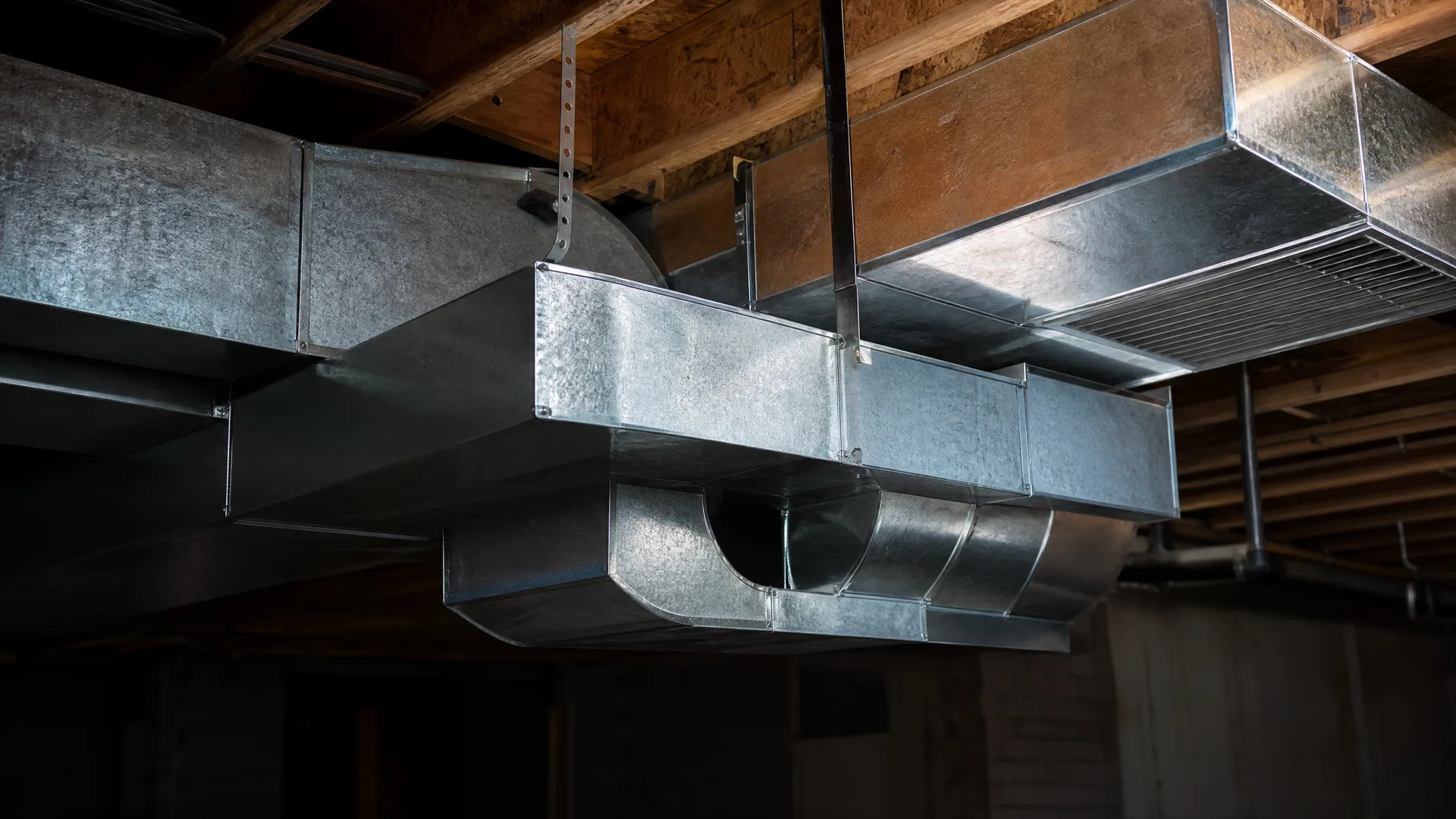
Galvanized sheet metal HVAC ductwork with rectangular trunks and round takeoffs suspended from wooden floor joists in an unfinished basement ceiling.

Done looking for a duct system pro

Duct and vent cleaningDucts or ventsJackson County, MO
Step 1 of 2

What ZIP code is the job in?