Mini Split Installation in St. Louis, MO
A new system here will heat from October through April and cool from May through September every year. Tell us about the house, and a licensed contractor who covers St. Louis will get in touch.
Tell us about the job
It takes about a minute.
St. Louis asks a mini-split to run nearly all year
October through April you need heat. May through September you need cooling. That leaves almost no month where the system just sits idle. A mini-split here has to hold up on winter nights averaging 26°F and keep pace on summer afternoons averaging 87°F.
Any new mini-split has to meet the federal minimum for a split-system heat pump, 14.3 SEER2 for cooling and 7.5 HSPF2 for heating. That is the floor for units built from 2023 on, whether it is replacing an old system or going into a room that never had one.
- 7 months
- October through April, your system heats
- 5 months
- May through September, it cools
- 26°F
- the average winter night it heats against
- 87°F
- the average summer afternoon it cools against
NOAA nClimDiv, 1991–2020 normals
- Is a mini split worth it?
- For the right house, yes. A mini split heats and cools without ductwork, so it works well in additions, converted attics, garages, or older homes where running ducts is not practical. St. Louis winters average 26°F and summers average 87°F, and heat pump mini splits are built to run in that range. Whether it makes sense for your house depends on what you are heating or cooling now, and a contractor can walk through that with you.
- How many rooms can a mini split cover?
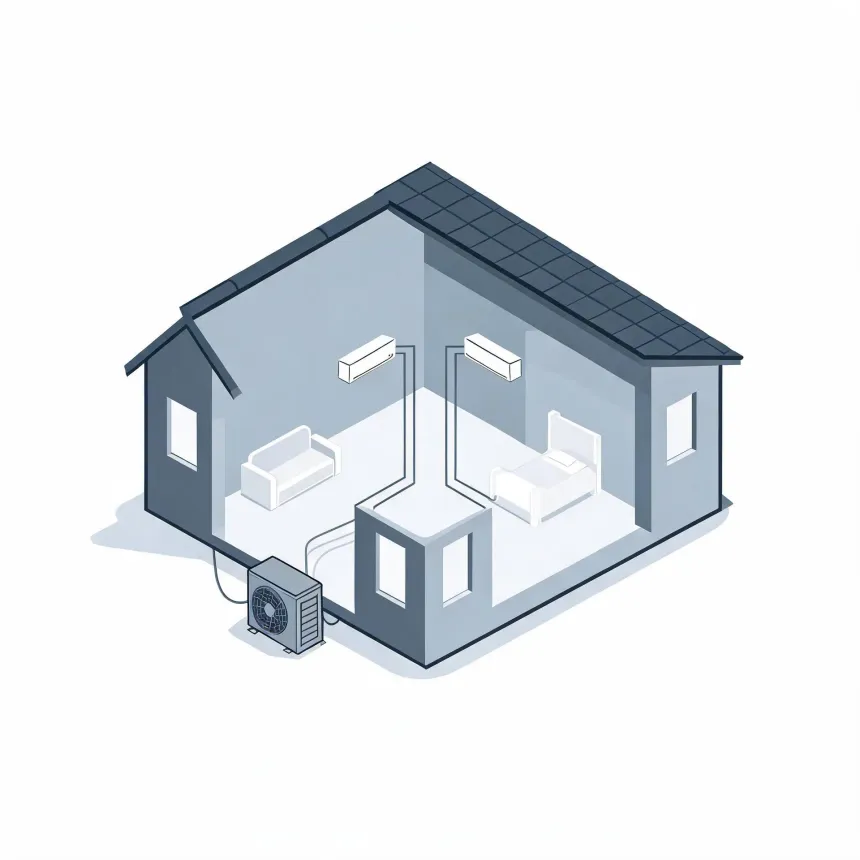
- A single-zone mini split covers one room or open area. If you need more than that, a multi-zone system runs several indoor heads off one outdoor unit, so more rooms can be covered from a single outdoor unit. How many rooms you can actually cover depends on the size of each room, how the space is laid out, and the outdoor unit's capacity, so a contractor needs to see the house to say what fits.
- Can a mini split heat a whole house?
- It can, if it is sized and placed for that. A multi-zone mini split with an indoor head in each room or living area can replace a furnace entirely, and heat pump models are built to work through cold winters like the ones here, where nights average 26°F from December through February. A single-zone unit will heat the room it is in and maybe the space around it, not the whole house. Whether whole-house coverage works for your floor plan is something a contractor can figure out room by room.