Get matched with a St. Charles County pro who cleans ducts.
A room that never feels right, a utility bill that keeps climbing, dust along the vents even right after you clean. Those are the usual signs something's wrong with the ductwork, not the furnace or the AC itself. In St. Charles County, where summers stay sticky for months and winters get genuinely cold, leaky ducts mean paying to condition air that never makes it to the room.
Most homes here heat with gas, and the furnace works harder to make up for air lost through a gap or a loose joint before it ever reaches a vent. Power here is cheap, which helps, but it doesn't make up for a duct run losing air into the attic or crawlspace all summer and all winter.
You can check some of this yourself. Hold a hand near the seams where ducts join, feel for a draft when the system runs. Look at the insulation around ducts in the attic for dust streaking, a sign air has been pushing past a gap for a while. But finding every leak, and knowing which ones are worth sealing, takes someone who does this for a living.
That's where this page can help. Once you send a request, you're not the one who has to track down a contractor who knows duct systems in O'Fallon and the surrounding area. A contractor who takes on jobs like yours will reach out to you directly, matched to what your home actually needs, whether that's a few sealed joints or a longer look at the whole run. You don't have to figure out who's reliable or who's worth the call. That part gets handled once you send the request below.
A few rooms stay warmer or cooler than the rest of the house no matter how you set the thermostat. One register blows strong while another barely moves air. These are the clearest signs of a leaky duct, because the air is escaping into the attic, the crawlspace or the walls before it ever reaches the room it was meant for. The furnace or the AC runs longer to make up for what's lost, which is why the bill climbs even when the equipment itself is fine. Loose joints, a seam that was never sealed right, or a crushed section of flex duct are the usual causes. In a house with gas heat, that leaking air is air you already paid to warm, pushed into a space nobody lives in. The fix isn't a bigger furnace or a new AC. It's sealing the ducts that are already there.
Why does your ductwork matter so much here?
Half the homes here were built by 1994
Half the homes in St. Charles County were built in 1994 or earlier, and ducts that age have had decades to work loose at the seams.
Heat runs October through April
Heat runs about seven months a year here, October through April, so a leak in that run pushes warm air into the attic for most of the year.
Cooling runs May through September
Cooling runs May through September, and any duct leak during those five months is sending cooled air straight into the crawlspace instead of your rooms.
ACS 2020-2024 · NOAA nClimDiv 1991-2020
Checking it yourself
Hold your hand near the duct joints in the attic or crawl space while the system runs. A rush of air means a leak at that seam. Look at the insulation around the ducts too. Dust stuck to a section, or insulation pressed flat and dirty, usually marks a spot where air has been leaking through for a while. Flex duct that has pulled loose from a collar is often visible without tools, just a flashlight.
When to bring in a contractor
Some leaks sit behind drywall or under the slab where you can't see or reach them. If the rooms farthest from the furnace never come up to temperature, or the attic runs noticeably hotter in summer than it should, the leak is likely somewhere you can't get to on your own. A contractor can pressure test the system and find leaks that don't show themselves to a hand or a flashlight.
Why is my duct system leaking air in the first place?
You've checked for the obvious signs and found some of them, but you're left wondering how the duct ever got leaky in the first place. It wasn't installed broken. Something had to happen over time to open those gaps, and knowing what causes it helps you understand whether it's a one-time fix or something that'll keep happening.
The seams and connections work loose over years of heating and cooling cycles
Ductwork is built in sections, joined with sheet metal screws, mastic or foil tape, not welded into one solid piece. Every time the furnace or AC kicks on, the metal heats and cools and shifts slightly. Over years, that movement works the joints loose. Tape dries out and peels back. Mastic cracks. A duct that runs through an unconditioned attic or crawl space sees wider temperature swings than one in conditioned space, so it moves more. Homes in St. Charles County built in 1994 or earlier have had decades of that cycling, which is why older seams are the ones most likely to have opened up. Physical damage adds to it too, someone stepping on a duct in the attic, or a connection that was never sealed well to begin with.
Get matched with a duct system pro in St. Charles County
Send the request and finding a pro stops being your problem.
Get matched with a pro who works on ducts in St. Charles County.
You run your hand over a vent and barely feel anything, even on high. A closet or a back bedroom holds onto heat in the winter and stays sticky in July no matter what the thermostat says. Somewhere along the duct run you hear a faint hiss when the system kicks on, or you catch a musty, dusty smell coming through the vents that wasn't there before. None of that is the furnace or the AC failing. It's conditioned air leaving the duct before it reaches the room. Left alone, the system runs longer to make up for what it's losing, and a crawl space or attic that keeps taking in warm, moist air through those gaps can turn damp over time.
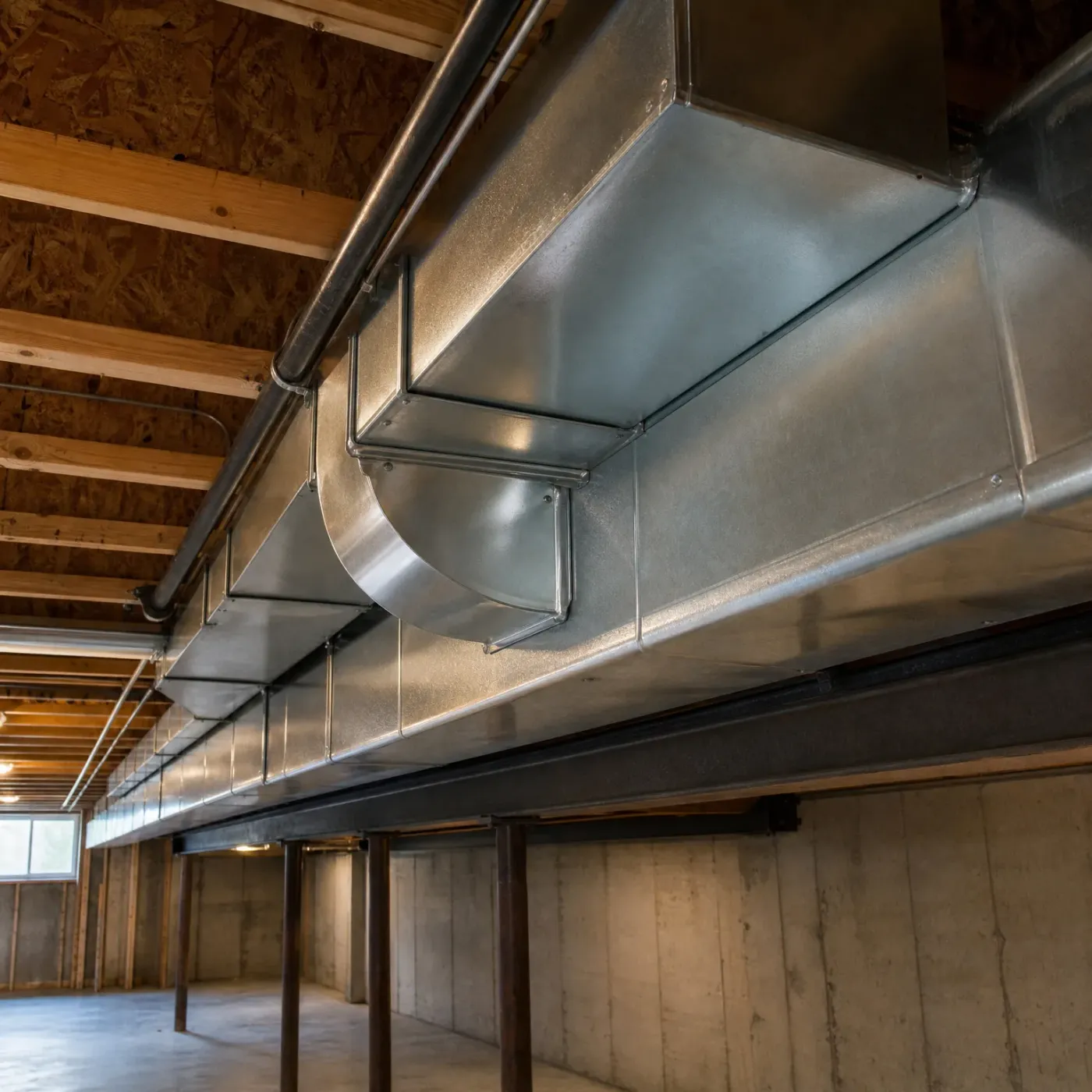
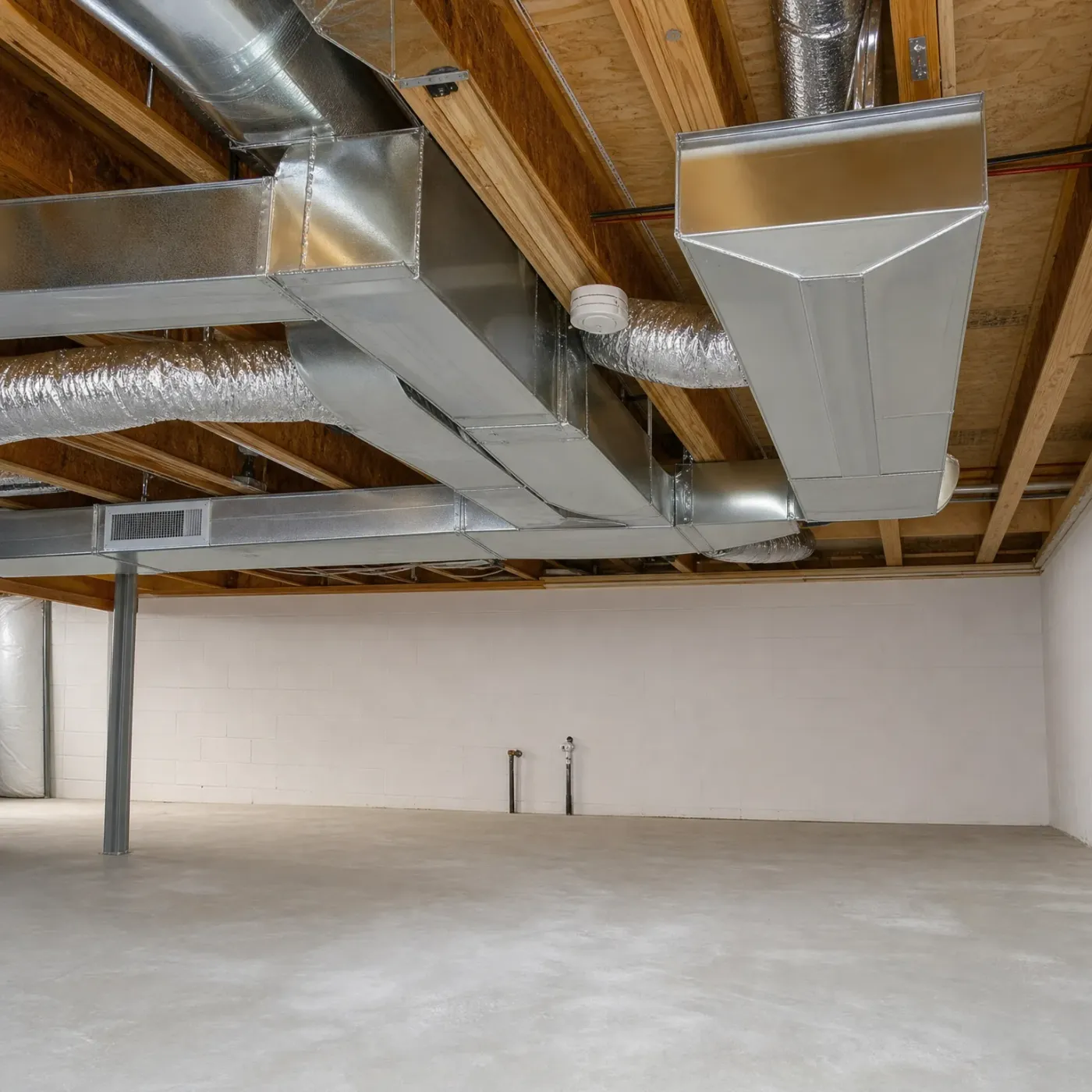
Ductwork sealed and sound
This is what a tight system looks like. The metal trunk lines and round pipe run straight along the joists, joints snug, insulation flat and even. Air moves from the furnace or AC to every vent without losing ground on the way, so every room gets the share of air it was sized for.
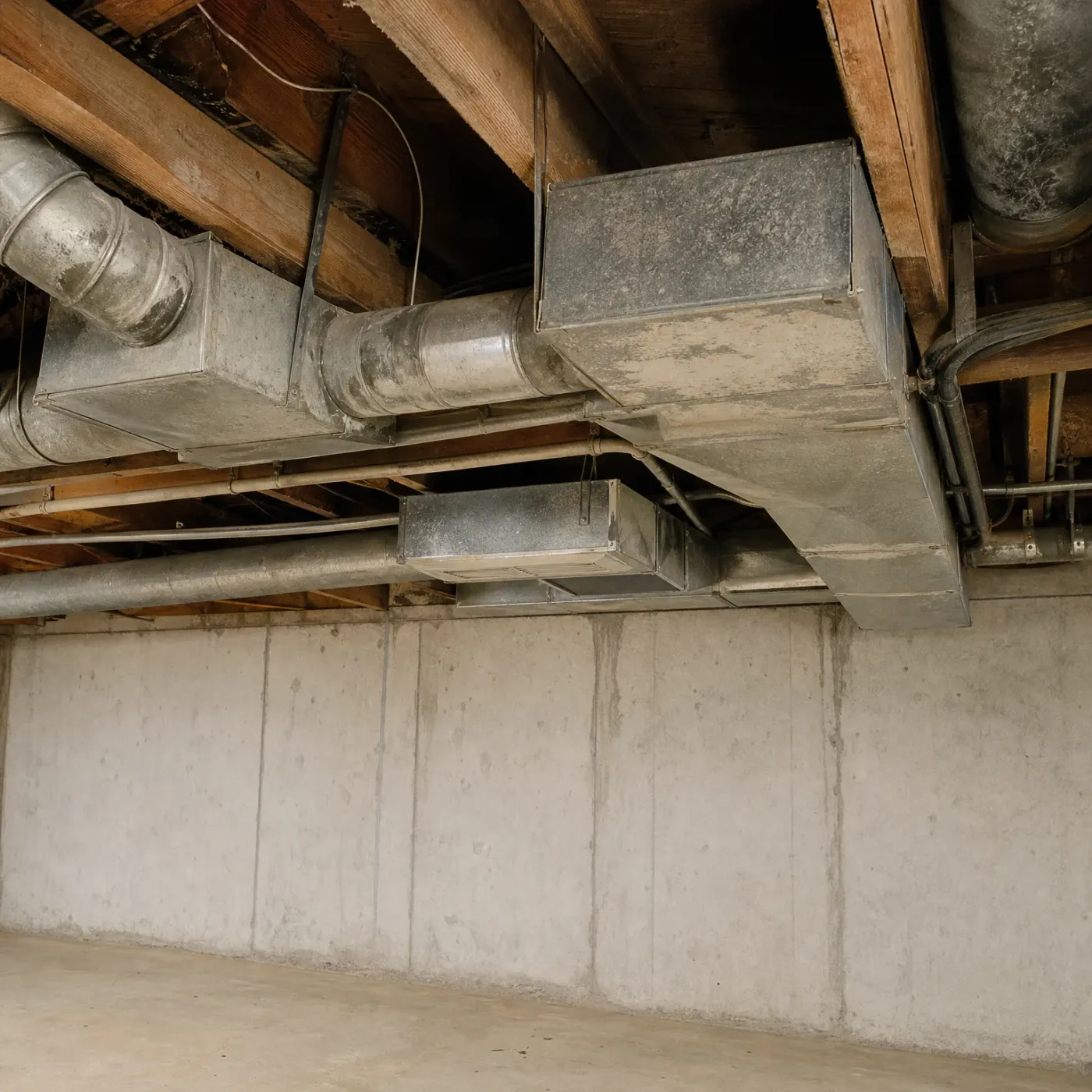
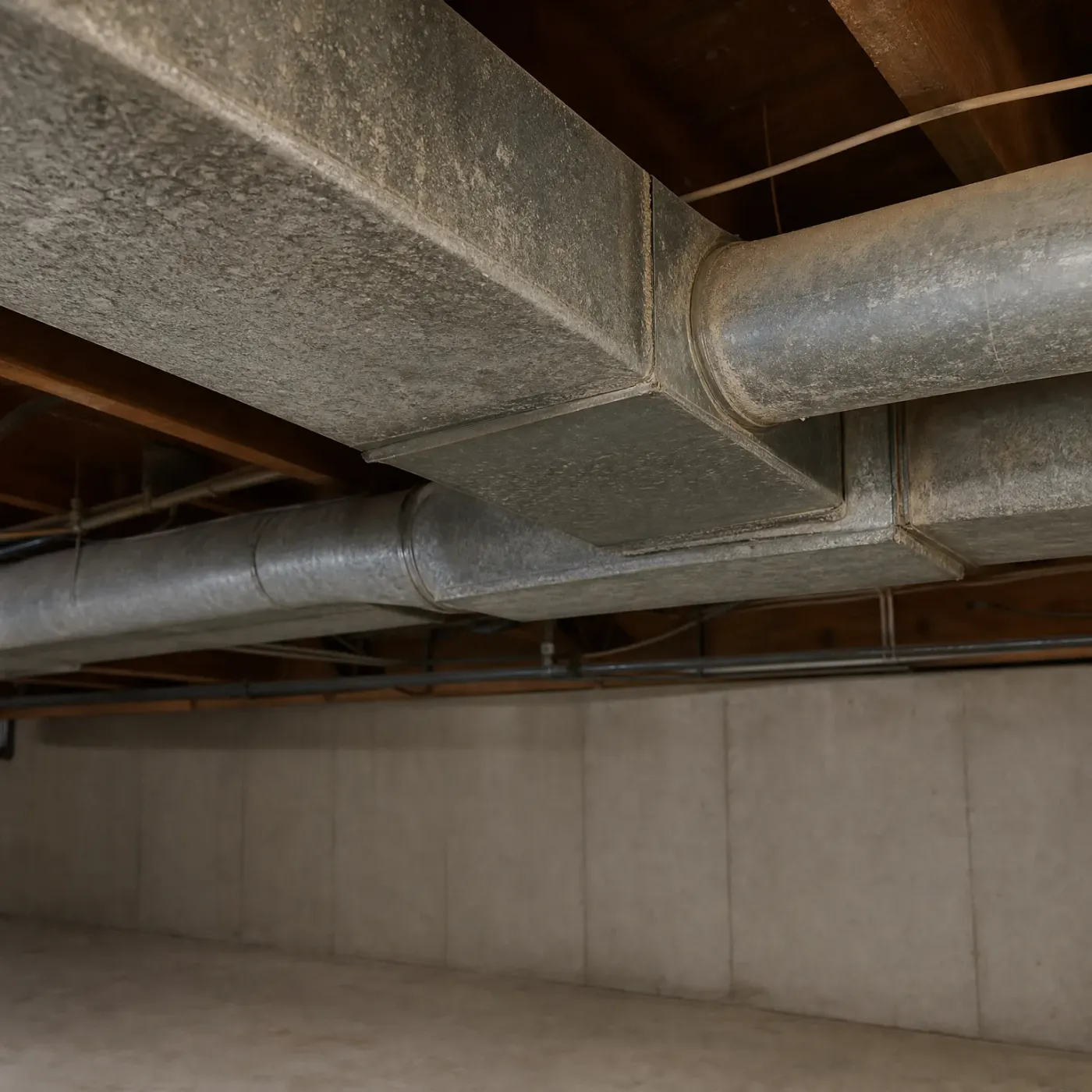
Ductwork losing air
Here the same kind of metal duct hangs under the joists, but a seam has opened somewhere along the run. You won't see the leak itself, only what it costs you: a bedroom that won't cool down, a vent that barely pushes air, a system working harder to make up for air it never delivers.
Duct Leak or Airflow Problem
Duct leak
The air leaks out of the duct itself, through a torn seam, a disconnected joint, or a gap where two sections meet.
Lost air goes into the attic or crawl space, so the furnace or AC keeps running but less of what it makes reaches the rooms.
You can sometimes feel it directly, a draft at the joint when you hold your hand near it while the system runs.
Sealing it is a matter of finding the gap and closing it, with mastic or metal tape made for ducts, not the cloth kind sold at hardware stores.
A leak in one trunk line can starve several rooms at once if they all branch off downstream of it.
The fix stays local to the duct. The furnace, the coil, and the blower are not involved.
Airflow problem
The duct stays sealed, but something is blocking or restricting the air moving through it.
A clogged filter, a closed damper, or a duct crushed behind a wall can all choke off airflow the same way a leak starves a room.
A blower that is weak or undersized for the system will move less air through every vent, not just one.
This kind of problem usually shows up evenly, the whole house feels short on air rather than just one back bedroom.
A register blocked by furniture or a vent cover closed too far can look exactly like a leaky duct until it's checked.
Fixing it means finding the restriction and clearing it, and sometimes that means a damper, a filter, or the blower itself, not the ductwork.
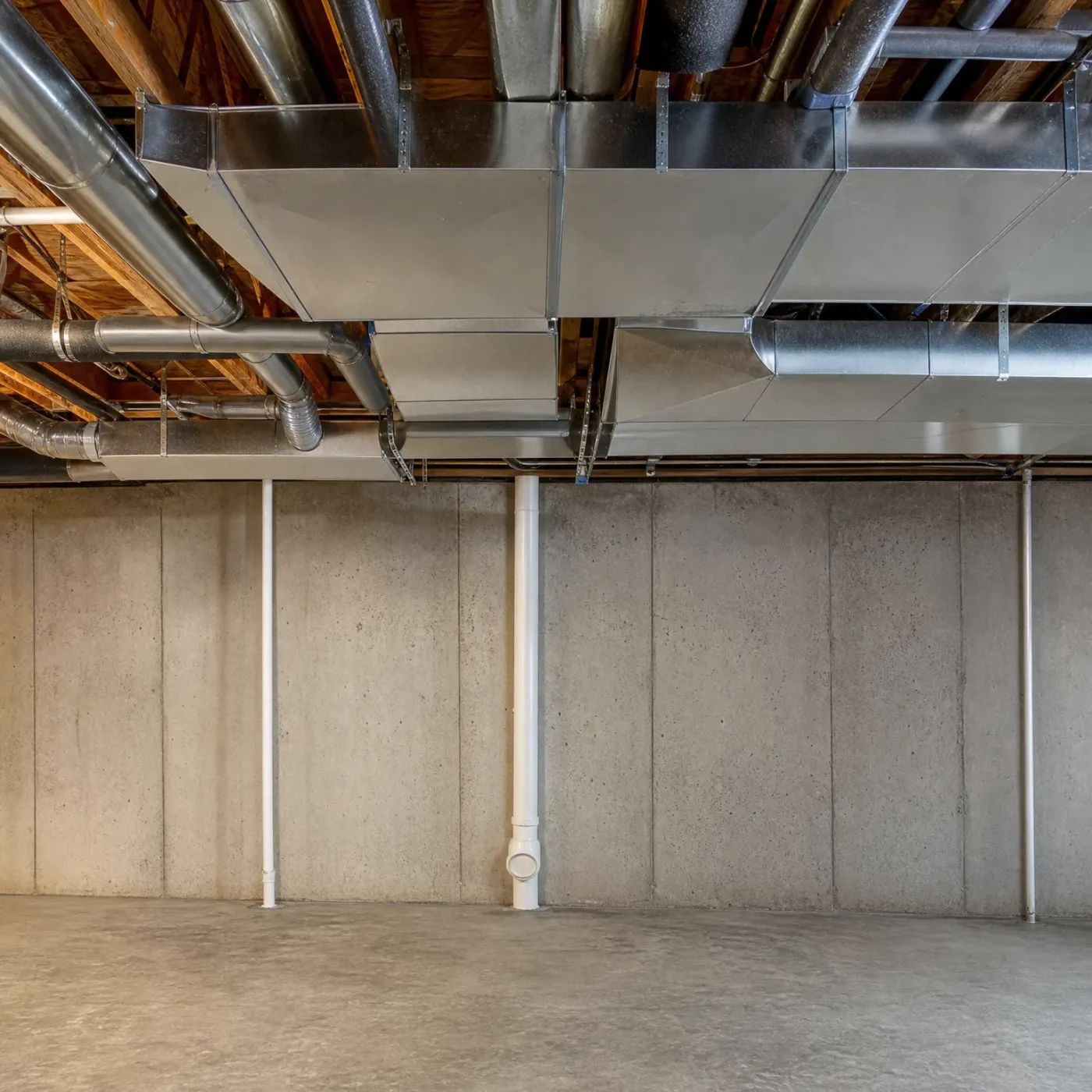
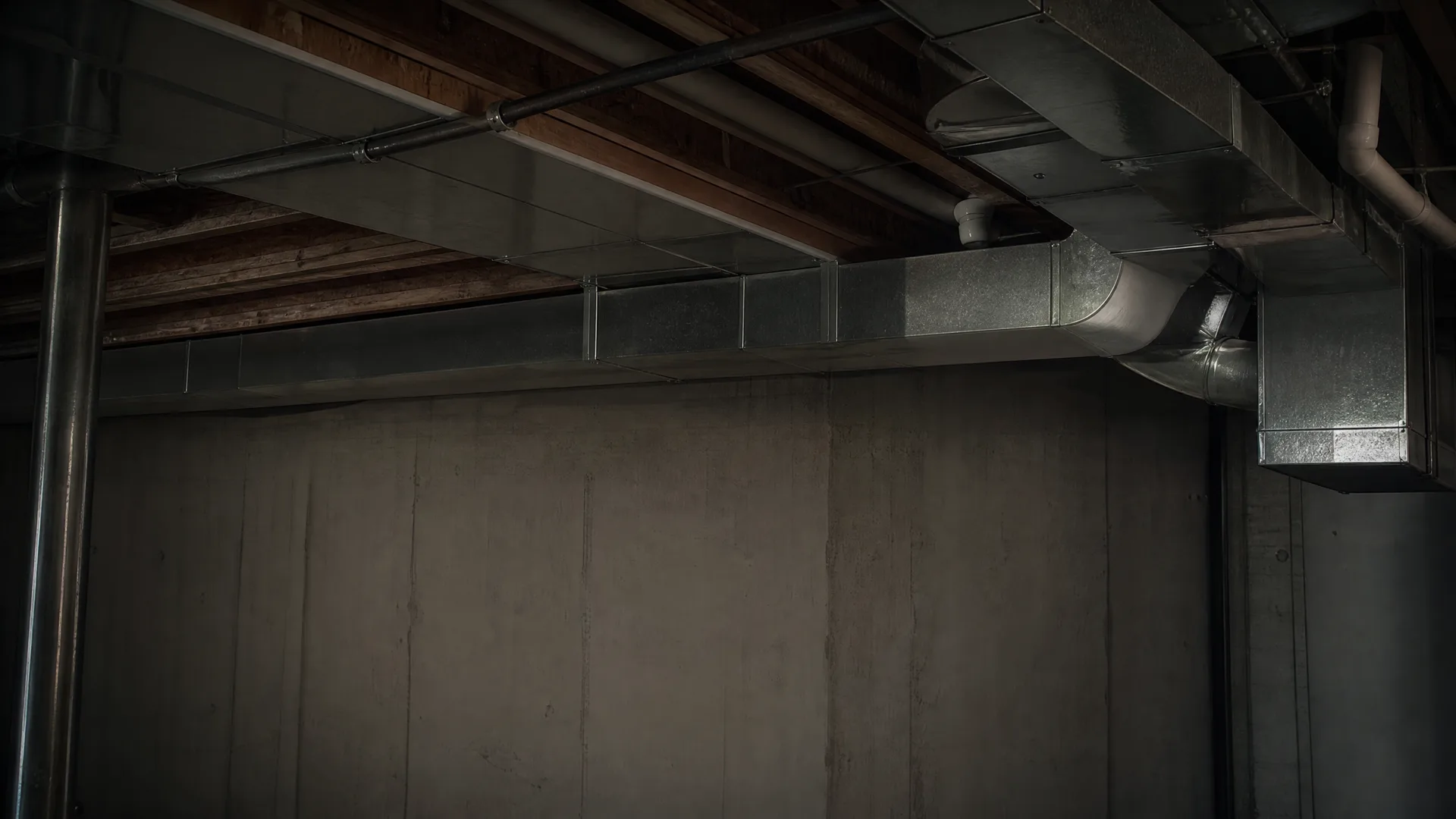
Sound ductwork, dry basement
The metal trunks and round pipe run tight along the joists, seams snug where they meet. No dust clinging to the outside of the duct, no insulation knocked loose. Air leaving the furnace or AC stays inside the duct until it reaches the vent.
A joint that's given way
Look close at where the rectangular trunk meets the round branch duct and you can see the fitting isn't holding like it should. Conditioned air is finding its way out before it ever reaches the register, spilling into the basement instead of the room it was meant for.
Before you get your ductwork cleaningAfter you get your ductwork cleaning
20 to 30 percent
That share of the air moving through a typical duct system is lost before it reaches a vent, when the seams or connections have come apart.
A joint or seam in the ductwork pulls apart or tears open
2
Conditioned air escapes into the attic or crawl space
3
The furnace or AC keeps running to make up the loss
4
Rooms near the leak get less air than the thermostat calls for
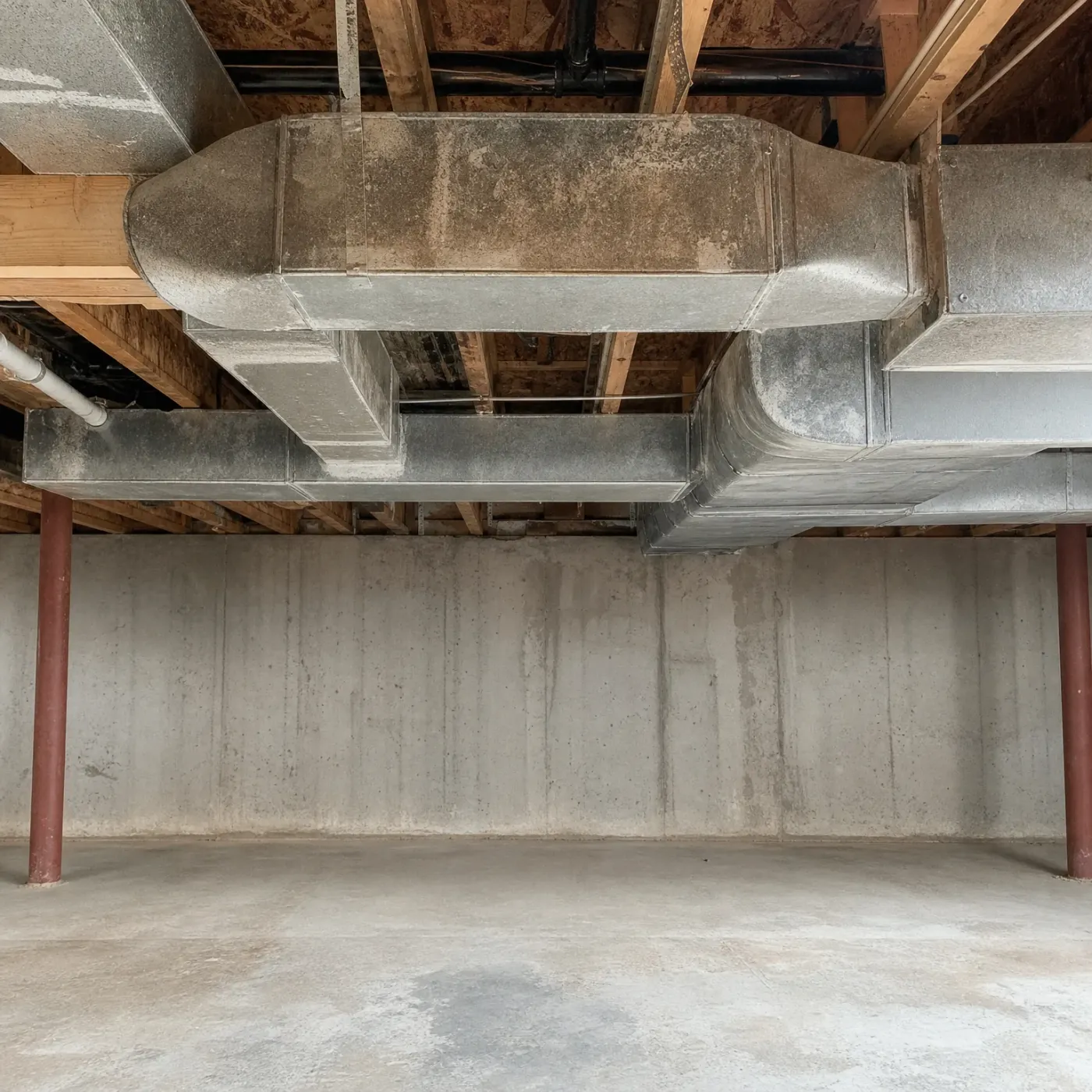
Clean ductwork like this moves air the way it was designed to, with no dust ring at the joints to show a leak.
Dust and grime caked this heavy on the duct and the joists means air has been leaking here for a long time.
Power here costs 12.83 cents per kilowatt-hour
At under 13 cents a kilowatt-hour, power here is cheap, but a leaky duct still wastes it every time the AC or furnace runs to cover what's escaping into the attic or crawl space. You feel it less in the bill than in rooms that never cool or heat right.
EIA-861 2025
Uneven rooms and rising bills point to the ducts
A room that won't hold its temperature, a vent that barely moves air, dust ringing a joint in the attic. Any one of those on its own might mean little. Together, in a house here where the furnace runs most of the winter and the AC runs long into the fall, they point to air leaving the duct before it reaches the room. You don't need to guess anymore. You know what to look for and what it means when you find it.
Sealing a duct like that takes someone under the house or in the attic with the system running, checking joints by hand. That's not something to take on yourself, and it's not something to put off once you've seen the signs. Send in what you've found and a contractor who works on duct systems in St. Charles County will reach out to go over it with you. From there, finding the leak and fixing it is off your plate.