
Missouri HVAC Match
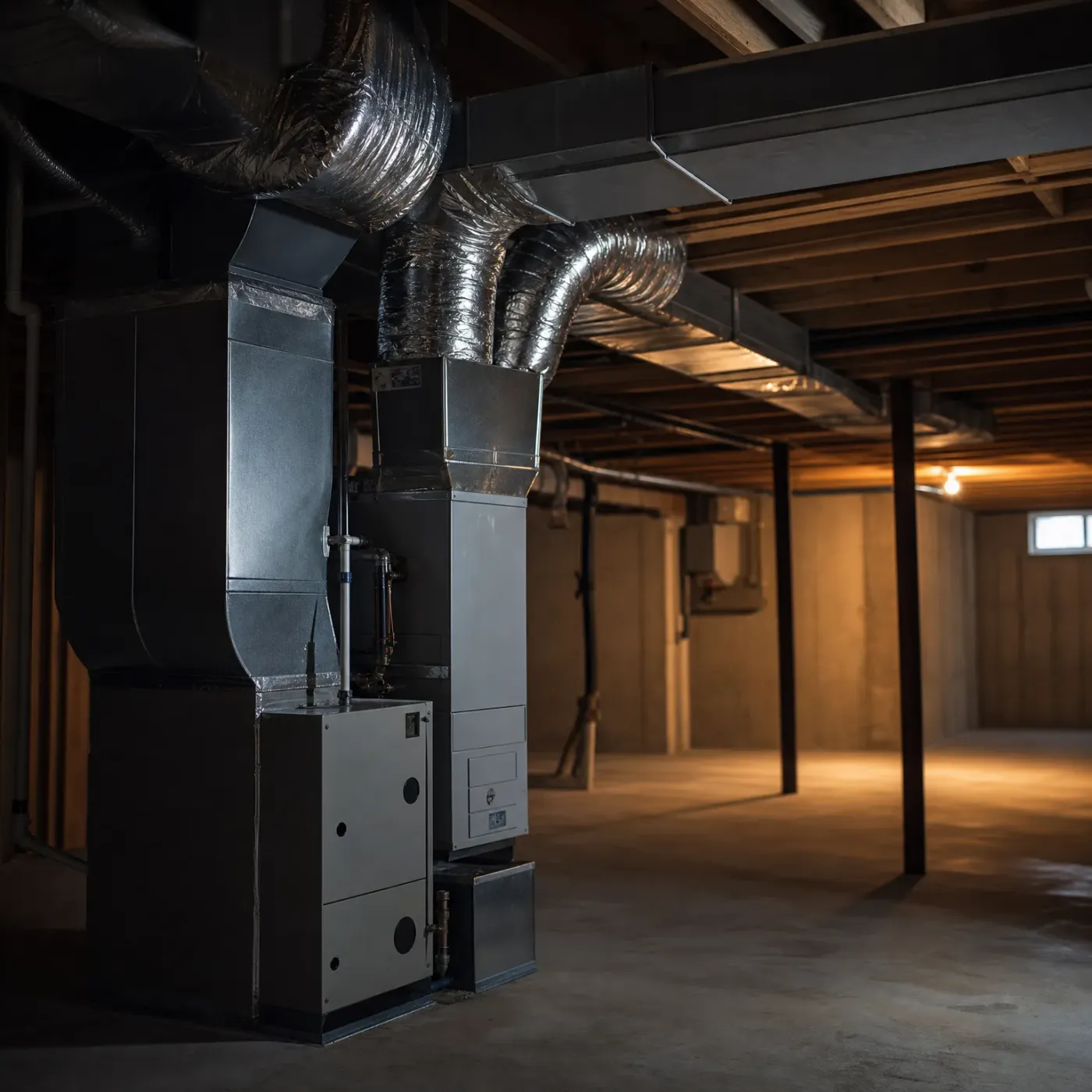
Unfinished basement with concrete floor and walls, exposed wood joists, steel support columns, and two furnace-type units connected to sheet-metal and flexible insulated ducts.

Get the right pro for your ductwork

Signs your air ducts need cleaning in Missouri

Dust on a vent cover, a musty smell when the furnace kicks on, more sneezing indoors than out. Missouri homes collect a lot in the ducts between muggy summers and gas heat running all winter. This page covers what those signs mean and when they point to a dirty system versus something else. Skip the search for a contractor to look at it, that part's below.

Get matched

The clearest sign is dust that comes back fast after you clean, settling on furniture or windowsills within a day or two of dusting. A musty smell when the furnace or AC first kicks on is another, especially if no one can find where it's coming from. So is a room that never seems to get fully warm in winter or cool in summer, even with the system running fine. These point to buildup inside the ducts themselves, dust, pet hair, sometimes mold where moisture has settled, that the air moving through picks up and carries back into the house. In Missouri, summers run humid enough that moisture can sit in ductwork and feed that buildup, and with gas heat pushing air through the same ducts all winter, whatever's in there gets circulated for months. If you're seeing two or more of these signs together, it's worth having the ducts looked at before it turns into a bigger problem with air quality or the system itself working harder than it should.

Empty unfinished basement with bare concrete floor, insulated walls with vapor barrier between wood studs, exposed wood joists, galvanized sheet-metal ductwork, a recessed light, and a steel support column.

Ducts doing their job

Air moves through clean metal and flex runs without carrying much along with it. A system like this still picks up dust over time, but you won't see it piling back up on a windowsill days after you wipe it down, and no musty smell greets you when the furnace cycles on.


Empty basement room with bare concrete walls and floor, exposed wooden floor joists overhead, large galvanized sheet-metal ducts with a vent grille, colored pipes, and a single lit bulb.

Ducts overdue for a look

Big rectangular trunk lines like these collect dust and debris along their seams and corners, especially where runs sit close to plumbing or get disturbed by other work nearby. If vents have been pushing out a stale smell or a fine layer of dust, this is where it's building up.

A woman in a cream cowl-neck sweater sits by a window with snow outside, in a dimly lit living room with a sofa, lit lamp, mirror, candles and a fireplace.
A woman in a gray turtleneck sweater sits beside a large window looking out at snow-covered evergreen trees, in a dimly lit living room with a lit fireplace, lamps, couch and houseplant.
A woman in a cream turtleneck sweater stands beside a large window with snow-covered ground and bare trees outside, in a dimly lit living room with lamps, a sofa and framed art.
A woman in a grey cowl-neck sweater stands indoors near a window, looking out at falling snow, with a lamp, framed picture and couch in the warmly lit room behind her.

Dust doesn't fall into ducts evenly. It builds up where the airflow lets it. Return air crosses the blower wheel before it ever reaches the filter, so pet hair and loose dust collect there first. Past the filter, flex duct has ridges inside it, and dust settles into those ridges the way it never would in a smooth metal trunk line. Floor registers pull in more than ceiling ones, which is why rooms with floor returns tend to show buildup before the rest of the house does. Whatever gets past the filter keeps going until it hits the evaporator coil, where it can coat the coil and cut down airflow. Old tape joints don't help. Years of heating and cooling cycles work them loose, and once a seam opens, it starts pulling in dust from the attic or crawlspace instead of conditioned air. A Missouri furnace cycling on and off all winter pushes more air through the system than one that runs steady, and that air carries whatever's settled along with it.

How Dust Actually Gets In

  • Air handlers pull return air across the blower wheel first, so loose dust and pet hair tend to collect there before anything reaches the filter.
  • A flex duct run has ridges inside it, and dust settles into those ridges instead of blowing through the way it does in smooth metal trunk lines.
  • Registers on the floor pull in more than ceiling registers do, so rooms with floor returns usually show buildup sooner than the rest of the house.
  • The evaporator coil sits downstream of the filter, and once dust gets past a dirty or poorly sealed filter, it can coat the coil and restrict airflow.
  • Duct joints sealed with tape loosen over years of heating and cooling cycles, and once a seam opens, it pulls in dust from the attic or crawlspace instead of conditioned air.
  • A blower that cycles on and off all day, the way a furnace does through a Missouri winter, pushes more air through the ducts than a system that runs steady, which moves more settled dust along with it.
Unfinished basement with bare concrete floor and walls, exposed wood joists, large galvanized sheet-metal ductwork, PVC and copper piping, and a gray furnace unit beside wood stud framing.
Metal stays bright, joints stay sealed, and the drain lines beside them run clear with no staining on the foundation wall.
Basement ceiling with large galvanized sheet-metal ductwork, round metal pipes and plumbing lines running beneath wood joists, above a bare concrete wall and floor.
Water staining on the foundation wall means moisture has been reaching those joists, and damp duct runs are where dust turns to mold.
A bearded man in a plaid flannel shirt sits indoors looking out a window at snow-covered trees, with a steaming mug on the sill and wooden kitchen shelves behind him.
A bearded man in a navy T-shirt sits on a light-colored couch indoors, smiling while looking down at a laptop screen in the foreground, with a framed picture and a potted plant blurred behind him.
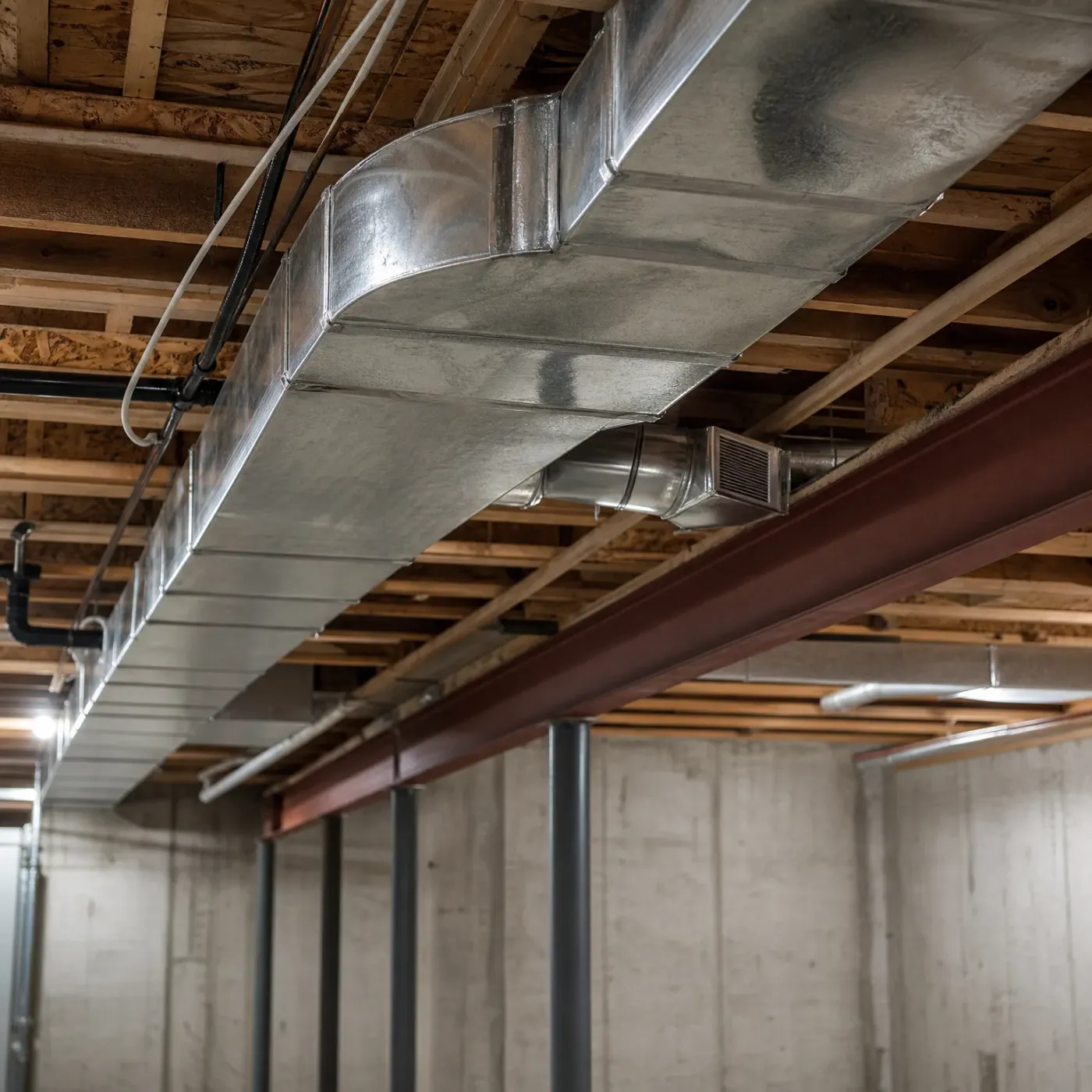
Galvanized sheet metal trunk ductwork with a round branch and register running beneath wood floor joists in an unfinished basement, alongside pipes, wiring, a steel beam and concrete walls.

A pro who works on ducts

Skip calling around for someone who cleans ducts.

A local pro who cleans ducts gets in touch with you.

Skip the search

Sending the form costs nothing.

What's that smell when your furnace turns on?

Walk past a vent and look at the cover. If there's a gray buildup you only just wiped off last week, that's your answer starting to show. Listen when the furnace or AC first kicks on. A musty smell for the first minute or two, one that fades once air's been moving a while, usually means something is sitting in the ducts and getting stirred up each time the system starts. Check how often you're dusting the same shelf or sneezing indoors more than you do outside. None of this is dangerous by itself, but a duct system that's holding onto dust and damp long enough to smell is also one where mold has somewhere to grow, and that's worth catching before it spreads further than the ducts themselves.

Empty basement with bare concrete walls and floor, a small window at left, and exposed wood joists with galvanized sheet metal ductwork and pipes overhead.

New construction, clean runs

These ducts are new, with galvanized metal and flex pipe still bright under the joists. Air moves through them without picking up much along the way. A basement like this hasn't had years for dust to settle into the seams or the flex ridges yet, so a vent cover here stays clean for weeks, not days.

Dusty sheet-metal HVAC ducts with a rectangular vent register run beneath wooden floor joists above an empty concrete-walled basement.

Years of buildup

This is what those same ducts look like after years of dust settling on every surface inside them. The grime coats the metal and the smaller pipe running beside it. Once it's built up like this, it keeps feeding dust back into the air every time the blower runs, which is what shows up on your windowsill days after you've cleaned it.

How do I know if it's my ducts and not just a dirty filter?

A dirty filter and dirty ducts cause some of the same things: more dust in the air, a musty smell, maybe someone sneezing more indoors. So before you pay for duct cleaning, it's worth knowing which one you're actually dealing with. A filter is a five-minute check. Ducts take more work to confirm.

Swap the filter first and give it a few days

Pull the filter and look at it. If it's gray and matted, replace it with a new one and watch what happens over the next several days. If the dust on windowsills and the smell both ease up, that was the filter. If dust is back within a day or two of a fresh filter, or the musty smell is still there when the furnace first kicks on, the filter isn't the source. A filter only cleans air passing through it right then. It can't account for dust already sitting in the duct runs themselves, especially around the blower wheel or in the ridges of flex duct, which is where buildup tends to collect first.

Galvanized sheet metal HVAC ductwork with a vent grille running along a wooden joist ceiling above a bare concrete wall.
Before you get your ductwork cleaning
A basement with a gray furnace on a concrete pad connected to large sheet-metal ducts running along an exposed wood joist ceiling, with PVC pipes and plastic sheeting on the walls.
After you get your ductwork cleaning

Power costs 13.30 cents per kilowatt-hour statewide

At 13.30 cents per kilowatt-hour, the blower in your furnace or AC isn't the expensive part to run, so dirty ducts don't usually show up as a jump on your power bill. They show up as dust back on the windowsill and a furnace that has to push harder through ridges and seams already loaded up.

EIA-861 2025 statewide residential average

  1. Return air pulls dust, hair and skin cells in through the vents first.

  2. That air crosses the blower wheel, where the heaviest debris drops out.

  3. The rest rides through the duct runs, settling into seams and ridges.

  4. A duct cleaning breaks that buildup loose and pulls it out through a vacuum line.

A woman stands in the open front doorway of a single-story house with stone and wood siding while a man in a dark polo shirt and cap walks toward it along a concrete path.

Dust that keeps coming back is the sign, nothing else

You don't need a special tool to tell if your ducts need cleaning. Dust back on the windowsill days after you wipe it down, a musty smell when the furnace or AC kicks on, more sneezing inside than outside. Those three things, checked against a filter you've actually changed, are what the facts come down to.

Finding someone to look at your ducts usually means a few calls, explaining the same thing twice, and sorting through quotes that don't say the same thing twice over. Answer a few questions about what you're seeing and a contractor who handles duct cleaning in your area will reach out to you directly, already knowing what you're dealing with before they walk in.

A wooden table holding a stone vase with a bare branch, two stacked books and a small dark bowl, beside a window with green foliage outside and a sofa in the dim background.
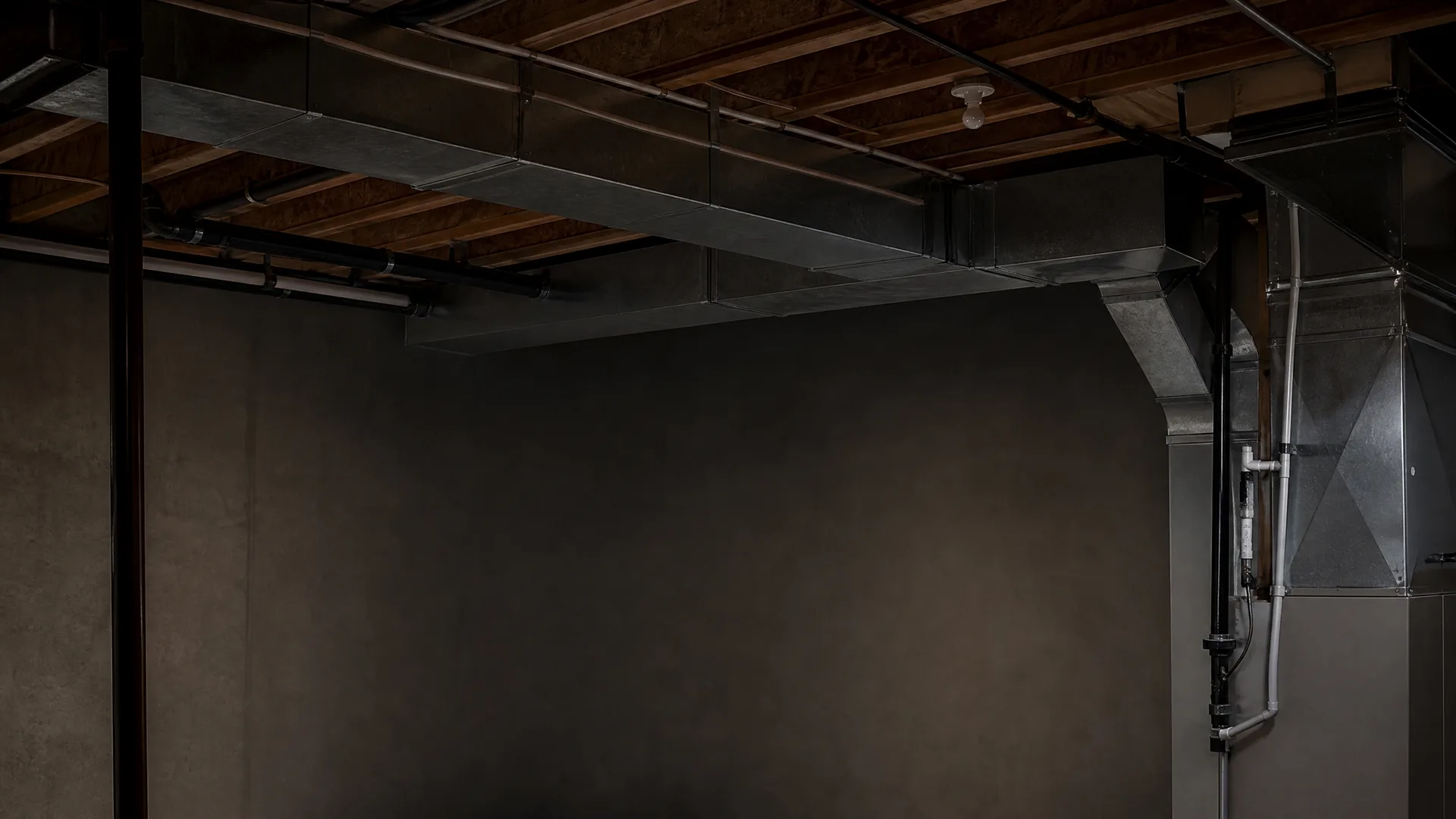
Dim interior with a dark gray wall, exposed wood joist ceiling, sheet-metal ductwork, conduit, pipes and a sprinkler head.

Get your ductwork to the right pro

Answer a few questions about the duct cleaning and skip the search.

Duct and vent cleaningDucts or ventsMissouri
Step 1 of 2

What ZIP code is the job in?