Clean the coil and drain yourself
Coil cleaner and a wet vac can clear a mild smell for a while. You won't know if mold has reached the ductwork or if the drain line is cracked somewhere you can't see.
You walk by a vent and catch that damp, stale smell, maybe worse right when the AC kicks on. It's not strong enough to be mold on the walls, but it's there every time the air runs. In St. Charles County summers, the system runs for months at a stretch, and that smell usually means something sitting in the ductwork the air keeps passing over.
That smell is almost always moisture that never fully dries out. The evaporator coil pulls humidity out of the air all summer, and the water is supposed to drain away through a condensate line. If that line is slow or clogged, or if dust has built up on the coil itself, water sits there and starts to smell. Dust and debris inside the ductwork can hold moisture the same way, especially with how muggy and long summer runs here. Once that smell is in the duct system, every cycle of the blower pushes it through the house. Cleaning the ducts and the coil removes what's actually holding the moisture and the smell, rather than just covering it up until the air runs again.

Your AC coil runs cold and wet all summer long. Every time the system cycles off, that moisture sits on the coil and in the drain pan instead of draining away. Dust and skin cells settle on the wet coil too, and that combination starts to smell. When the blower kicks back on, it pushes air across that damp coil first, straight through your ducts, so the smell is strongest right at startup and fades as dry air takes over.
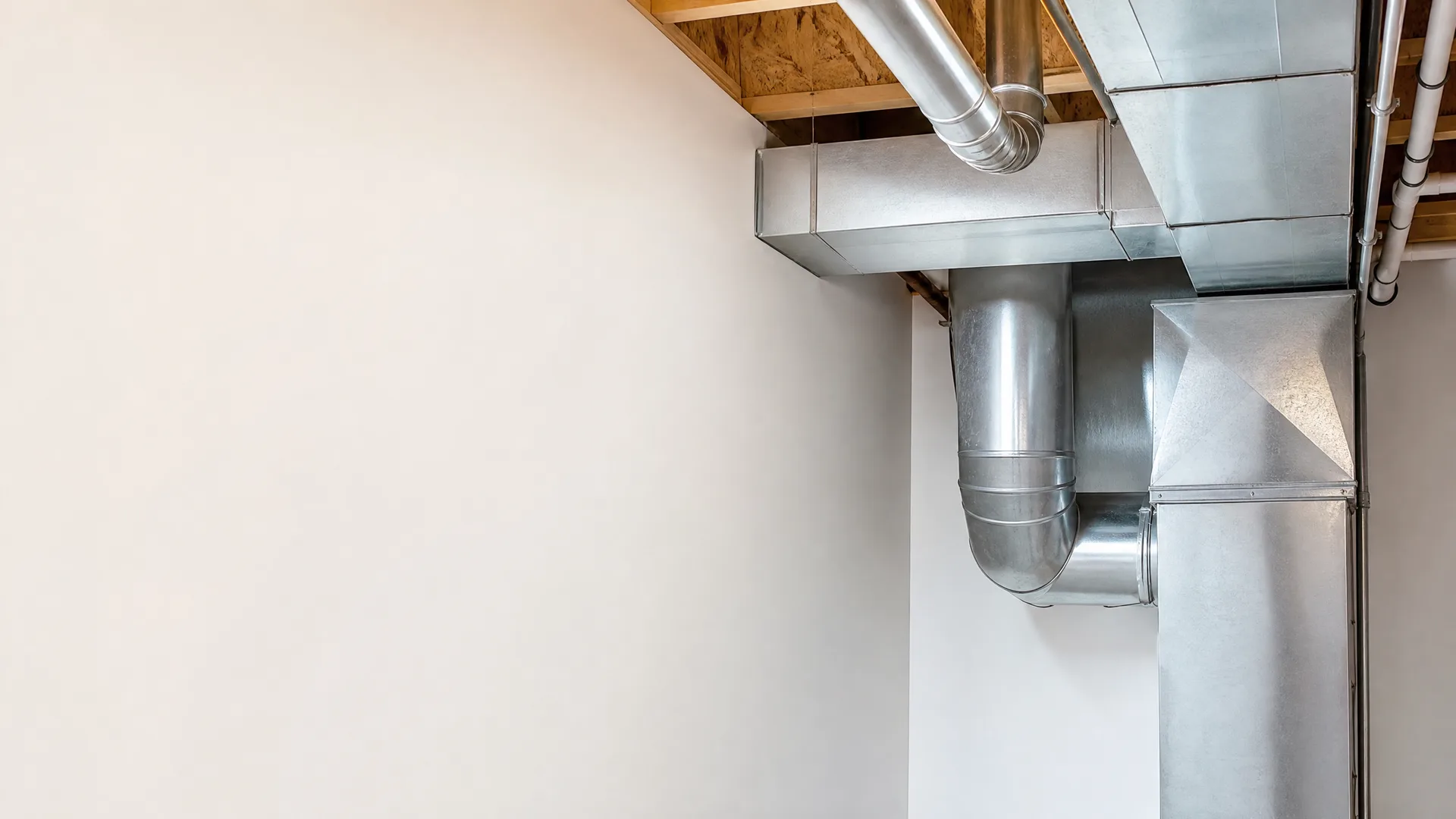
A duct cleaning clears the dust and buildup sitting in the duct runs themselves, the parts you can't see or reach. It doesn't touch the evaporator coil, the drain pan, or the blower wheel, and a musty smell this specific to startup usually traces back to one of those instead. A contractor doing the work can check the coil and drain line while they're in the system, since cleaning the ducts alone won't clear a smell that's coming from somewhere else.
Half the homes here were built by 1994
Your AC runs May through September here, five months of condensation sitting on that coil every single day it's on.
Heat runs October through April
Heat runs October through April, about seven months. A dry furnace season doesn't rinse out what the coil left behind.
Cooling runs May through September
Half the homes in St. Charles County were built in 1994 or earlier, so check how long your ducts have gone uncleaned.
ACS 2020-2024 · NOAA nClimDiv 1991-2020
Most of the time the ductwork gets blamed and the coil is the real source. The evaporator coil sits wet for hours every time your AC runs this time of year, and anything that keeps it wet longer than it should be gives mold and bacteria a place to settle. A coil caked with dust holds that moisture against its fins instead of letting it drain off between cycles, so the smell builds instead of clearing out. The condensate line is the other common spot. That line is supposed to carry water from the drain pan outside, and if it's clogged or sagging somewhere along its run, water backs up and sits in the pan instead of leaving the house. Standing water in a warm pan for days at a time is going to smell, and that smell travels straight into the air the system pushes out. If your ducts run through a crawlspace or attic, a gap in the insulation or a loose seam can let humid air into the duct itself, which adds another source. And if a return vent pulls air from a damp basement or crawlspace, it's drawing that air straight into the system before it ever reaches the coil. Cleaning the coil, the pan and the duct runs gets rid of what's already built up. If the drain line is clogged or a duct seam is open, that part needs to be fixed too, or the same smell shows up again within a season.


Coil cleaner and a wet vac can clear a mild smell for a while. You won't know if mold has reached the ductwork or if the drain line is cracked somewhere you can't see.
A contractor can check the coil, drain pan and line, and the ducts themselves, then tell you exactly where the smell is coming from and what it takes to clear it.




That smell is riding on every cubic foot of air the system pushes into your bedrooms and your kids' rooms, five months a year, every time the AC cycles.
A wet coil you can't see and don't clean doesn't go away on its own. It sits there growing until someone opens the cabinet and looks.
At 12.83 cents a kilowatt-hour, running the blower longer to chase a smell doesn't hit your bill hard. That's worth knowing before you put off a coil or drain inspection to save money. The cost that matters here is a dirty coil feeding mold into your air, not the electricity to fix it.
EIA-861 2025


Answer a few questions instead of calling shop after shop.
Get matched with someone who does this kind of work in St. Charles County.
No fee to send it, and nothing to sign.
A technician inspects the coil, drain pan and duct runs for buildup.
Agitation tools knock dust and mold loose from duct walls.
A high-powered vacuum pulls the loosened debris out through the access points.
The coil and drain line get cleaned so moisture stops collecting.

It's a Saturday morning in April and the sun is coming in low across the living room. You're on the couch with coffee, and the light catches the ceiling vent grille just right. There's a soft gray film on the slats, and the same dust sitting on the side table and the TV stand underneath it. You ran the AC for the first time this week, just to test it before the heat sets in, and that's when you noticed the smell. You look up at the vent and wonder how long that dust has been collecting there, and how much of it you've already been breathing since the system kicked on.

Every room on that duct run gets the same air, so if the smell is strongest in one bedroom, that's likely the one closest to a bad connection or a return pulling in damp basement air. Kids and anyone with allergies or asthma notice it first, usually as stuffiness or a cough that clears up when they leave the house. Guests smell it walking in the door even when you've stopped noticing it yourself.
Chasing it with air fresheners or a new filter treats the air in the room, not the coil or drain pan where the smell starts. A contractor who's seen this before in a St. Charles County house can tell you in one visit whether it's the coil, the drain line, or buildup further down the duct run, instead of you working through fixes one at a trip to the hardware store at a time.


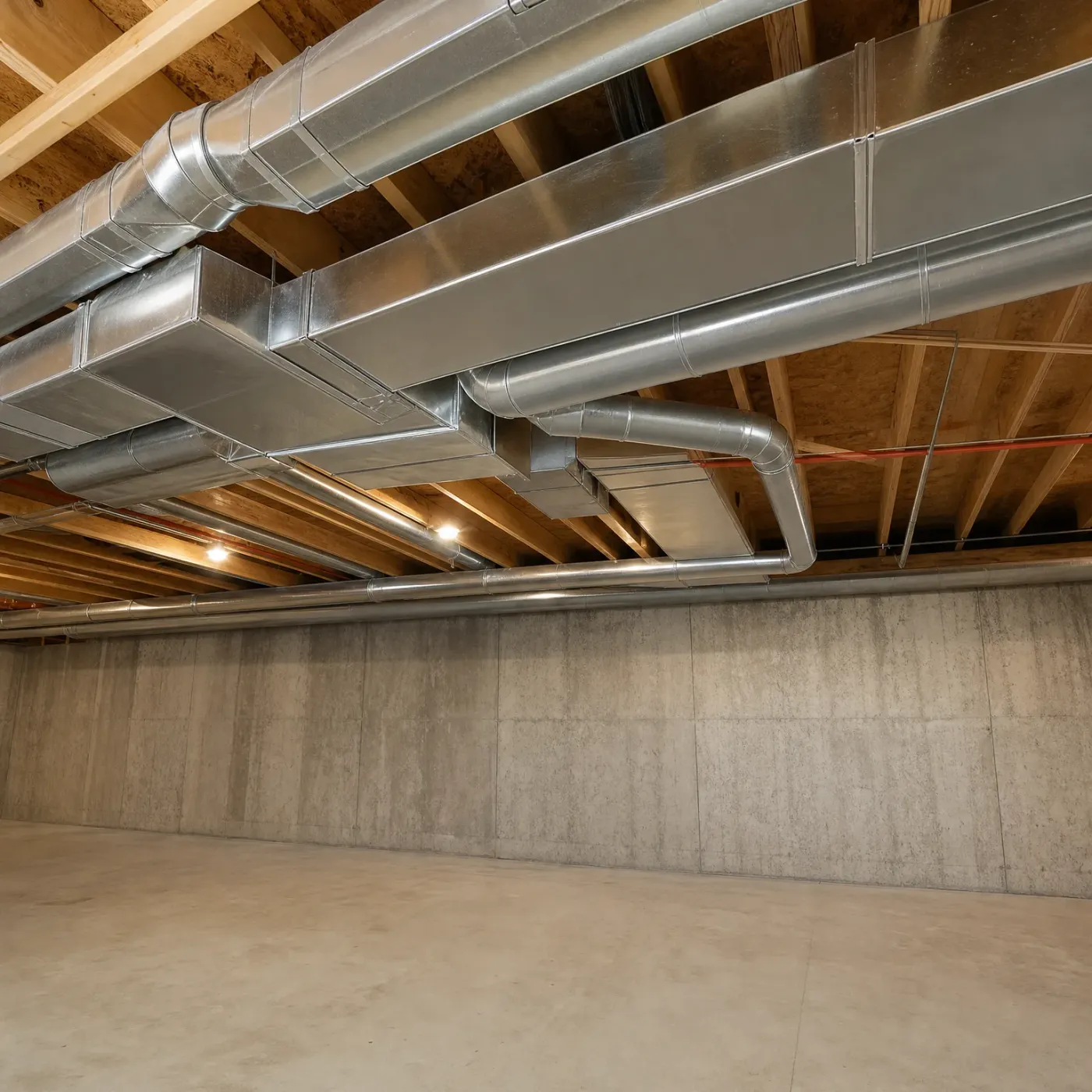
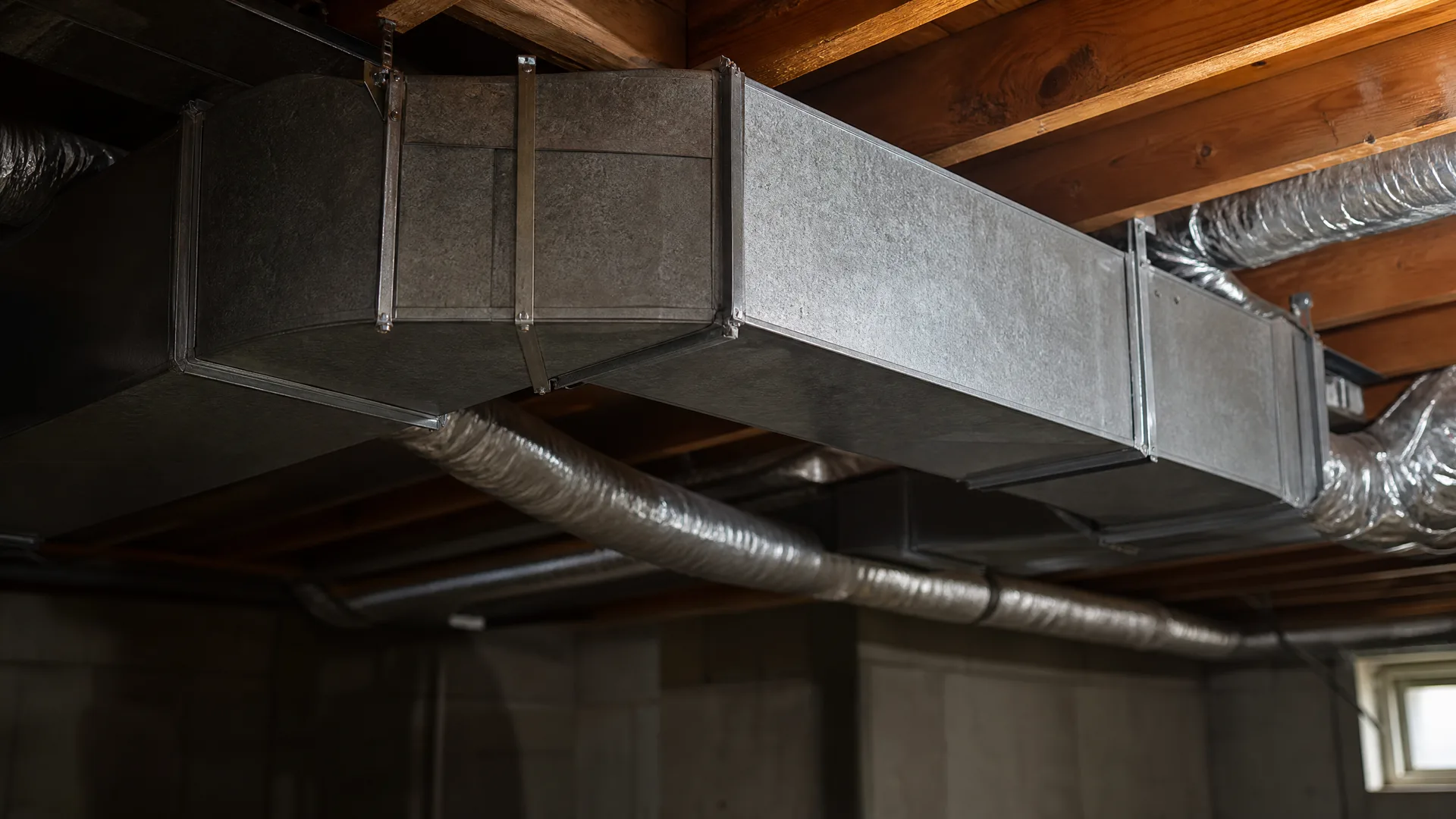
This is what a basement duct system looks like when air moves through it the way it should. The metal stays dry, the furnace sits idle in the off months, and nothing on those joists is holding onto dust or moisture. No smell rides along with the air coming off this setup.

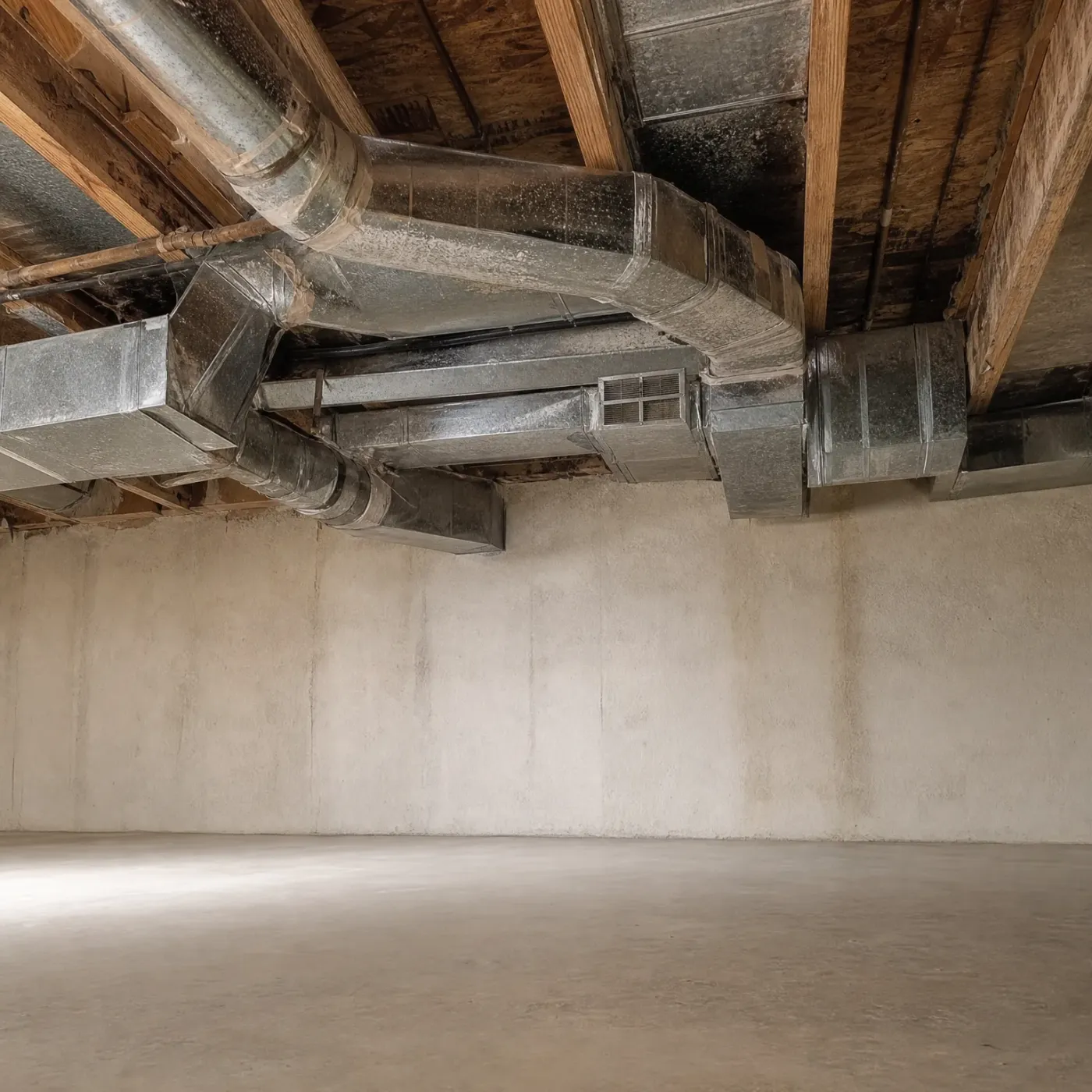
Here the ductwork runs the same joists, but the metal and flex duct are doing the opposite job. Dust and buildup sit on the duct walls and inside the runs, with nowhere to go but out through that supply vent. This is the setup that keeps pushing the musty smell into your rooms.
The musty smell from your vents comes down to moisture sitting somewhere it shouldn't, usually the coil or the drain pan, feeding mold that rides the air into every room on that duct run. A visual check and a cleaning settle it either way. What's harder to settle on your own is who to call. You could spend an evening searching for duct cleaners around O'Fallon, calling a few, explaining the same thing about the smell and when it shows up, then sitting with quotes that are hard to compare because you don't know what each one actually checked. That part is the slog, not the cleaning itself. Answer a few questions about your system and your house, and a contractor who handles this in St. Charles County homes gets in touch with you directly. You'll have made the calls without making the calls.
A local pro for your ductwork cleaning