60 percent
Indoor humidity above this level gives mold what it needs to keep growing. St. Louis summers push many homes past it unless the AC is keeping up.
Mold in your air ducts usually means moisture got in somewhere. In St. Louis that often comes down to summer humidity meeting a cold supply duct, which sweats the way a glass of ice water does, and keeps the metal damp enough for mold to grow. A clogged drain line or a duct running through a damp crawlspace can do the same thing. You'll usually notice it as a musty smell when the air conditioner kicks on, or dark spots around the vent covers. It doesn't go away by running the fan more or changing the filter, since the mold is growing inside the ductwork itself, past where a filter reaches. Left alone, it keeps releasing spores into the air every time the system runs, all summer long. Cleaning the ducts removes it, but whatever is keeping that moisture in place needs to be fixed too, or it comes back.


Mold needs moisture and something to eat, and a duct system can supply both. Dust settles inside the runs over time, and that dust is enough food for mold once the moisture shows up. In St. Louis, that moisture often starts as condensation on a supply duct during the muggy months, and it tends to form first at the seams, since the metal there is thinnest and cools the fastest. A dirty evaporator coil makes this worse. It holds onto moisture longer after the AC cycles off, so the air right around it stays damp. Flexible duct adds another problem. Where it sags or gets crushed, water sits instead of draining out with the airflow. Once mold takes hold anywhere in the system, the air handler carries spores to every room the ducts feed, not just the room closest to the problem. A musty smell that gets stronger when the AC turns on is usually a sign the growth is inside the ductwork itself.




Indoor humidity above this level gives mold what it needs to keep growing. St. Louis summers push many homes past it unless the AC is keeping up.
Gaps at joints and seams let humid attic or crawlspace air reach the metal, so one damp spot can reappear after cleaning if the leak isn't found.
Heat runs October through April
Your furnace runs about seven months a year here, October through April, so cool duct metal and warm indoor air aren't in contact for long before the season flips.
Cooling runs May through September
Your AC runs about five months a year here, May through September, and every one of those months is enough time for a damp duct to grow mold if moisture is getting in.
Power here costs 13.27 cents per kilowatt-hour
Power here runs 13.27 cents per kilowatt-hour, cheap enough that running your AC harder to control indoor humidity isn't the expensive part of fixing this.
NOAA nClimDiv 1991-2020 · EIA-861 2025

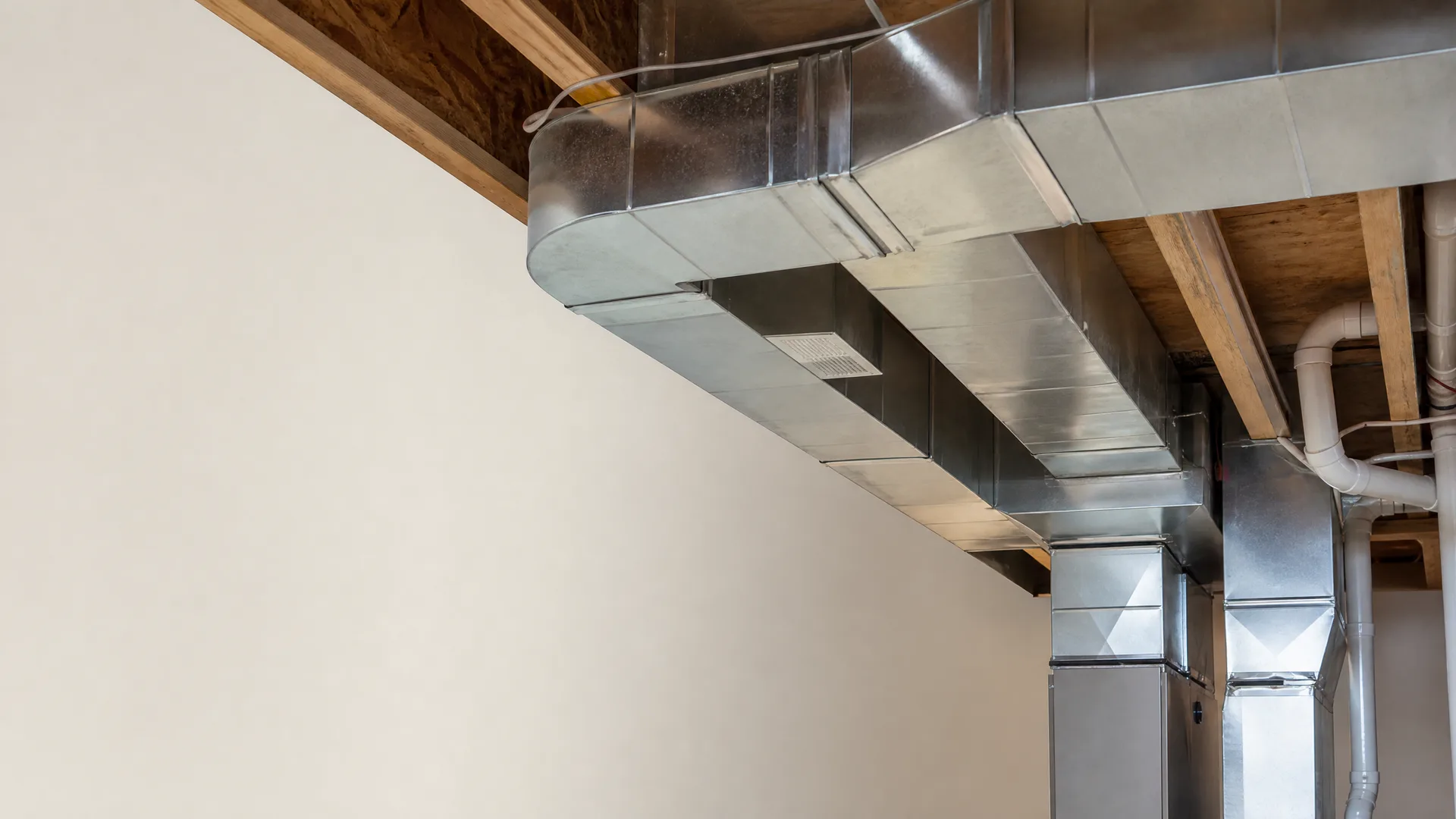
This is what a basement duct system looks like when moisture isn't a problem. The metal stays dry, the fiberglass batts along the walls stay intact, and there's no sign of sweating on the ducts or the joists around them.

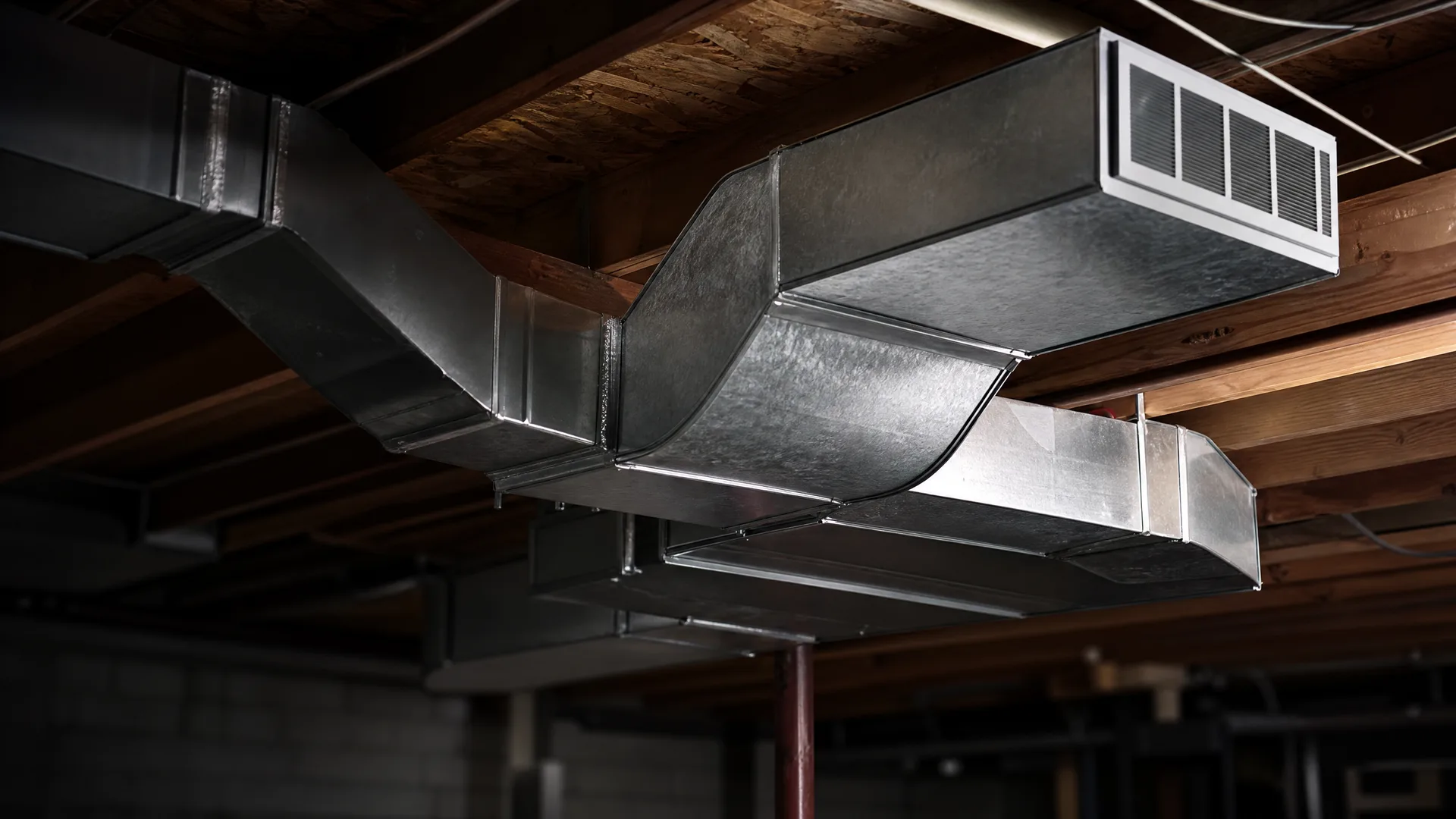
Here the ducts run exposed across concrete and joists with no insulation in sight. Bare metal like this cools faster than a wrapped duct, so it sweats sooner when humid air sits against it, and that moisture is what mold needs to take hold.
You notice it most when the air first starts moving, a damp, earthy smell that fades after a few minutes but never fully goes away. Maybe there's a room that stays stuffier than the rest of the house, or a vent cover with dark specks around the slats that wipe off but come back. Some households notice a family member's allergies act up indoors, or someone's cough that eases when they leave the house. None of this is dramatic on its own. Left alone, it tends to keep coming back every summer, and it's a sign the moisture behind it hasn't been dealt with.
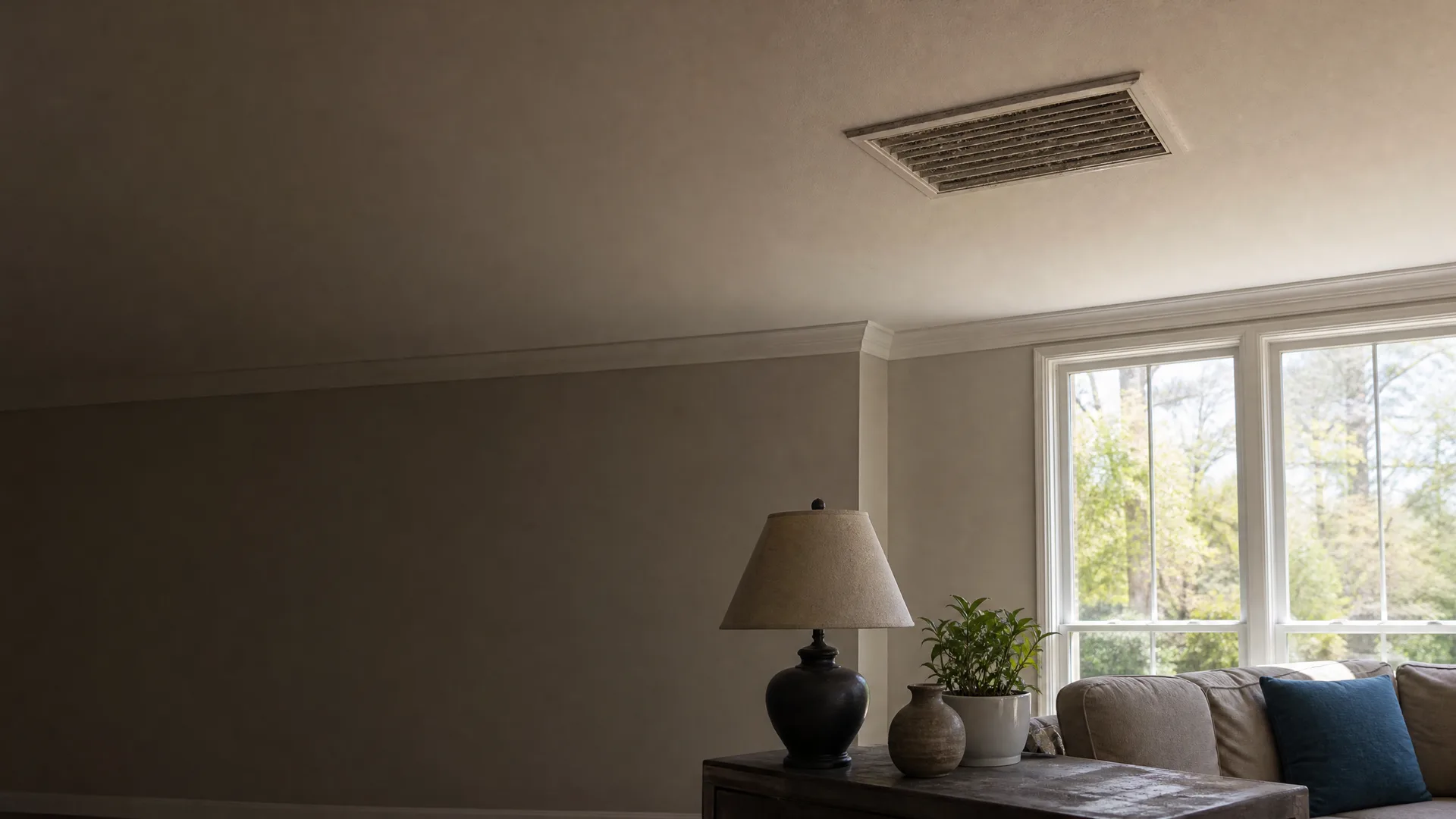
It's a Saturday afternoon in April, warm enough that you've had the windows cracked. Sun comes in low across the living room, and you notice it then, the way light does that: a soft gray ring of dust around the ceiling vent, and a film of it on the bookshelf underneath, on the lamp, along the top edge of the picture frames. You run a finger over the end table and it comes back dark. The vent hasn't looked clean in a while. You hadn't thought much of it until the air kicked on a minute ago and you caught that smell again, faint, but there.
Skip searching for a duct system pro and answer a few questions instead.
No fee to send it, and nothing to sign.
Mold doesn't start everywhere in a duct system at once. It starts where moisture collects, and the layout of your ductwork decides where that is. If your return duct draws from a basement or crawlspace, any dampness down there rides the airflow straight into the system, past the furnace and across the evaporator coil, before a single room gets conditioned air. The coil itself is a common starting point. It's designed to get wet during a cooling cycle, but if it doesn't dry fully between cycles, mold can take hold right there and then spread into the supply ducts downstream. Flex duct adds another variable. Where it sags between supports, condensation pools at the low point instead of draining or evaporating, so you'll often find mold concentrated at those dips rather than spread evenly through the system. Location matters too. A duct run through an attic or crawlspace that isn't conditioned swings in temperature more than one boxed inside conditioned space, and that swing is what drives condensation on the duct wall. Older duct systems lined with fiberglass complicate cleanup further. Bare sheet metal sheds moisture and lets a cleaning crew get at whatever grows on it, but fiberglass holds water against its surface and can trap spores inside the material itself, where a cleaning can reduce the mold but not always remove it completely.




You can vacuum out a return grille or wipe down a few feet of accessible duct near the furnace, and it will look better right away. But most of the run is hidden in the basement joists or behind walls, and a shop vac doesn't reach the mold sitting past the first bend. If moisture is still getting into the system, whatever growth is out of reach keeps spreading, and spores keep moving through the house every time the blower turns on. You end up cleaning the same few feet over and over without touching the source.
A full cleaning reaches the whole run, not just what's visible from the furnace room, using equipment that gets past the bends and into the branch lines. That matters in St. Louis, where humid summer air keeps feeding mold that starts at a sweating joint. A contractor doing this work can also tell you where the moisture is getting in, whether that's a gap at a seam or a return pulling damp basement air. Instead of calling around to find someone who does this and explaining the smell and the gray film twice, you get matched with someone who handles it.
Those seven months are seven months of warm air moving through ducts that may still be holding moisture from summer. Mold doesn't need the furnace off to survive, just a damp surface it already found. If it took hold last summer, the duct system carries it right into heating season.
NOAA nClimDiv 1991-2020

Some homes in St. Louis never give mold much to work with. The crawlspace stays dry, the basement doesn't sweat in July, and the AC keeps up well enough that indoor humidity doesn't sit high for weeks at a stretch. In a house like that, a duct system can go years without a mold problem, even with the same gas furnace and the same humid summers everyone else deals with. Dry conditions, not luck, are what's doing the work.
Other homes fight the same problem every year. Maybe the crawlspace floods a little every spring, or a bathroom fan vents into the attic instead of outside, or the basement stays muggy all summer no matter what the thermostat says. In that kind of house, cleaning the ducts helps, but the mold comes back within a season or two because the moisture that fed it never left. Finding where the water is getting in matters as much as the cleaning itself.

Mold in a duct system comes down to moisture that found a way in and a surface that held onto it. St. Louis gives it plenty of chances, long muggy summers, a furnace that runs most of the year, basements and crawlspaces that sweat before anyone notices. None of that means your house is doomed to it. It means the ducts need a real look, not a guess from the symptoms alone.
A contractor who cleans ducts for a living can tell you what's actually in yours and whether the moisture problem behind it is still there or already fixed. Getting matched with one means you skip calling around St. Louis, describing the musty smell three different times, and sorting through quotes that may not even be looking at the same problem. You explain it once, to someone who comes out and checks.

Find a duct system cleaning pro in St. Louis
