
Why your vents smell musty in Missouri
Why do my vents smell musty?
You turn on the air or the heat and that musty smell rolls out of the vents. In Missouri, where summers get sticky, that smell usually shows up most in July and August, but it can linger into the colder months too once it settles into the ductwork. It makes you wonder if something is growing in there, and whether it's worth looking into before it becomes a bigger problem.
Mold or mildew is growing inside your ductwork
That smell is almost always moisture sitting somewhere in your duct system, usually mixed with dust that never gets cleared out. Missouri's humid summers push a lot of moisture through the air your system handles, and if any of it condenses inside the ducts instead of draining away, it gives mold and mildew a place to settle in the dark, closed-off space. Once that happens, every time air moves through, it carries the smell into the room with it. The smell doesn't go away on its own because the ducts don't dry out or clean themselves. Running the system longer or changing the filter more often won't touch what's already built up inside the ductwork itself. Getting the ducts cleaned out is what actually removes it.

The windows have been open since Saturday, finally warm enough to air the place out. Sun comes in low across the living room and catches it: a gray film sitting on the ceiling vent grille, thick enough to shadow the slats. You look down and the side table under it has the same dust, a fine layer you can write your name in. You run a finger along the grille and it comes back dark. The heat hasn't kicked on in weeks and the air conditioner hasn't started yet either, but the vent still breathes out that same stale smell when the blower kicks on for a minute, like a closet that hasn't been opened.


Your central AC pulls moisture out of the air as it cools, and that moisture has to go somewhere. Some of it stays on the metal inside the ducts after the system shuts off, especially during a muggy Missouri summer when it's running for hours at a stretch. Dust in the air settles on that wet metal and the two together make a film. Mold spores need exactly that to grow: something damp with dust mixed in. The evaporator coil itself stays wet while the system runs, and condensation near it can work its way into the duct sections closest to the unit. Every time the blower kicks on, it pushes air straight across that buildup and into every room the ducts reach. Switching to the furnace in winter doesn't undo any of it. Gas heat dries out the air in the house, but it does nothing for what's already sitting inside the ductwork. By the time next summer's humidity rolls back in, the mold has had months to spread.
How the smell actually gets there
- Humid air moving through your ducts all summer leaves moisture behind on the metal long after the AC shuts off.
- Dust mixes with that leftover moisture and turns into a film that mold spores can take hold of.
- A central AC's evaporator coil stays wet during a cooling run, and condensation near it can drip into nearby duct sections.
- The blower keeps pushing air across that damp buildup every time the system cycles, which is what carries the smell into each room.
- Once mold is established on duct interior surfaces, running the system only spreads spores rather than clearing them out.
- Gas furnace heat in the winter dries the air but doesn't remove what settled into the ducts over the summer.


Finding a pro stops being your job

Your duct cleaning request goes to one local pro.
You're not committing to anything by asking.
How mold actually gets in your ducts
- Mold needs three things to grow: moisture, dust for food, and a dark enclosed space, and ductwork gives it all three.
- A musty smell means mold has already colonized the duct lining or the coil, not that it might start soon.
- The return side of the system pulls household dust, skin cells, and fabric fibers into the ducts, where they settle on damp metal.
- In flex duct, mold can grow inside the insulation layer itself, not just on the inner surface you'd see with a flashlight.
- The smell often gets stronger right when the AC kicks on, because moving air carries spores out through the grille and into the room.
- A dirty filter lets more dust reach the ducts, but swapping the filter does nothing to remove mold that has already taken hold.
Mold needs three things, and a duct system gives it all three at once: moisture, dust to feed on, and a dark space where nothing disturbs it. That's why the smell shows up in the first place. The return side of your system is pulling air out of every room, and that air carries dust, skin cells, and fabric fibers with it. All of that settles inside the ducts, and if there's any moisture on the metal, which there usually is after a Missouri summer, the dust has something to stick to and the mold has something to eat. By the time you can smell it, the mold isn't starting up. It's already established on the duct lining or on the coil, and it's been there a while. Flex duct makes this harder to deal with, because mold can grow inside the insulation layer itself, not just on the surface you'd see if you shined a flashlight down the vent. You can change the filter every month and it won't touch any of this. A clean filter keeps new dust from piling on top, but it does nothing for what's already growing further down the line. And the reason the smell seems to get worse the second the AC kicks on isn't in your head. Moving air pushes spores out through the grille and into the room, which is exactly when you notice it.

What a stuck damper does
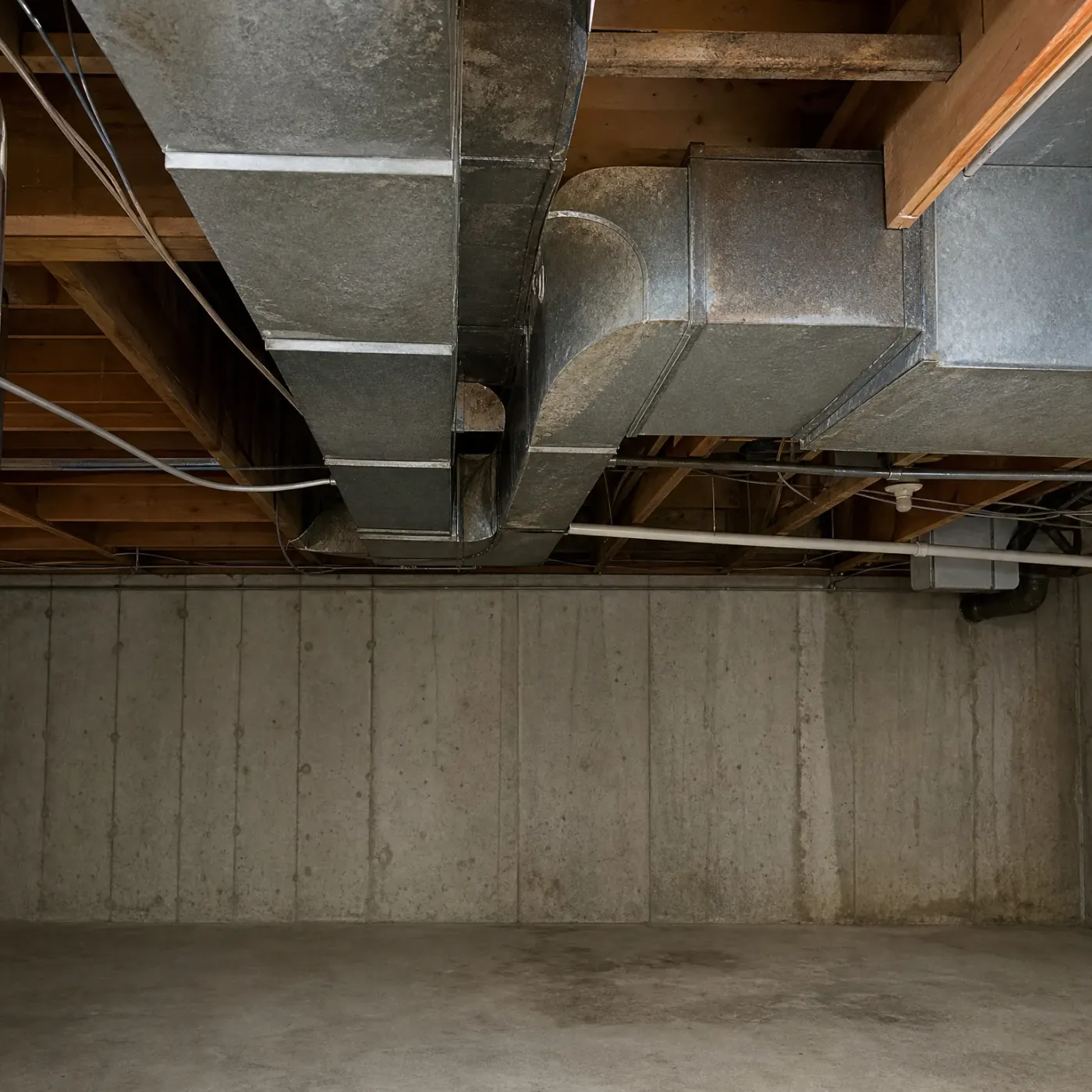
A duct system has dampers that balance airflow between rooms, and a return side that pulls air back to the furnace or the coil. When a damper sits closed for months, the air behind it barely moves. Still air drops its moisture onto the duct wall instead of carrying it through, and that's where a mold colony gets its start. The same thing happens in a branch line feeding a room you keep shut most of the year. Missouri's humidity gives that moisture a steady supply from spring through fall, so a duct run that never clears out can smell long before the rest of the system does.
Why gas furnaces don't fix it
Most homes here heat with gas, and a gas furnace moves air the same way an electric one does, through the same ducts, past the same coil. Running the heat in January doesn't dry out a duct that picked up mold over the summer. It just pushes that smell through the house along with the warm air. Some homeowners notice the odor fades for a few weeks once the furnace kicks on, then comes back once the humidity climbs again in spring. That's the mold cycling with the moisture, not going away. Cleaning removes what's actually built up in there instead of waiting for the season to mask it.
Power costs 13.30 cents per kilowatt-hour statewide
At 13.30 cents a kilowatt-hour, running the blower longer to fight a musty smell doesn't hit your bill hard. That's worth knowing before you start propping doors open or running fans around the clock to chase the odor. The smell is still coming from the ducts, not the air moving through them.
EIA-861 2025 statewide residential average




The musty smell is mold or mildew sitting in your ductwork, and moving air through it with a fan or an open window won't touch it. It takes someone physically cleaning the supply and return sides, the coil, and the plenum to get rid of it. A duct cleaner who works Missouri summers sees this same gray film and the same stuck dampers often enough to know where to look first and what usually caused it in a house like yours. Sending the request connects you to one licensed local contractor for the job, not a handful of companies competing for your callback. Once that's sent, you're done chasing it down. The smell came from somewhere specific inside your system, and someone who knows that system can find it and clear it out.

Let someone else find the pro
Only one pro gets your request, so you hear from one company.
It costs nothing to send, and you don't have to hire anyone.