Signs your furnace is undersized for a Missouri home

Describe your furnace job, and a local pro who handles it gets in touch.

Get matched

A furnace that can't keep up shows it in a few ways. It runs almost the whole time on the coldest days instead of cycling off. Some rooms stay cold while the thermostat says the house is warm. The air coming out of the vents feels only lukewarm instead of hot. This happens because the furnace was sized for a smaller house, or for one with less glass and less exposed wall than yours, and Missouri winters push a stretch of real cold that forces the undersized unit to run flat out just to hold the line. A furnace sized right for your house cycles on, heats it, and shuts off. One that's too small never gets that chance. It also means your gas bill is paying for a lot of runtime that still isn't buying you a warm house, since gas is how most homes here heat anyway. If this sounds like your house, the fix isn't a repair. It's a furnace sized for the house you actually have.

A gray-haired bearded man in a dark coat and scarf dusted with snow stands smiling in a dimly lit entryway with a white front door, a side table with a lit lamp, an oval mirror, and a patterned rug.
An older bearded man in a dark snow-dusted coat and gray scarf stands just inside a dimly lit home entry, with a framed picture, lit table lamp, and an adjoining room with a fireplace behind him, and snow visible through the open door.
A gray-haired, bearded man in a dark snow-dusted coat stands smiling in a dimly lit entry hall with a staircase, a lit table lamp, a framed picture, and a living room visible through a doorway.
An older man with gray hair and a beard, wearing a dark jacket dusted with snow, stands smiling in a dimly lit hallway with lamps and a living room visible behind him.

Winter nights average 25°F statewide

That 25°F nighttime average is what your furnace is sized against, not the rare single-digit night. If it's already straining to hold the house at a normal 25°F, a sizing problem is showing up well before winter gets hard.

NOAA nClimDiv 1991-2020 county normals weighted by homes

What an undersized furnace looks like

A furnace sized right for your house cycles on, heats the place up, and shuts off. One that's too small for the job runs long stretches without ever shutting off, especially overnight when it's working against that 25°F average. You'll see a gap between rooms too. The room over the garage or at the end of a long duct run stays noticeably cooler than the room with the thermostat, because there isn't enough heat being produced to make it all the way through the house evenly. A furnace matched to the house doesn't have to work that hard to cover the distance.

What a properly sized furnace looks like

A furnace built for your square footage cycles two or three times an hour on a cold day, runs for a while, then rests. The air at the vents feels distinctly hot, not warm, because the unit has the output to raise the temperature of the air it's pushing. Every room lands within a couple degrees of the thermostat setting, including rooms farther from the furnace itself. None of this depends on the coldest night of the year. It shows up on an ordinary January day, because the furnace was sized for your house rather than installed because it was the one on the truck.

A woman wrapped in a thick beige fleece blanket sits on a sofa with an open book on her lap, beside a lit table lamp, with a frost-covered window behind her.
A gray-haired woman in a cream knit sweater stands in a dimly lit kitchen at night, looking to her right, with a round loaf of bread in the foreground and a dark window and potted plant behind her.

Why running longer wears it out faster

A furnace cycles off so the parts inside get a break. The blower motor stops, the heat exchanger cools down, the igniter isn't working. An undersized unit skips most of that rest. On a cold Missouri night it can run for hours straight trying to close a gap it was never built to close. Motors and igniters that cycle normally last years. Motors that run near-continuously through a Missouri winter wear against that expectation every night it happens, not just on the coldest ones.


What the gas bill can tell you

Gas is cheap in Missouri, which is part of why a sizing problem can hide for a while. But an undersized furnace still burns more gas per month than a correctly sized one, because it's drawing fuel for longer stretches to make up ground it can't close. If your gas bill has climbed compared to last winter, and nothing else at the house changed, that's worth checking against how long the furnace is actually running each day.

An older beige furnace with two louvered vent panels stands on a concrete basement floor, connected to galvanized ductwork and a metal flue pipe, with gas piping and flexible conduit on the wall behind.
Before you get your furnace installation
A beige high-efficiency furnace in an unfinished basement, with white PVC vent pipes, a yellow gas line, metal ductwork, and exposed wood framing on a concrete floor.
After you get your furnace installation
An unfinished basement with a concrete floor, pink insulation on one wall, exposed joists, galvanized sheet-metal ductwork, PVC vent pipes, and a tall gray furnace with attached gas and electrical lines.

A local pro for your furnace installation

Send the form and the search for an installer is over.

A local installer who puts in furnaces gets your project.

Find a furnace pro

There's no charge for the request.

Is your furnace actually too small for your house

Walk through your own house and check. Is the room farthest from the furnace noticeably colder than the one closest to it, even with the thermostat set the same for both. Does the furnace sound like it's running when you fall asleep and still running when you wake up. Is your gas bill climbing faster than the temperature outside would explain. A furnace working past what it was built for pushes the heat exchanger and blower harder than they're meant to run, and parts that don't get a break wear down sooner. Left alone through a few Missouri winters, that's a furnace more likely to need a repair call, or a full replacement, before its time.

  1. Thermostat calls for heat and the furnace ignites.

  2. Blower pushes warm air through the ducts into each room.

  3. Furnace keeps running, trying to reach the set temperature.

  4. Heat exchanger stays hot instead of cycling off to cool.

Undersized vs. Properly Sized Furnace

Undersized furnace

  • It runs most of the night in single digit or teens weather and the house still doesn't reach the set temperature.
  • Rooms at the far end of the ductwork stay noticeably cooler than the room where the thermostat sits.
  • The blower rarely gets a break, so the heat exchanger and igniter see far more hours of use each winter.
  • Adding a room or finishing a basement pushes a furnace that was already borderline past what it can cover.
  • You end up running space heaters in one or two rooms just to get them comfortable.
  • The gas bill climbs faster than the weather alone would explain, because the furnace is working overtime to catch up.

Properly sized furnace

  • It cycles off and on through the night, even when it's in the teens outside, instead of running straight through.
  • Every room reaches close to the same temperature once the thermostat is satisfied.
  • The heat exchanger and blower motor get regular rest between cycles, which is how they're built to run.
  • It has some reserve capacity, so a cold snap or an added room doesn't push it past its limit.
  • The gas bill tracks with how cold it's been outside, not with the furnace struggling to keep up.
  • You don't need a space heater anywhere in the house to make up for a cold room.
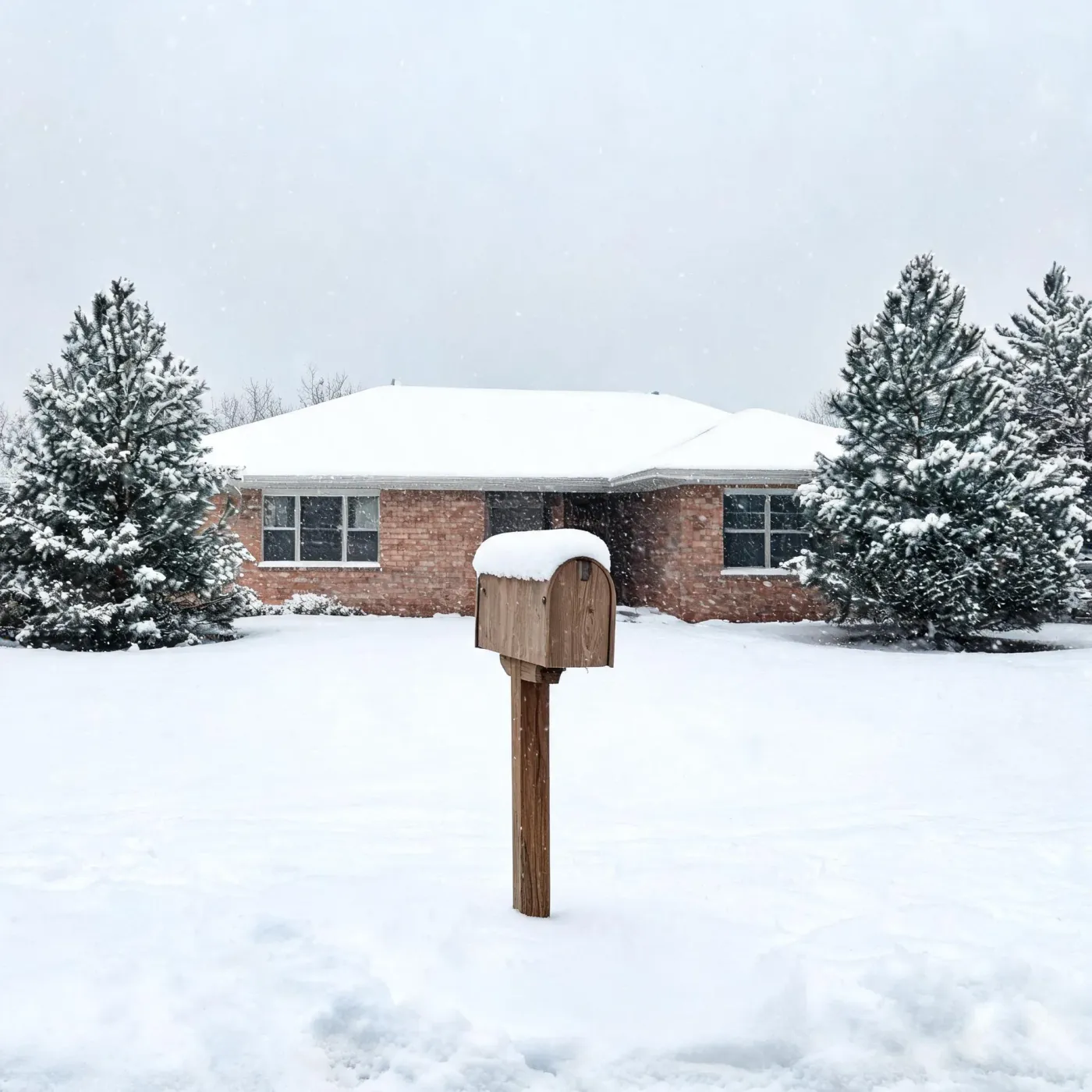
A snow-covered wooden mailbox on a post stands in a snowy yard in front of a single-story brick house flanked by snow-laden evergreen trees during falling snow.

The National Weather Service puts the statewide average winter nighttime low at 25°F. That's an ordinary night, not a cold snap. A furnace sized right for your house holds its temperature through nights like that without much trouble. One that's too small keeps falling behind as the night goes on, so by early morning the house has lost ground and the thermostat still hasn't caught up. You'd notice it most in the coldest part of the house, and in how long the furnace stays running past when it should have shut off.

NOAA nClimDiv 1991-2020 county normals weighted by homes

A gray high-efficiency furnace in a basement, connected to sheet-metal ductwork on the left and white PVC vent pipes above, with black gas and drain piping and an exposed wood-stud wall with OSB sheathing on the right.
A furnace sized right for your house keeps the basement calm. It heats, shuts off, and waits for the next call.
An older gas furnace with two louvered front panels stands on a concrete basement floor beside galvanized sheet-metal ductwork, pipes, and a weathered concrete wall.
A furnace that's too small never gets that rest, and years of running long stretches show on the cabinet and the floor around it.
A dimly lit interior with wood plank flooring where a small portable heater with a glowing orange element sits near an open doorway, with a stove at left, kitchen cabinets and a potted plant at right, and a wooden table and chair in the foreground.

It's just past six and still dark outside. You're in the kitchen in your socks, waiting on coffee, and the space heater is going by the table because the floor is too cold to stand on otherwise. The basement door behind it is open, you left it that way last night to listen for the furnace, and it's still running, the same low sound it's had on and off since midnight. The thermostat says 68. It doesn't feel like 68. You've got a hand on the vent and the air coming up is warm, not hot, and you're already thinking about whether to just leave the space heater plugged in through breakfast.

A man seen from behind raises his hand to wave at a woman standing in the open front doorway of a single-story house with gray shingle siding, white columns and a gabled porch entry.

A furnace that's too small for your house won't fix itself

The signs don't go away on their own. Cold rooms stay cold, the furnace keeps running past the point it should shut off, and the strain shows up on the equipment a little more each winter. If you've walked through your own house and found that gap between rooms, or listened to the furnace run long after it should have caught up, you already have your answer.

What changes from here isn't you chasing down a contractor and explaining your situation from scratch. Once you send the details on your house, that part is handled. A contractor who works on Missouri furnaces gets matched to your home and reaches out to you, so the next step is theirs to carry, not yours.

A living room corner with a beige upholstered armchair holding navy and striped cushions, a small round wooden side table with a carved bowl and a potted green plant, a framed landscape picture on a pale wall, built-in shelving, and a curtained window.
A gray high-efficiency furnace with two access panels stands on a concrete basement floor, connected to sheet-metal ductwork and white PVC vent pipes, with wood framing and a gas line nearby.

Get the right pro for your furnace

New system or replacementFurnace or heatingMissouri
Step 1 of 2

What ZIP code is the job in?