Birds nesting in a dryer vent in St. Louis, MO
Hand it offSpring in St. Louis is when birds start looking for a place to build, and a dryer vent hood with a loose or broken flap is an easy pick. Once there's a nest in there, lint has nowhere to go and your dryer has to work harder to push air through. Left alone, that's a fire risk, not just a nuisance. You don't want to be pulling nesting material out of a vent yourself, especially if it runs up through a wall or the roofline. This is work for someone who clears vents for a living and knows how to check the whole run, not just the opening. Fill out the form and this stops being something you have to figure out on your own. It goes to one licensed contractor near you in St. Louis, someone who deals with this exact problem every spring and knows how to get a vent clear and guarded against the next nest. No chasing multiple companies, no sorting through calls. Just one person who knows the work, handling it.
Why are birds nesting in my dryer vent?
You went out to check the dryer vent hood outside your house and heard chirping, or saw grass and twigs sticking out around the flap. It's spring in St. Louis, and you're not imagining it. Something has decided the warm, sheltered spot where your dryer exhausts air is a good place to raise a family, and now you're wondering how that happened and what it means for your dryer.
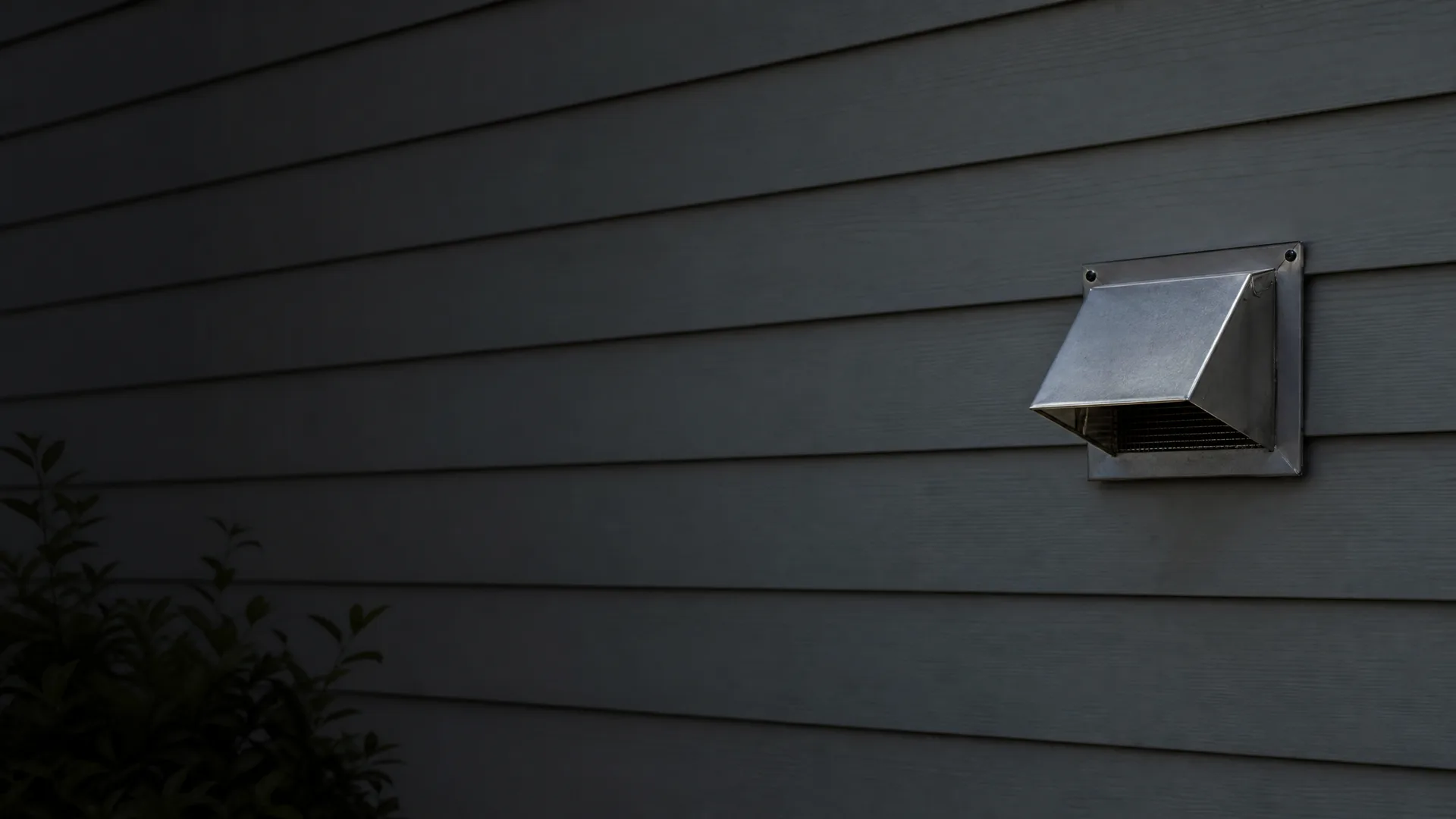
A vent hood with a weak or broken flap looks like a cavity to a bird
Birds look for a small, dark opening off the ground, out of the wind and out of reach of most predators, and a dryer vent hood does that job well if the flap isn't closing all the way. Sparrows and starlings are the usual culprits around St. Louis, and spring is when they're actively building. The warm air coming out of the vent when the dryer runs doesn't scare them off. It just tells them the spot is used, not that it's unsafe. Once a few twigs catch on the flap or get pushed just inside the duct, more material builds up around them fast. A bird doesn't need much room to start a nest, and a vent that already has lint clinging to the inside gives it something to grab onto.




Clear It Yourself or Call for a Cleaning
Clear it yourself
- If the nest is just inside the hood, you can reach it with gloves and pull the material out by hand.
- You can see right away whether the vent flap opens and closes freely once the nest is gone.
- You won't know if lint and nesting material packed further back in the duct toward the wall or the dryer.
- A nest built around the damper can bend or break the flap, and that part needs a working flap to keep birds out next spring.
- Without a brush or rod made for the length of the duct, you're limited to what your arm can reach.
Have it cleaned
- A contractor who does this work brings rods and brushes sized to run the full length of your duct, not just the opening.
- Someone who services vents around St. Louis every spring knows this is nesting season and checks for it as a matter of course.
- Clearing the full run confirms whether lint built up behind the nest, which a hand-reach from outside can't tell you.
- A damaged flap or hood can be replaced at the same visit instead of waiting to find out it failed again next year.
- One contractor takes the job start to finish, so you're not fielding calls from several companies about the same vent.


A nest in the vent means your dryer is pushing hot, damp air against a wall of grass and twigs instead of out through the hood. You'll likely notice it before you ever go outside to look. Clothes that used to dry in one cycle now need two. The top of the dryer feels hotter than it used to. The laundry room picks up a warm, musty smell that wasn't there before. None of that fixes itself, because the material packed in there doesn't thin out, it builds. Lint is highly flammable, and a blocked vent means heat and lint are sitting together with nowhere to go. That's the real risk, not just a slower load of laundry. St. Louis summers are humid, and a dryer already struggling to vent properly runs hotter and longer in that kind of air. The longer a nest sits, the more packed the vent gets, and the more your dryer has to fight to do a basic job.


One request and it's handed off

The pro who gets in touch is licensed in Missouri and works in St. Louis.
There's no charge for the request.
Why the vent invites a nest
A dryer vent hood sits a few feet off the ground, opens to the outside, and stays dark and still except for the few minutes a day your dryer runs. To a bird hunting a nest site in March or April, that's shelter from wind and rain with an opening already built in. The flap is supposed to swing open only when air is pushing through it and stay shut the rest of the time. Once the hinge wears or the flap doesn't close all the way, there's a gap wide enough for a bird to work through, and a dark, draft-free box waiting on the other side.
Why a working flap stops it
A flap that closes all the way is a mechanical barrier, not a scare tactic. Birds choose a site by sight and feel, and a sealed opening gives them nothing to land on or push into. Air pressure from the dryer helps too. Every time the dryer runs, moving air pushes the flap open and keeps anything from building a nest in the opening itself, though it does nothing for the duct further back once lint has already packed in. That's why a hood in good repair stays empty season after season, and a worn one doesn't make it through one spring.
1.92 people per household on average
Most households here run one dryer load at a time for about two people's worth of laundry, which is often enough to keep a blocked vent from showing itself right away. A lighter wash routine means more days can pass before you notice the longer dry times that point to a nest in the way.
ACS 2020-2024
Clear the Vent, Check the Flap
- A dryer vent with a bird nest in it needs the nest cleared and the flap checked before the dryer runs normally again.
- A local contractor who clears vents around St. Louis every spring has likely seen the same nest, in the same hood style, more than once this month.
- Sending one request means one contractor calls you, not a handful of companies competing for the job.
- Checking the flap now, after the nest is gone, is what keeps the next bird out before fall.
- A vent that's blocked by nesting material will keep running hot and slow until something is physically pulled out of it.
- You already know what changed, longer dry times and a warm laundry room, so the fix is just getting someone out to clear it.
The nest is the whole problem, and pulling it out is the whole fix. Once the grass and twigs are out and the flap swings free again, your dryer goes back to pushing air straight outside the way it did before spring started. Nothing else about the machine needs attention unless the blockage sat there long enough to cause other trouble, which a contractor checking the vent would catch while they're already out there.
Someone who clears vents around St. Louis this time of year has likely pulled a nest out of this exact hood style more than once already this month. That's not a guess about your house, it's just what spring does to dryer vents here, and a contractor working this trade knows which hoods let birds in and which ones don't. That's who shows up when you send one request, one licensed local contractor, not three or four companies calling within the hour to compete for the job.
You already know what told you something was wrong. The laundry room ran warmer than usual, and clothes that used to come out dry after one cycle needed a second. That's the vent talking, and it stops once the nest is gone. The flap is worth a look at the same visit, since a flap that was already loose or slow to close is likely what let the bird in to begin with, and leaving it that way just invites the next one before fall.
Done looking for a dryer vent pro
A licensed pro who works in St. Louis gets your request.