Is a clogged dryer vent a fire risk in Florissant, MO

A square stainless steel wall vent with four corner screw holes and a hinged flap cover, partly open to reveal a dark circular duct opening, shown against a plain light gray background.
Find my pro

Is a clogged dryer vent a fire risk in Florissant, MO?

You run a load of laundry and notice the dryer is taking longer than usual, or the outside vent hood barely puffs air when the dryer runs. Maybe you have never had the vent cleaned since moving in. With summers here getting long and sticky and the dryer working hard most of the year, it is a fair thing to wonder whether this is just an inconvenience or something more serious.

Yes, a clogged dryer vent is a real fire risk

Lint is dry, fine, and burns fast. When it builds up inside the vent line, it blocks the hot air the dryer needs to push outside. That heat has nowhere to go, so it builds up inside the duct and around the dryer itself, right next to the lint feeding it. This is how dryer fires start in homes all over St. Louis County, not just in older houses. A dryer that runs hot and often, which is most of the year once you count summer humidity and cold winters pushing more loads through the machine, works that lint loose faster than people expect. If your vent has not been cleaned in a while, or you are not sure it ever has, that is worth checking before it becomes a bigger problem.

  1. Lint builds up inside the vent line over time.

  2. Airflow drops and the dryer runs hotter than normal.

  3. Heat has nowhere to go but back into the vent.

  4. Trapped lint ignites against the dryer's heating element.

How much laundry is your vent actually handling?

  • 2.36 people per household on average

    A St. Louis County household runs 2.36 people on average, and more people means more loads through that same vent line every week.

  • Half the homes here were built by 1969

    Half the homes in St. Louis County were built in 1969 or earlier, which means the vent run has had decades to pick up lint if nobody has cleaned it yet.

  • Power here costs 13.20 cents per kilowatt-hour

    Electricity here runs 13.20 cents per kilowatt-hour, cheap enough that a dryer working harder through a clogged vent doesn't always show up as a jump on the bill.

ACS 2020-2024 · EIA-861 2025

The vent looks fine, runs long

The dryer finishes a load in two cycles instead of one, but nothing looks wrong. No burning smell, no lint on the floor, the hood outside still moves a little air. This is the stage most people miss, because there is no obvious sign to catch. The lint has narrowed the line enough to slow airflow and raise the heat inside the dryer, but not enough to stop it. A vent cleaning now clears it before the buildup gets worse. This is the easier problem to fix and the cheaper one to catch early.


The vent hood barely moves air

You put your hand near the outside hood while the dryer runs and feel almost nothing. The line is restricted enough that most of the exhaust isn't getting out. Heat is building up inside the duct with each load, and lint sitting in that heat is what starts a dryer vent fire. This is further along than a slow dryer and worth having looked at before running another load. A contractor who services vents in St. Louis County homes can tell you how much buildup is actually in the line.

A woman in a gray turtleneck sweater stands near a window with snow outside, in a dimly lit living room with a lit Christmas tree, table lamp, sofa and bookshelf.
A woman in a cream knit sweater with her hair in a bun stands in a dimly lit living room looking out a large window at snow-covered evergreen trees, with a lamp, sofa, framed picture and lit candle behind her.
A woman in a thick gray knit sweater stands beside a window looking out at falling snow, with a dimly lit living room containing a lamp, sofa, string lights and a candle behind her.
A woman in a gray turtleneck sweater stands in a dimly lit room with a lit table lamp, framed picture and sofa, looking toward a window with snow outside.

Think about where your dryer vent actually runs. In a lot of Florissant homes it goes up through a wall cavity or across a joist space before it ever reaches outside, and every foot of that run is someplace lint can sit against wood framing. You will not see it building up. You will notice the dryer working harder, the top of the machine feeling warmer than it used to, or a load that used to take forty minutes now taking over an hour. None of that looks like a fire hazard from the laundry room. It looks like an old dryer. The actual risk is on the other side of that wall, where lint has been collecting load after load with nowhere to go. A vent that was never cleaned when you moved in has had every year since added to it. The longer that goes, the less it takes to set it off, and the less warning you get before it does.

What this means for your house

  • A dryer running two cycles instead of one is pulling more heat into that same clogged line every single week.
  • Lint sitting in the vent for years catches at a lower temperature than you would expect from paper or fabric.
  • Once lint ignites inside the vent, the fire is already behind your wall or under your floor before you smell smoke.
  • A vent hood that barely moves air outside means the moisture and heat from every load is staying somewhere in that line.
  • Homes with longer or more bent vent runs hold more lint per foot, so the same number of loads builds risk faster.
  • A dryer that never gets its vent cleaned carries that risk forward every year you live in the house.
A white hooded dryer vent cover screwed into beige lap siding above a concrete foundation wall, with a bed of rounded gravel at the base.
Air moves freely through a clean vent, carrying heat and lint straight outside with every load.
A metal dryer vent hood mounted on light gray horizontal lap siding, with its opening clogged by gray lint, above a concrete foundation wall.
Lint has packed the flap shut, so heat and moisture back up into the line instead of venting out.

Why is your dryer taking two cycles to dry a load?

You load the dryer, run it, and the clothes come out still damp. You run it again and this time they dry, but the top of the dryer feels hotter than it used to, and the laundry room picks up a warm, dusty smell partway through the cycle. Check the outside vent hood while a load is running. If the flap barely lifts, or you cannot feel much air coming out at all, the line between the dryer and the wall is carrying less air than it should. Every load after that pushes more heat into a vent that already cannot clear it, and that heat has nowhere to go but back toward the dryer itself.

A bearded man in a plaid flannel shirt stands indoors looking out a condensation-covered window at a snowy landscape, with a speckled mug on the sill and kitchen shelves behind him.
A bearded man in a navy t-shirt sits on a beige sofa, laughing while looking toward a laptop screen visible in the lower foreground, with a houseplant, shelves, and a framed picture behind him.
A metal hooded exterior dryer vent with louvered opening mounted on beige lap siding above a concrete foundation bordered by dark mulch.

Get matched with a dryer vent pro in St. Louis County

The pro who gets in touch is licensed in Missouri and works in St. Louis County.

Your request goes to a St. Louis County pro who takes dryer vent jobs.

Get one local pro

You're not committing to anything by asking.

A woman stands in the open front doorway of a single-story house with a dark hipped roof and light siding, while a man in a navy jacket and cap is seen from behind in the foreground on the paved walkway.

What a clogged vent is actually costing you

Right now it is probably showing up as a longer drying time and a warmer laundry room, not as a fire. But every load that runs two cycles is pushing more lint through a line that already cannot clear itself, and that line sits inside your wall, behind your dryer, where you cannot see what it looks like. A dryer that used to finish in forty minutes and now takes over an hour is burning more power to do it, and your gas or electric bill carries that difference whether you notice it or not.

A technician who services vents in St. Louis County homes week after week can tell you in minutes whether yours is a quick clean or a sign the line itself is crushed or too long for the run. That is not something to guess at from the laundry room. A local contractor who handles this kind of job regularly knows what tends to fail in homes built the way yours was, and you would be working with one company on your vent, not several.

A mug and a small round vase sit on a wooden windowsill beside sheer and heavier curtains, with blurred autumn trees seen through the rain-speckled window and a sofa with cushions and a throw in the foreground.
A white plastic hooded dryer vent with a louvered opening mounted on gray horizontal lap siding, beside a plain light-colored wall surface.

Why lint catches fire at all

Lint is loose cotton fiber, and loose cotton fiber burns easily even at temperatures well below what paper needs. A dryer's heating element sits right at the start of the vent line, so any lint packed up against it is sitting next to the heat source every single load. That is why the vent itself, not just the lint trap, matters so much.

A white hooded dryer vent cover screwed to beige horizontal lap siding on an exterior house wall, with a blank wall at left.

The hood outside tells you something

Step outside while the dryer runs and watch the vent hood. A clear line pushes the flap open wide and you can feel steady air and warmth coming off it. A flap that barely lifts, or air that feels weak, means lint is sitting somewhere between the dryer and that hood, and the dryer is working against it with every load you run.

Leave the Vent or Clear It

Vent left alone

  • Lint keeps building with every load, so the dryer keeps pulling more heat into a line that already can't clear itself.
  • Drying times stretch further, and the top of the dryer runs hotter than it used to.
  • Moisture that should vent outside stays trapped in the line, which can rust the vent hood and the flap over time.
  • Lint sitting near the heating element is fuel that's already in place, waiting on the right temperature.
  • Nothing about the risk shows up on the energy bill or the dryer's display, so it's easy to keep ignoring.
  • The flap outside stays shut or barely moves, which is often the only outside sign anything is wrong.

Vent cleaned

  • A cleared line lets the dryer push heat and moist air straight outside instead of back into the vent.
  • Drying time drops back to one cycle per load, which is the clearest sign the line is actually clear.
  • The dryer runs at a normal temperature instead of overheating against packed lint.
  • A local contractor who services vents every week in St. Louis County knows what a line this old usually looks like inside.
  • One contractor handles the inspection and the cleaning, so you're not fielding calls from several companies for the same job.
  • The outside flap moves freely again once the line is clear, which you can check yourself after the work is done.
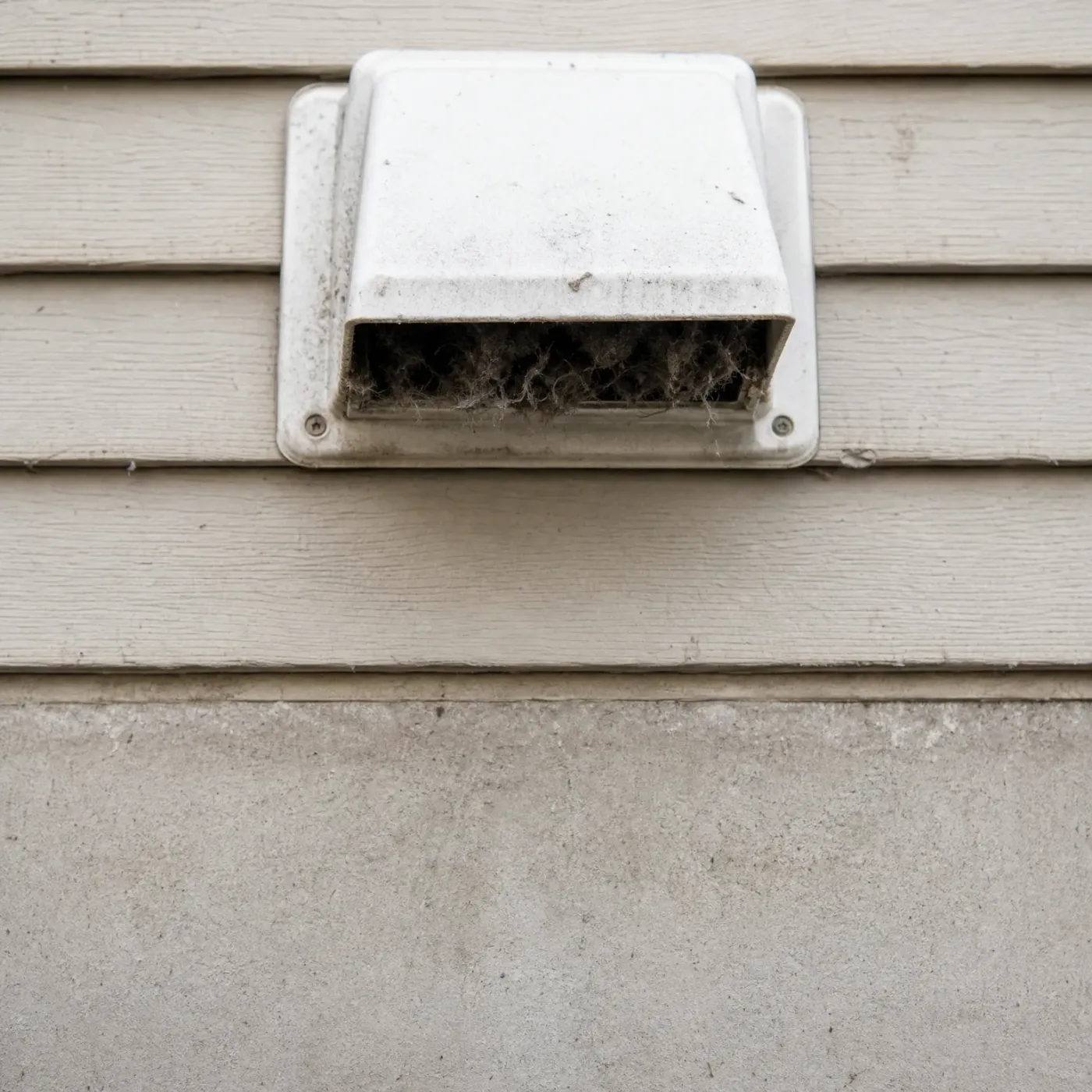
A white plastic dryer vent hood clogged with grey lint, mounted on beige horizontal lap siding above a concrete foundation wall.
Before you get your dryer vent cleaning
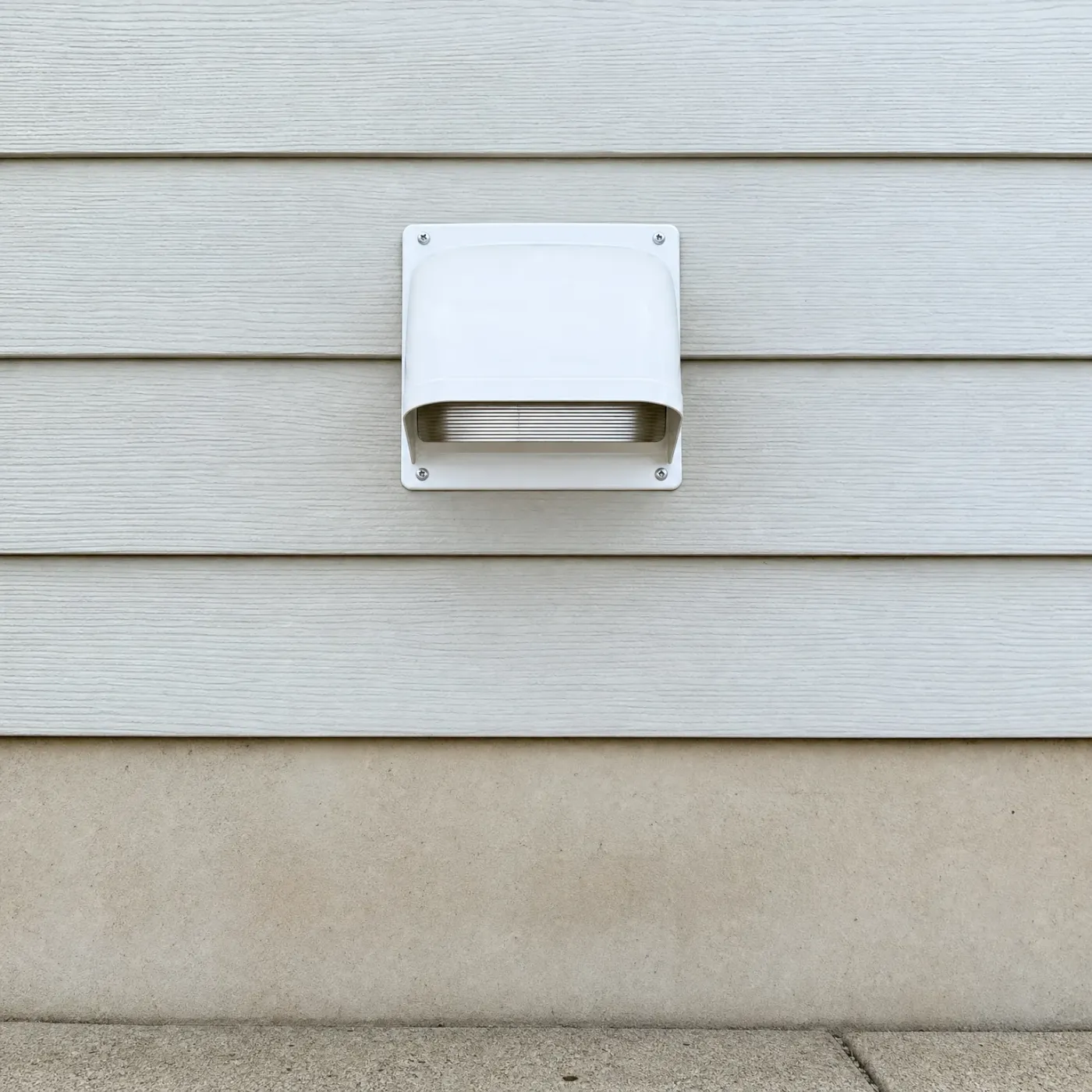
A white hooded dryer vent with a louvered opening mounted on light beige horizontal lap siding above a concrete foundation and sidewalk.
After you get your dryer vent cleaning

2.36 people per household on average

At 2.36 people, your household is still doing laundry most days of the week, and every load pushes more hot, damp air through the same vent line. If that line is already restricted, there's no slow season for it to catch up.

ACS 2020-2024

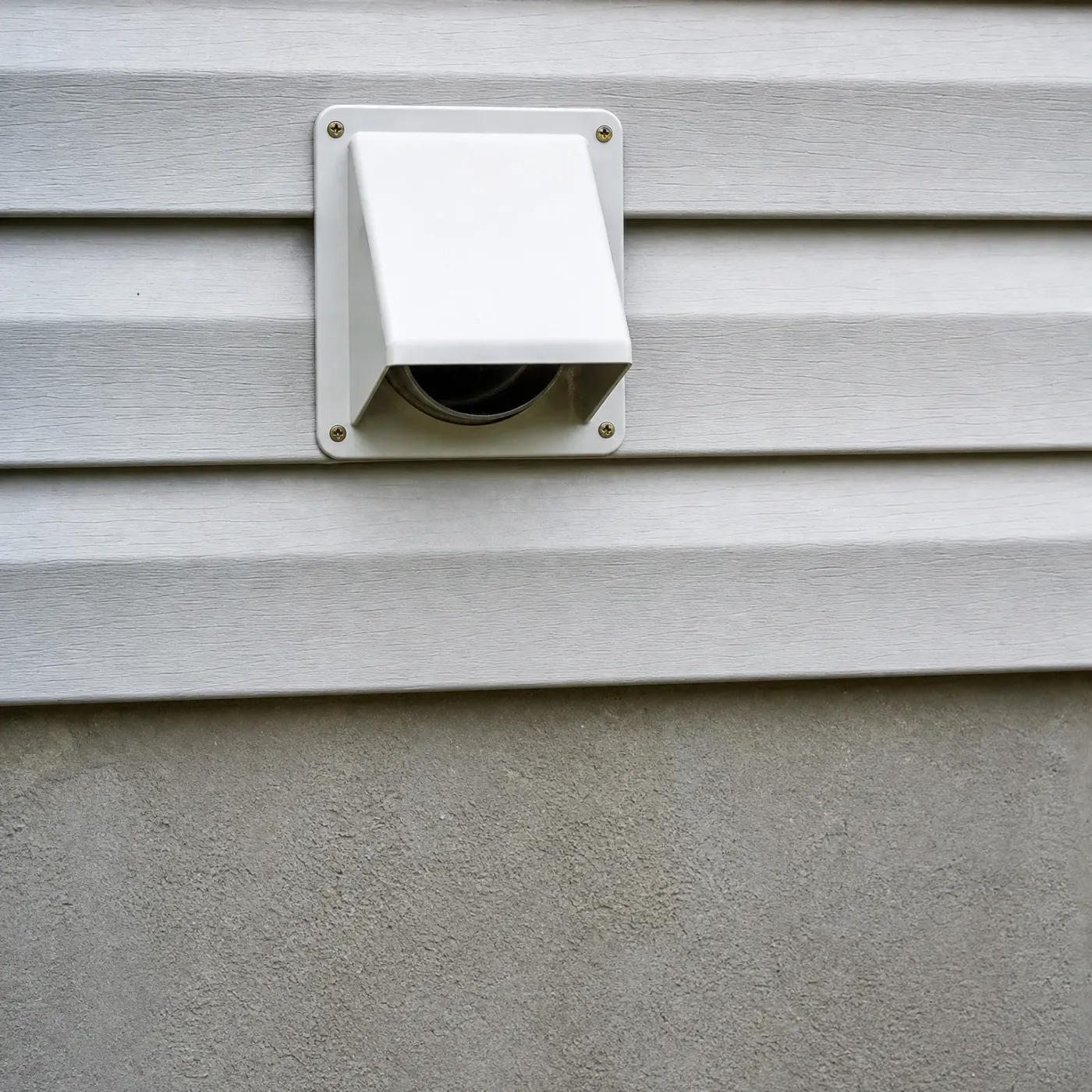
A white hooded dryer vent with a square mounting plate screwed onto light gray horizontal vinyl siding, above a gray stucco-textured lower wall.

Clear vent, open path

The hood sits flush against the siding, and the flap hangs open enough to show daylight behind it. Air and lint pass straight through and outside with every load, and the dryer's heating element only has to push against open line, not a packed one.

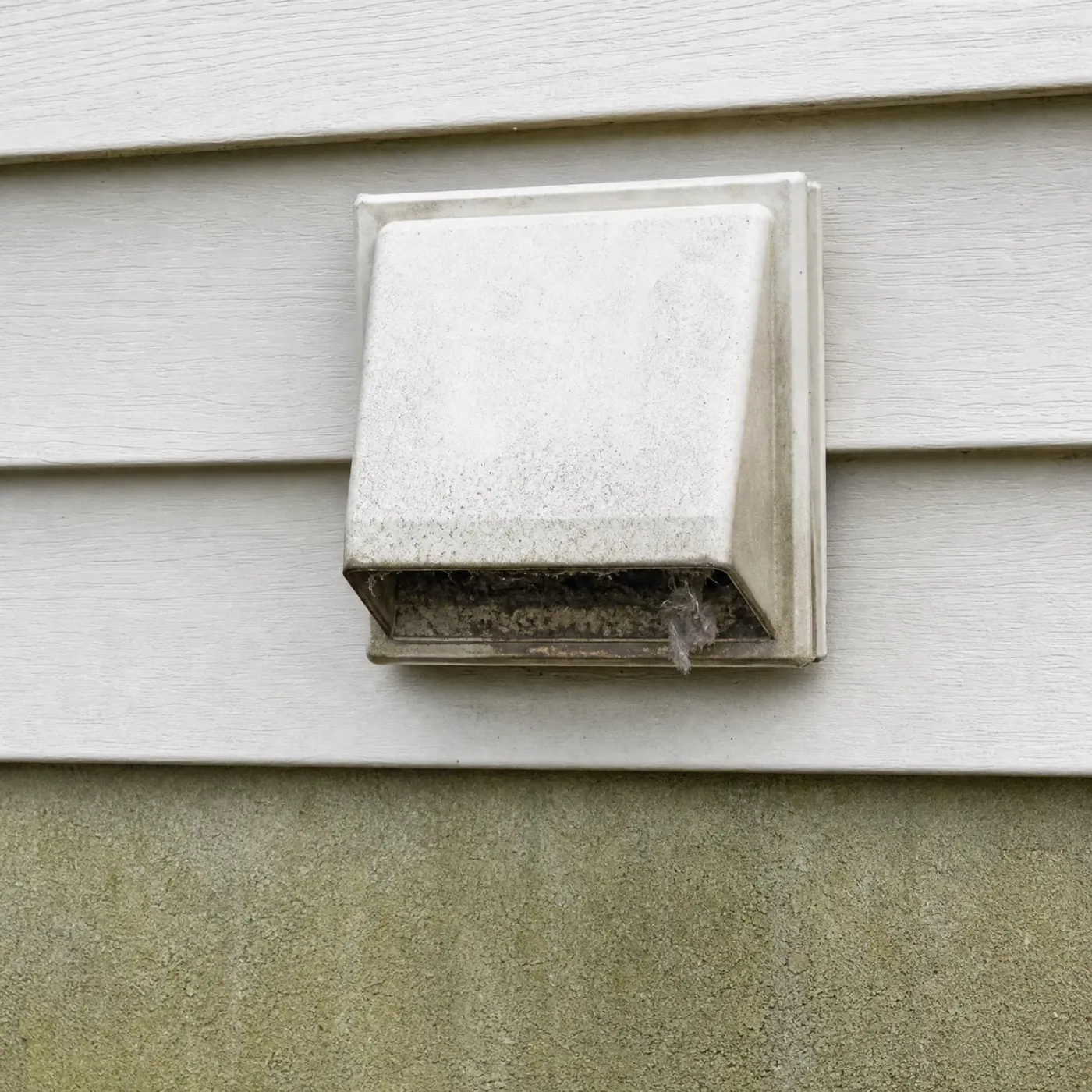
A white plastic dryer vent hood mounted on light-colored horizontal lap siding, with lint caught in its lower opening and a green-stained foundation wall below.

Clogged vent, lint at the opening

Lint has built up right at the flap, enough that a tuft hangs out of the opening. If it's packed this thick at the hood, the line running back to the dryer is carrying the same buildup, and heat has nowhere to go but back toward the element.

A clogged dryer vent is a real fire risk, and a longer drying time is usually the first sign you get. The fix is not complicated. Someone who services dryer vents in St. Louis County every week knows the difference between a line that just needs clearing and one where the flap or the hood has failed outright, and what to check first on a 1969 house versus a newer one. You'll be matched with one licensed local contractor for this, not a handful of companies competing for your callback. That means one visit, one person who already knows what they're looking at before they get there, and no juggling quotes from strangers. The vent either moves air freely or it doesn't. Right now you know which one yours is doing, and that's the part that was worth finding out.

A dark gray hooded exterior vent cover with a louvered opening mounted on dark horizontal lap siding, viewed at a steep angle.

Find a dryer vent cleaning pro in St. Louis County

A licensed pro who works in St. Louis County gets your request.

Duct and vent cleaningSt. Louis County, MO
Step 1 of 3

What kind of equipment?