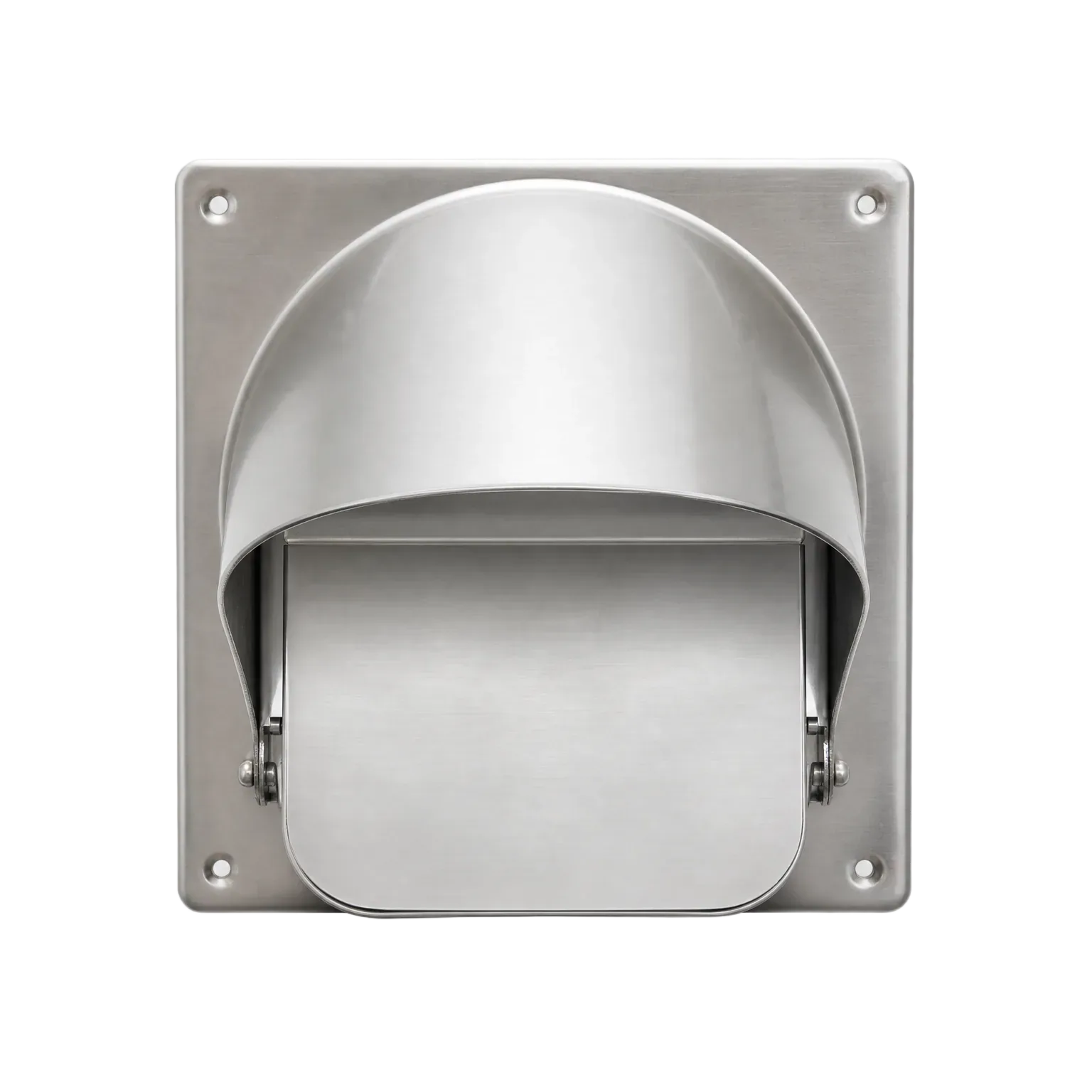

Flush, sealed, and open
This cap sits tight against the siding with the flap free to move. Four screws hold it in place, and when the dryer kicks on, that flap swings open and stays open until the air stops pushing. Nothing slows the exhaust down.
You load the dryer, run a full cycle, and pull out clothes that are still damp around the seams and waistbands. So you run it again, maybe a third time, and the electric bill creeps up while you're still standing over a pile of clothes that won't finish. Something is slowing the dryer down, and it's worth knowing what before you run it a fourth time.
A dryer dries by pushing hot, wet air out through the vent, not by heating the clothes alone. When lint builds up inside that vent line, the air can't escape fast enough, so moisture stays trapped in the drum and clothes come out damp cycle after cycle. This builds up slowly, so most homeowners in Florissant notice it as a gradual change rather than a sudden one. It also shows up more in summer, when the air outside is already humid and the dryer has to push harder to move air out at all. A dryer that runs hot to the touch on the outside, or takes two cycles to do what one used to do, points to a blocked vent rather than a dying heating element.

A dryer pushes hot, wet air out through the vent to the outside wall. When lint packs that line, the air has nowhere to go. Moisture stays in the drum instead of leaving the house, so the same load has to run twice or three times to get dry. The motor and heating element work the same as always. The air just can't carry the moisture out fast enough to keep up with the cycle.

St. Louis County summers run long and stay muggy into early fall, so the air coming into the dryer already carries moisture before a single towel goes in. A clear vent matters more in that stretch because there's less margin to begin with. Winters turn cold and dry, which helps, but a packed vent line will slow drying time whatever the season. The vent length and number of bends in a home also affect how much lint collects and how often it needs clearing.
2.36 people per household on average
A household here runs 2.36 people on average, so laundry stacks up fast, and a dryer already struggling to vent properly falls behind even quicker.
Half the homes here were built by 1969
Half the homes in St. Louis County were built in 1969 or earlier. A vent run that old has likely never been cleaned out all the way to the wall.
Power here costs 13.20 cents per kilowatt-hour
Electricity here runs 13.20 cents per kilowatt-hour. A dryer running two or three cycles to finish one load adds up on the bill long before anyone thinks to check the vent.
ACS 2020-2024 · EIA-861 2025
Clean the vent now and the dryer goes back to drying a full load in one cycle, with the lint trap doing its normal job and no damp spots left in the seams.
Leave it clogged and every load keeps running twice, the motor keeps working against blocked airflow, and the heat that should leave through the vent stays trapped near the drum instead.




A dryer doesn't just run for a set time. It reads a thermostat or moisture sensor near the exhaust and shuts off once that reading says the air coming out is dry enough. That system depends on air actually moving through the duct and out the wall cap. When lint has built up, especially at the elbows and the cap itself where the airflow has to turn and slows down, exhaust air cools off and lingers instead of leaving the house. The sensor reads that air as wetter than it is, so the cycle keeps running. The drum and the heating element are doing exactly what they always do, tumbling and heating the same load the same way. The problem sits downstream of the drum, past the lint trap, which only ever catches what passes through it on the way out. None of this shows up as a strained motor or a burning smell. It shows up as a cycle that won't finish and a bill that climbs while the dryer pulls the same power it always has.


Lint builds up inside the duct with every load you run.
The narrowed duct slows the hot air trying to leave.
Moisture stays trapped in the drum instead of venting out.
The moisture sensor reads wrong and the cycle runs long.
Stand near the dryer partway through a cycle and feel for it. The room runs warmer than it should, the air feels thick, and the outside vent cap barely puffs when you hold your hand near it. The dryer itself may feel hot to the touch on top, and a load that used to come out warm now comes out hot and still damp. Lint shows up in places it shouldn't, dusted on the floor behind the dryer or packed tight in the trap after every single load. Left alone, a dryer working that hard stays hot longer after the cycle ends, and that heat has nowhere to go but back into your house.


The pro who gets in touch is licensed in Missouri and works in St. Louis County.
Get matched with someone who does this kind of work in St. Louis County.
Asking costs nothing, and the choice to hire stays yours.

Every extra cycle runs heat and moisture through a duct that's already packed with lint. That heat builds up behind the blockage, and dryers have started fires that way. It's not common, but it's the reason this isn't just an inconvenience to put off.
The damp air that doesn't make it out the vent cap has to go somewhere, and in a lot of houses that's back into the laundry room. If yours is a small space or sits off a closet, you may notice it smelling musty even when nothing's been washed in days. A contractor who clears vents around Florissant regularly can look at your duct run, tell you how bad the buildup is, and get it moving again before it costs you more than a long cycle.


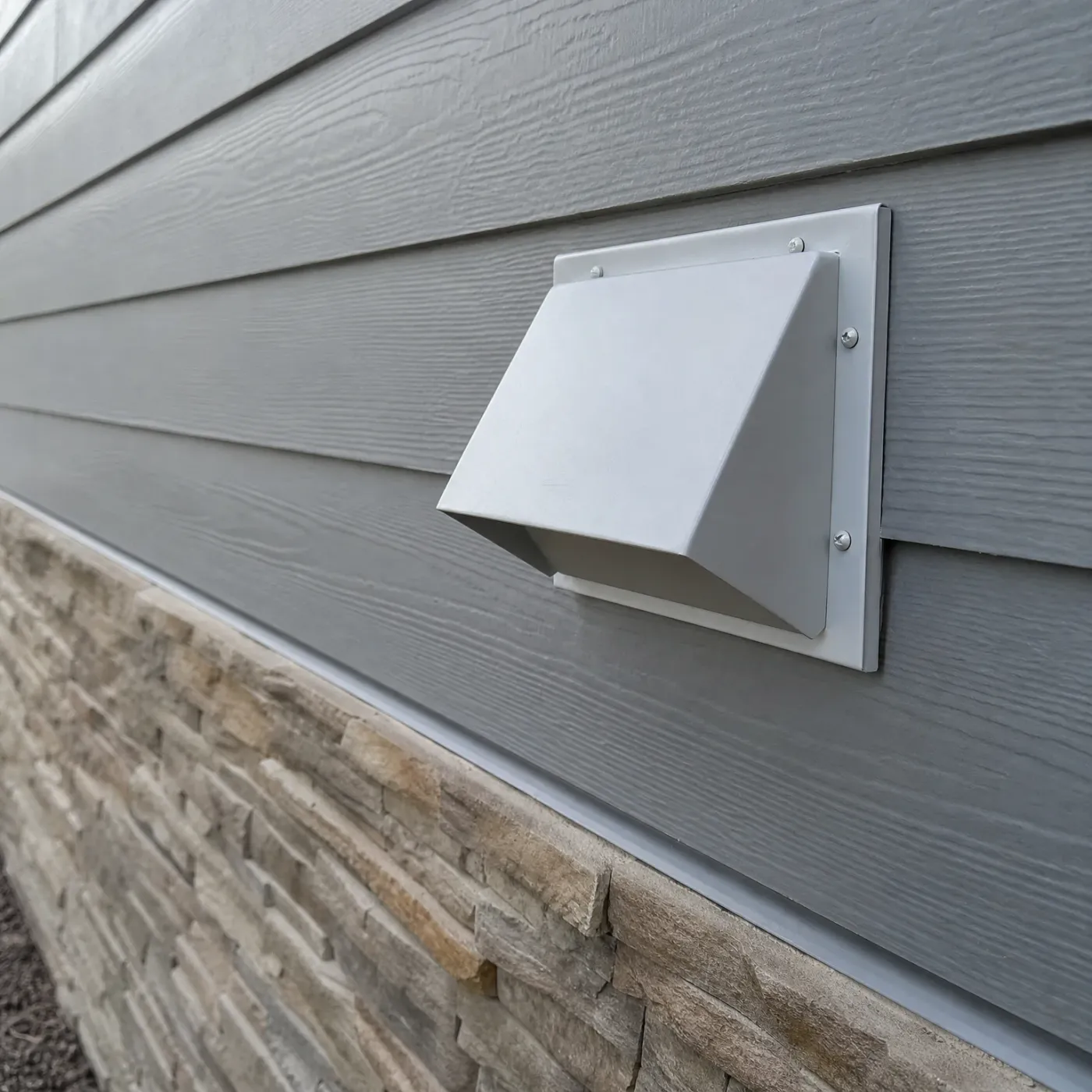
This cap sits tight against the siding with the flap free to move. Four screws hold it in place, and when the dryer kicks on, that flap swings open and stays open until the air stops pushing. Nothing slows the exhaust down.

Lint has packed into this hood until it coats the louvers and jams the flap part way open. Air still gets out, but not all of it, and what backs up stays in the duct as heat and moisture with nowhere to go.
With 2.36 people in the average household here, most homes run a load most days, not once a week. That steady pace hides a slow clog, since you'll chalk the extra cycle up to a bigger wash instead of a vent that's losing ground.
ACS 2020-2024



This is what a working vent looks like from outside. The cap sits flush against the siding, the duct behind it is open, and the flap moves freely when the dryer runs. Hot air leaves as fast as the dryer pushes it out, so the drum's sensor reads the air correctly and shuts off on time.

This cap is clogged, lint has built up across the hood and into the mesh screen behind it. Air that should vent outside is fighting through a narrow gap instead. The cycle runs long trying to clear moisture that has nowhere to go, and the lint sitting here only thickens with every load.
A dryer that takes two or three cycles to finish a load almost always comes down to one thing: the vent can't move the air it needs to. Clear that path and the dryer goes back to drying on the first try, the way it did when the house was new. A contractor who works on vents throughout Florissant and St. Louis County has pulled lint out of caps, elbows, and long duct runs all through the winter and summer alike, and knows which spots in a run tend to pack first and how to check the whole length, not just the end you can reach. When you request service through this page, you're matched with one licensed local contractor for your address, not a handful of companies competing for the job, so the person who calls you back is the one who'll actually show up and clear the line. Until that's done, expect the same long cycles and the same warm, damp laundry room. Once it's done, the vent moves air the way it's supposed to, and the dryer stops working overtime for a load it used to finish in one pass.

Matched to your dryer vent job



