Missouri HVAC Match

How often to clean a dryer vent in Springfield, MO

Hand it over

A clogged dryer vent is doing more work drying your clothes than it should, and in Greene County's humid summers the lint sits there damp and packed instead of blowing clear. Most dryers here run harder in July and August just to keep up, and a vent that's never been cleaned makes the machine fight the whole way. You already know the vent needs attention. What you don't want is to spend your evening calling around Springfield, explaining the same thing three times, waiting for someone to call back. Send the request once and a local contractor who works on vents like yours all year takes it from there. One contractor, not a list of them ringing your phone. Someone who already knows what a vent clogged from a Missouri summer looks like, and what it takes to clear it right. Finding that person stops being your job the moment you send this.

Clean your dryer vent once a year. If your dryer runs most days, or the vent run is long with a few turns in it, check it twice a year instead. The lint that matters most is the kind you can't see: it builds up inside the duct, not just in the trap, and a yearly cleaning stops it from packing tight enough to block airflow. In Greene County's humid summers, lint that sits in the vent holds onto moisture instead of drying out and blowing clear, so it compacts faster than it would somewhere dry. You'll notice the signs before you think to check: clothes taking two cycles to dry, the top of the dryer feeling hot, a burnt smell when it runs. Once the vent is clogged, the dryer works harder every single load, and that's wear it doesn't need. A clear vent also means less heat and lint sitting behind your wall, which matters most in a house that runs its dryer daily.

A white plastic hooded dryer vent cover mounted with screws on beige horizontal lap siding, next to a plain pale wall surface.

Why lint builds up where you can't see it

The trap catches most of the lint, but not all of it. What gets past it rides the airflow down the duct and settles wherever the metal bends or the air slows down. A straight, short run to the outside stays clearer longer. A run with two or three turns, or one that's long, collects lint faster at every elbow, and that's the part no homeowner ever checks.

A metal louvered exterior vent hood screwed to a beige horizontal lap siding wall, with a blank light-colored surface filling the left half of the frame.

What a blocked vent does to the hood

Outside, the vent hood has a flap that's supposed to swing open when the dryer's running and seal shut when it's not. Lint buildup can keep that flap from closing all the way, and in Greene County's cold winters that's an opening for outside air to work its way back into the duct. A clear vent lets the flap do its job both ways.

Is your dryer taking longer than it used to?

You run a load and it comes out still damp, so you run it again. The top of the dryer feels hot to the touch, or the laundry room itself feels warmer and more humid than it should after a cycle. You might catch a faint burning smell, especially in the first few minutes. Outside, the vent hood flap barely moves, or you notice it's not flapping much at all when the dryer's running. These are signs the duct is restricting airflow, not the dryer losing strength. Left alone, the motor and heating element work harder than they're built to, and the extra heat sitting in a lint-packed duct is how dryer fires start.

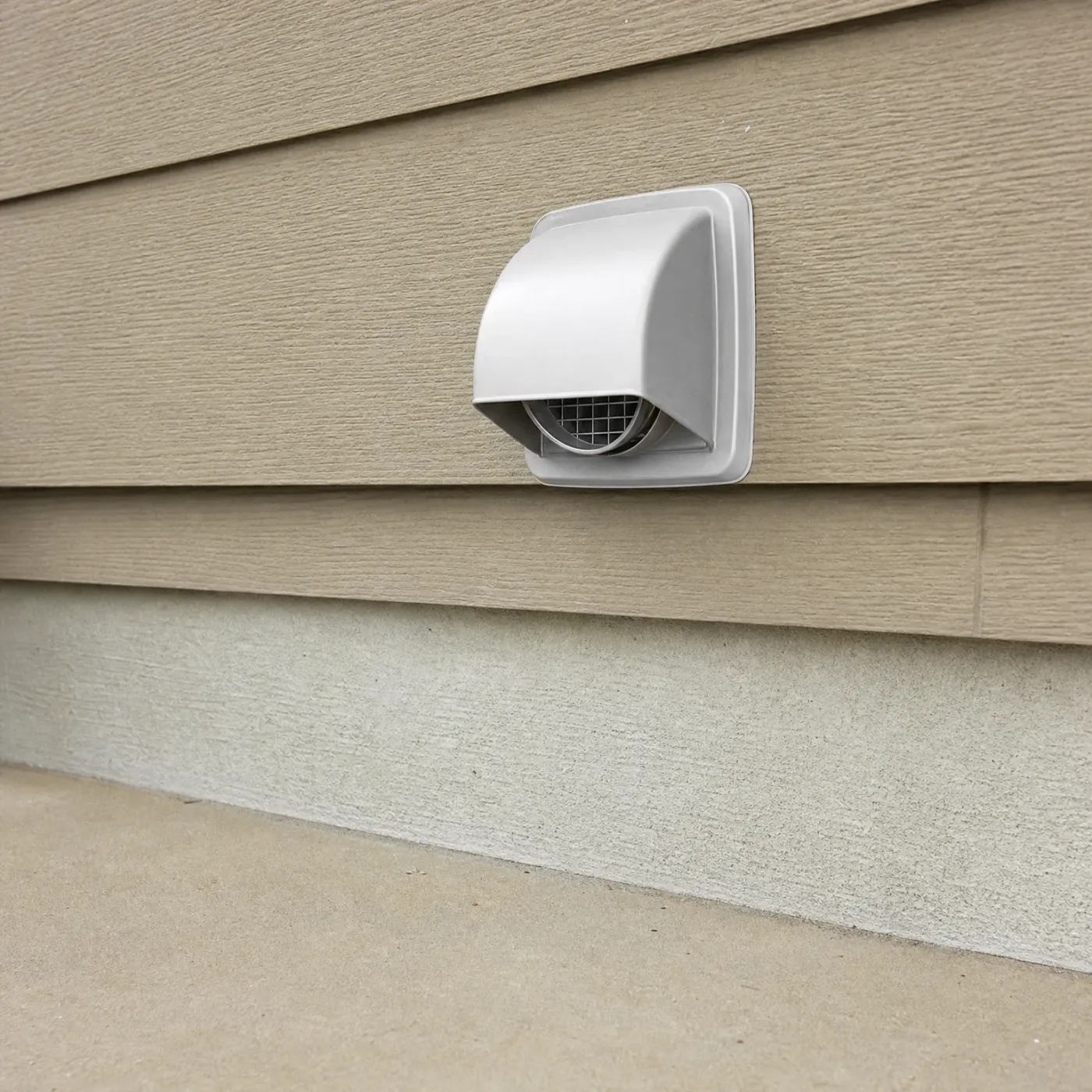
A white hooded dryer vent with a grille mounted on tan horizontal lap siding above a concrete slab.

Clear and venting outside

Air pushes the flap open and closes it again when the cycle ends. The screen keeps birds and mice out without blocking the exhaust. Stand outside while the dryer runs and you should feel a steady, warm push of air against your hand.

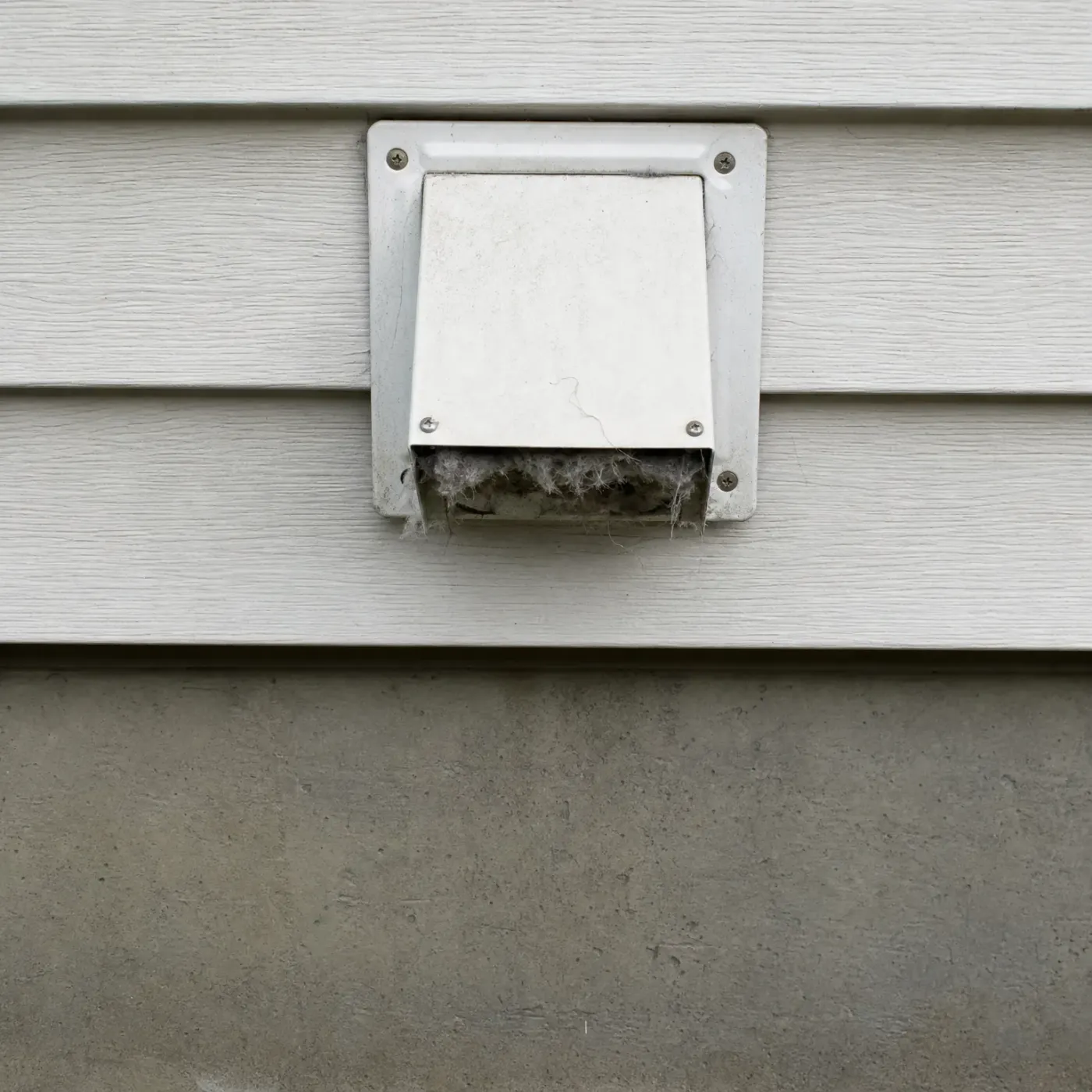
A white plastic dryer vent hood with a hinged flap mounted on light grey horizontal lap siding, with lint clogging the opening beneath the flap and a concrete foundation wall below.

Clogged and stuck open

That flap can't close because lint has packed in behind it. With the vent held open like this, the outside air comes straight back in, and whatever's pushing past the lint is barely making it out of the house. Birds and mice can get in through a flap that won't shut.

What does your household mean for your vent?

  • 2.24 people per household on average

    Greene County households average 2.24 people. More people usually means more loads a week, and more loads push more lint through the duct between cleanings.

  • Half the homes here were built by 1982

    Half the homes in Greene County were built in 1982 or earlier. An older duct run is more likely to have turns or a longer path than code favors today, and lint catches at every bend.

  • Power here costs 12.46 cents per kilowatt-hour

    Power here runs 12.46 cents per kilowatt-hour. That's cheap enough that most households don't notice a struggling dryer on the bill, so a clogged vent can go unnoticed longer than it should.

ACS 2020-2024 · EIA-861 2025

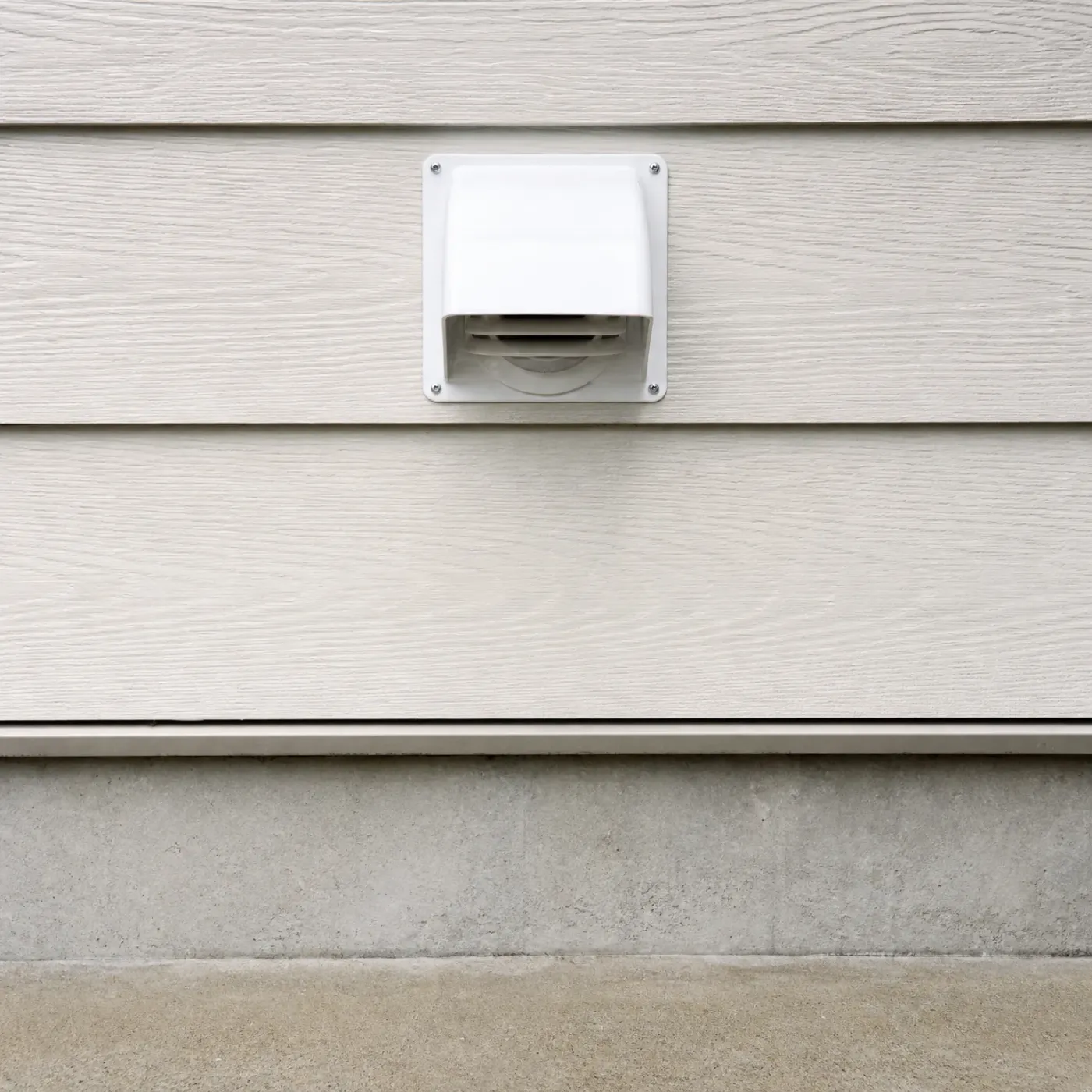
A white hooded dryer vent with a louvered flap mounted on beige horizontal lap siding above a concrete foundation wall.

Vented and clear

This is what the cap should look like. The flaps hang open on their own, loose enough to swing with the lightest push of air. The screws hold it flat against the siding, and the plastic stays white because lint isn't catching on anything near the opening.

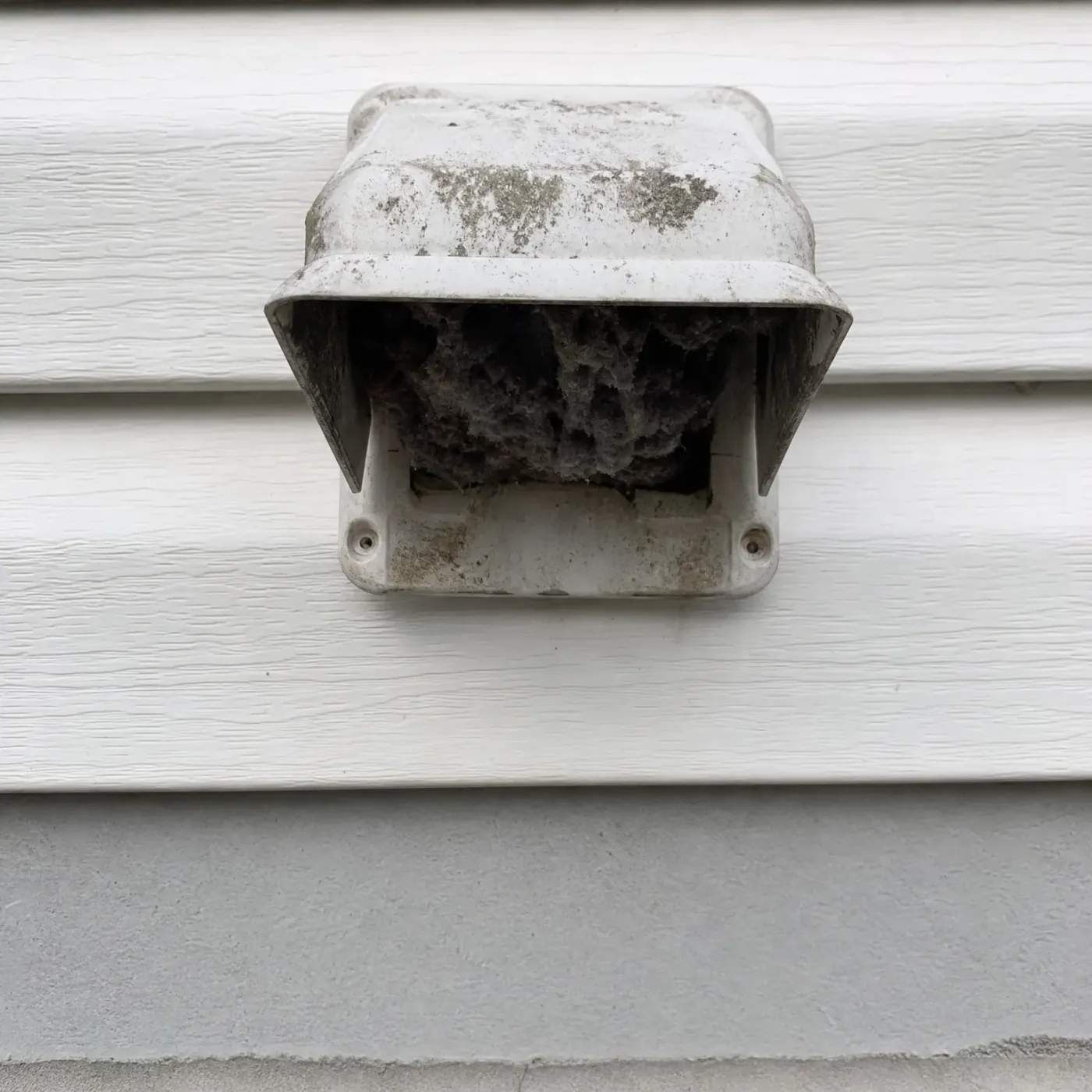
A white plastic dryer vent hood on horizontal lap siding, clogged with thick gray lint and dirt, above a lighter concrete foundation wall.

Clogged and blocked

Lint has packed the opening into a solid mass, and the flaps can't close or open right anymore. Dirt and mildew have taken hold on the cap itself, which happens when damp air stops moving through and instead sits right at the vent.

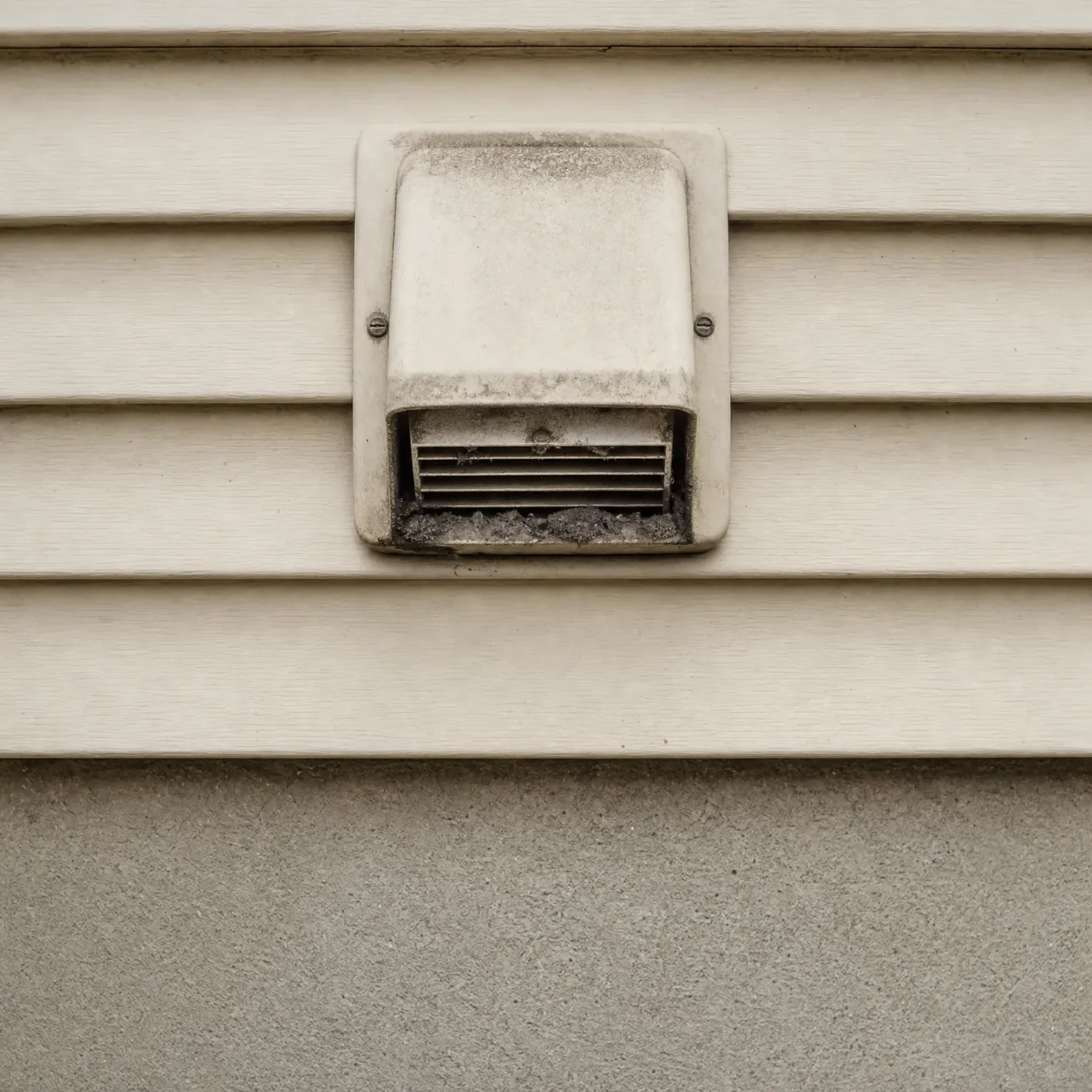
A dusty plastic louvered dryer vent hood screwed into beige horizontal vinyl siding above a gray stucco foundation wall, with lint buildup around the slats.
Before you get your dryer vent cleaning
A white hooded dryer vent with a square mounting plate fastened to beige horizontal lap siding above a concrete foundation wall.
After you get your dryer vent cleaning

Finding a pro stops being your job

The pro who gets in touch is licensed in Missouri and works in Greene County.

You only hire the pro if you want to.

A pile of beige, blue, and gray towels sits on top of a white dryer beside a window with green foliage outside, against a dark wall.

It's a Tuesday evening, loads in, dinner barely cleared off the stove. You pull the towels out expecting them warm and dry and instead they're heavy and damp, still smelling like the inside of the machine. You run the cycle again. Outside it's that thick Greene County summer air, and the laundry room feels like it's caught some of it, warmer than the rest of the house, a little close. The dryer hums on, the pile of towels waiting on top of it, and you reach over and press a hand flat against the metal lid. It's hot. You leave the towels there and go check on dinner, telling yourself you'll deal with it once this load finally finishes.


2.24 people per household on average

At 2.24 people, most households here run a load every day or two, sometimes more with towels and sheets in the mix. That steady pace keeps lint moving into the duct between cleanings, so a yearly cleaning keeps up with what a typical house here sends through it.

ACS 2020-2024

  1. Lint screen pulls out and gets wiped clean of loose fuzz

  2. Rods or a brush feed into the duct from the dryer end

  3. Brushing works lint loose from the inside of the duct walls

  4. A vacuum pulls the loosened lint out through the access point

How does a technician actually clean a dryer vent?

You've seen the steps on this page, the rods, the brush, the vacuum, but maybe you're picturing someone just stuffing a brush in from outside and calling it done. You want to know if this is actually thorough, or if it's a quick swipe that leaves most of the lint sitting in the duct where it was before.

It's worked from both ends, not just one

A technician starts at the dryer, disconnects the duct from the back of the machine, and feeds the rod and brush in from there, working it the full length of the run. Then the cap outside gets pulled and the duct gets checked and brushed from that end too, since lint tends to pack hardest near the bends and near the exit, where the airflow slows down. Working both ends means nothing gets missed in the middle. Once the brushing loosens what's built up, the vacuum pulls it out rather than just pushing it further down the line. The cap goes back on last, and the flaps should hang loose and swing freely when the dryer kicks on.

A bearded man in a dark gray T-shirt sits smiling on a light gray couch, with a houseplant and a framed picture on the wall behind him.
A bearded man in a red and dark plaid flannel shirt looks out a frost-edged window at a snow-covered yard, with a gray mug on the sill in the foreground.

Once a Year Keeps It Clear

  • Clean the vent once a year, or twice if you run a load almost every day or the duct is long with bends in it.
  • Lint builds up inside the duct itself, not just in the trap, so a clean trap doesn't mean a clear vent.
  • A dryer that takes two cycles to dry a load or runs hot to the touch is pushing air through a duct that's partly blocked.
  • The cap outside should swing open easily and let out a steady, warm push of air while the dryer runs.
  • A technician clears the duct with rods and a brush, then pulls the loosened lint out with a vacuum.
  • Greene County's humid summers and steady daily laundry loads both push more lint through the duct between cleanings.

Once a year is the answer for most houses in Greene County. Twice a year fits if the dryer runs almost daily or the duct is long and bends more than once on its way outside. That schedule holds up against what actually happens inside the vent. Lint doesn't stop at the trap. It rides the airflow past it and settles wherever the duct narrows, bends, or slows down, out of sight the whole time. A trap you clean every load tells you nothing about what's built up further down the line. Your dryer gives you signs before the vent gets bad enough to matter. Towels coming out damp after a full cycle. The top of the machine warm to the touch. The laundry room itself holding heat and moisture longer than it should. Those are the vent telling you it's working harder than it needs to. Outside, the cap tells the rest of the story. The flaps should swing open on their own and stay open while the dryer runs, with a steady warm push of air behind them. If they barely move, or you don't feel much air, lint is sitting somewhere between the machine and that cap. A technician works the problem from both ends, feeding rods and a brush into the duct to break the lint loose, then vacuuming it out so it's gone instead of just pushed further down the line.

A smiling man in a dark green sweater sits at a wooden table with a light gray mug in a kitchen with white tile backsplash, pendant lights, and an adjoining living room visible.
A smiling man in a dark gray sweater stands indoors looking to the side, with a kitchen counter holding a ceramic mug and open wooden shelves behind him and a living area in the background.
A smiling man in a dark blue button-up shirt stands at a white kitchen island, with open shelving, a gas range, a potted plant and a window in the background.
A smiling man with dark wavy hair and a beard, wearing a dark green knit sweater, sits in an open-plan living room and kitchen with a brown sofa, large windows, and a counter holding a mug and a wooden bowl.

Dryer Vent Cleaning

Let someone else find the pro

A licensed pro who works in Greene County gets your request.

A black-framed smartphone standing upright against a plain light gray background, its screen filled with solid green.
Duct and vent cleaningGreene County, MO
Step 1 of 3

What kind of equipment?