Signs your dryer vent is clogged in Missouri

A white square plastic dryer vent hood with a hinged flap propped open, revealing a round duct opening, shown against a plain light gray background.
Get a dryer vent pro

What are the signs your dryer vent is clogged?

You load a normal batch and the dryer runs longer than it used to, or you have to run it twice to get clothes dry. Maybe the top of the dryer feels hot, or the laundry room smells warm and a little like dust. You haven't had the vent cleaned since you moved in, and you're wondering if that's what's going on.

A clogged vent shows up as longer drying times, a hot dryer, and lint where it shouldn't be

The clearest sign is time. A load that used to take 40 minutes now takes an hour or more, or needs a second cycle to finish. The dryer itself runs hotter than normal, and the room around it warms up too, because the heat that should leave through the vent is staying inside the drum and the cabinet. You may notice lint around the outside vent hood, on the floor behind the dryer, or caught in the hose where it bends. Check the outside hood while a load is running. Air should be pushing out with some force. A weak flow, or almost none, means lint has built up somewhere between the dryer and the outside wall.

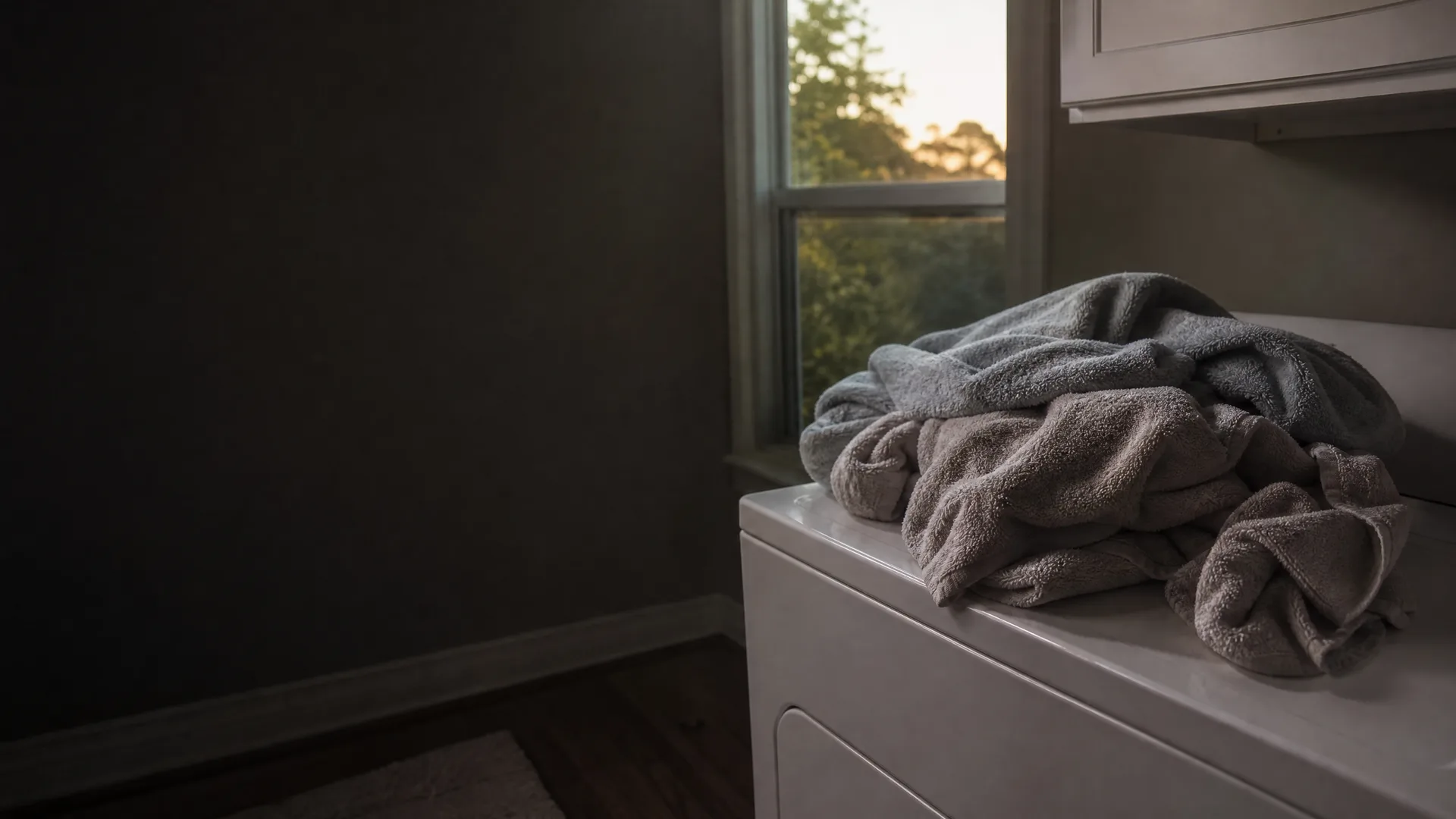
A pile of gray and taupe towels sits on top of a white laundry appliance in a dim room beside a window with trees and sunlight outside.

You pull the towels out at eight thirty and they are still damp, heavy in your arms, so you drape them over the top of the dryer and start the load again. This is the second run tonight. The air in the laundry room feels thicker than it should, warm against your face when you lean in to check the drum. Outside it's been sticky for weeks, the kind of Missouri summer evening where the house already feels close, and now the one room that's supposed to dry things just adds to it. You press a hand flat on the lid. Warm, more than warm. You've got a stack of damp towels and a dryer that isn't finishing the job.

A woman stands in the open doorway of a white stucco house holding the dark door, facing a man in a black cap and shirt seen from behind in the blurred foreground, with a potted flowering plant beside the entry.

Where the lint actually stops

A dryer pushes hot, damp air through a tube to the outside, and it needs a clear path to do that. Lint gets past the trap in small amounts every load. On a straight, short run it mostly blows out with the air. Most Missouri houses have more bends than that, elbows at the wall, a stretch through the attic or along the foundation, a hood at the end with a flap that's supposed to swing open. Lint builds at every turn, and it builds fastest right behind that flap, where the moving air slows down first. That's also where summer humidity here works against you, because damp lint sticks to the inside of the vent instead of blowing through, and the buildup thickens over the season instead of clearing itself out.

A clogged vent doesn't fail all at once. It narrows a little more with each load until the dryer is pushing air against resistance it wasn't built for. That's the heat you feel on the cabinet and the extra time on the timer. A vent cleaning clears the duct back to open air, not just the trap. If you'd rather have someone check the full run before it gets worse, the next step is getting matched with a contractor who can look at your setup and tell you what they find.

Interior corner of a living room with a beige upholstered sofa and dark cushion in the foreground, a ceramic vase of leafy branches on a dark side table by a curtained window, a framed picture on the wall, and a wood-surround fireplace at right.
A white hooded exterior dryer vent with a mesh screen, screwed to light gray horizontal lap siding above a concrete foundation.

Vent running clear

This is what a clear vent looks like. The flap hangs loose and swings open when the dryer runs, letting the hot air out in one push. No lint around the edges, no buildup on the screen. Between loads the hood sits closed flat against the siding.

A metal dryer vent hood mounted on beige horizontal lap siding, with gray lint clogging its open flap, above a lighter textured foundation wall.

Vent clogged with lint

The flap can't close all the way because lint has packed in behind it. You can see it caught in the screen and along the edge of the hood. Air is still forcing its way out around the blockage, but it's working harder to do it, and less of it is getting through.

A woman wrapped in a cream textured blanket sits in an armchair beside a lit lamp and a dark window, with an open book in the foreground.
A smiling older woman with gray hair in a cream knit sweater stands in a dimly lit kitchen beside a window showing snow outside, with a round loaf of bread on the counter in the foreground.

1 fire a day

Clogged dryer vents cause house fires across the country on an average day. Heat with nowhere to go is the reason, not a faulty dryer.

Connect with a pro

Lint is the fuel

Dryer lint catches fire at a lower temperature than paper. A clogged vent traps both the heat and the lint in the same place.

Connect with a pro
A beige plastic dryer vent hood mounted on horizontal vinyl siding, with clumps of gray lint protruding from the open flap.
Before you get your dryer vent cleaning
A white hooded exterior vent cover with a louvered underside, screwed to beige horizontal lap siding above a lighter stucco lower wall.
After you get your dryer vent cleaning
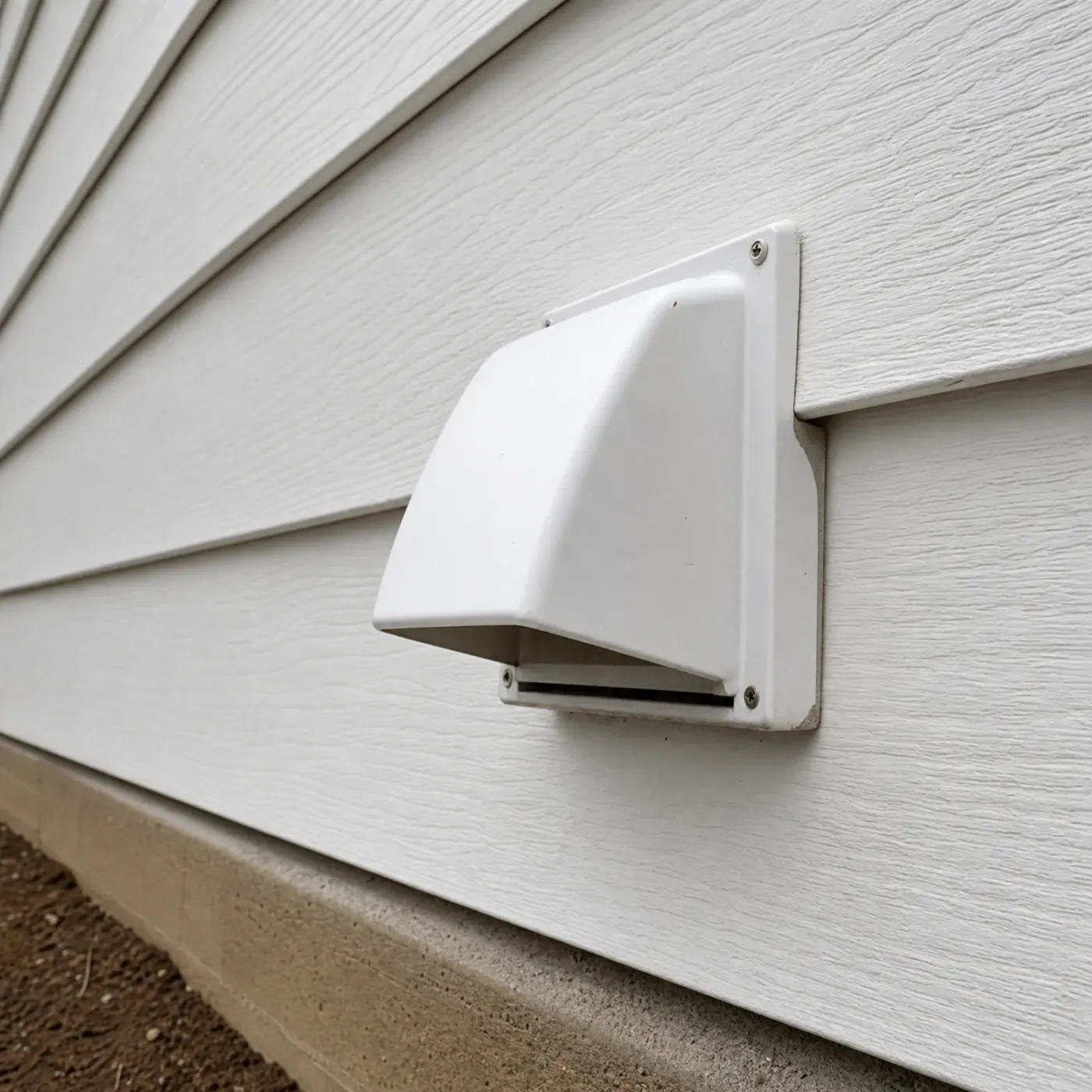
A white hooded dryer vent cover screwed to white lap siding above a concrete foundation and bare soil.

Get your dryer vent to the right pro

Send the form and finding a dryer vent cleaner is handled.

Describe your dryer vent job, and a local pro who handles it gets in touch.

Find a pro near me

Asking costs nothing, and the choice to hire stays yours.

An older man with gray hair and a beard, wearing a dark coat dusted with snow, stands smiling in a doorway of a warmly lit home with a sofa, lamp and window visible behind him.
An older man with grey hair and a beard, wearing a dark coat dusted with snow, stands in a dimly lit entryway with a ceiling lamp, a side table with two shaded lamps, and a lit fireplace visible in a room beyond.
A bearded older man in a dark snow-dusted coat and scarf stands just inside a home's front door, with a lamp-lit room and snowy window visible behind him.
An older man with gray hair and a beard stands in a doorway of a home, wearing a dark coat dusted with snow, with a lit fireplace and lamp visible in the blurred room behind him.
A metal hooded dryer vent with a louvered opening mounted on beige horizontal lap siding above a concrete foundation wall.

The vent cap outside

This is what a clear exhaust cap looks like from the driveway. The flap sits loose against the siding and swings open the moment the dryer kicks on, giving the hot air a clean path out. Nothing hangs off the edges.

A white hooded dryer vent mounted on horizontal lap siding, with a thick mass of gray lint clogging the opening beneath the hood.

The flap held open by lint

Here the flap can't close because lint has packed in behind it, gray and thick, pushing the cover off the wall. Every load adds to it. Air that should shoot out in one push now has to force its way past a wad of lint sitting right at the exit.

Power costs 13.30 cents per kilowatt-hour statewide

Power is cheap here, so your dryer running an extra fifteen or twenty minutes a load doesn't hit the bill as hard as it would in some states. That cost stays low even as a clogged vent makes the dryer work harder and run longer to get clothes dry.

EIA-861 2025 statewide residential average

A white louvered dryer vent hood mounted with four screws on beige horizontal lap siding above a gray stucco foundation and concrete walkway.
The hood sits flush against the siding, screws tight at the corners, louvers hanging open and ready to swing when the dryer kicks on.
A white plastic dryer vent hood mounted on beige horizontal vinyl siding, with lint clogging its lower opening and a concrete foundation below.
Lint has packed the opening solid, gray fibers matted across the screen with nowhere left for the air to push through.

Is this your dryer, or your laundry room, right now?

Check the dryer itself first. Clothes come out hot but not quite dry, and the drum feels warmer than it used to against your hand. Check the vent hood outside. Lint gathers on the screen or around the flap, and the flap stays slack even partway through a cycle instead of swinging open. Check the room. A warm, dusty smell hangs in the air after a load, and you can feel heat coming off the back of the dryer that never used to be there. Any one of these is worth noting. A few together mean the vent is restricting airflow, and that heat is building up somewhere it shouldn't, with nowhere clear to go.

  1. Hot, damp air leaves the drum through the duct.

  2. Lint rides along in the airflow toward the outside wall.

  3. A bend or a long run slows the air down.

  4. Lint drops out of the slowed air and sticks to the duct wall.

A long dry time, a hot dryer top, a warm smell in the laundry room, lint packed around the outside hood: any one of these means the vent isn't clearing the way it should, and together they mean it's worth checking now rather than later. None of this means something is wrong with your dryer. It means the air has nowhere to go. Missouri summers already run sticky, and a blocked vent adds more heat and moisture to a laundry room that's already working against the weather. Gas dryers here run on cheap power, so the extra minutes don't show up much on the bill, but the lint sitting in that duct doesn't care what the bill looks like. Once you send the form, you're done with the finding part. A contractor who handles this work gets in touch, and the vent gets looked at and cleared. You don't have to track down who does this or figure out the right questions to ask. That part is off your plate the moment you hit send.

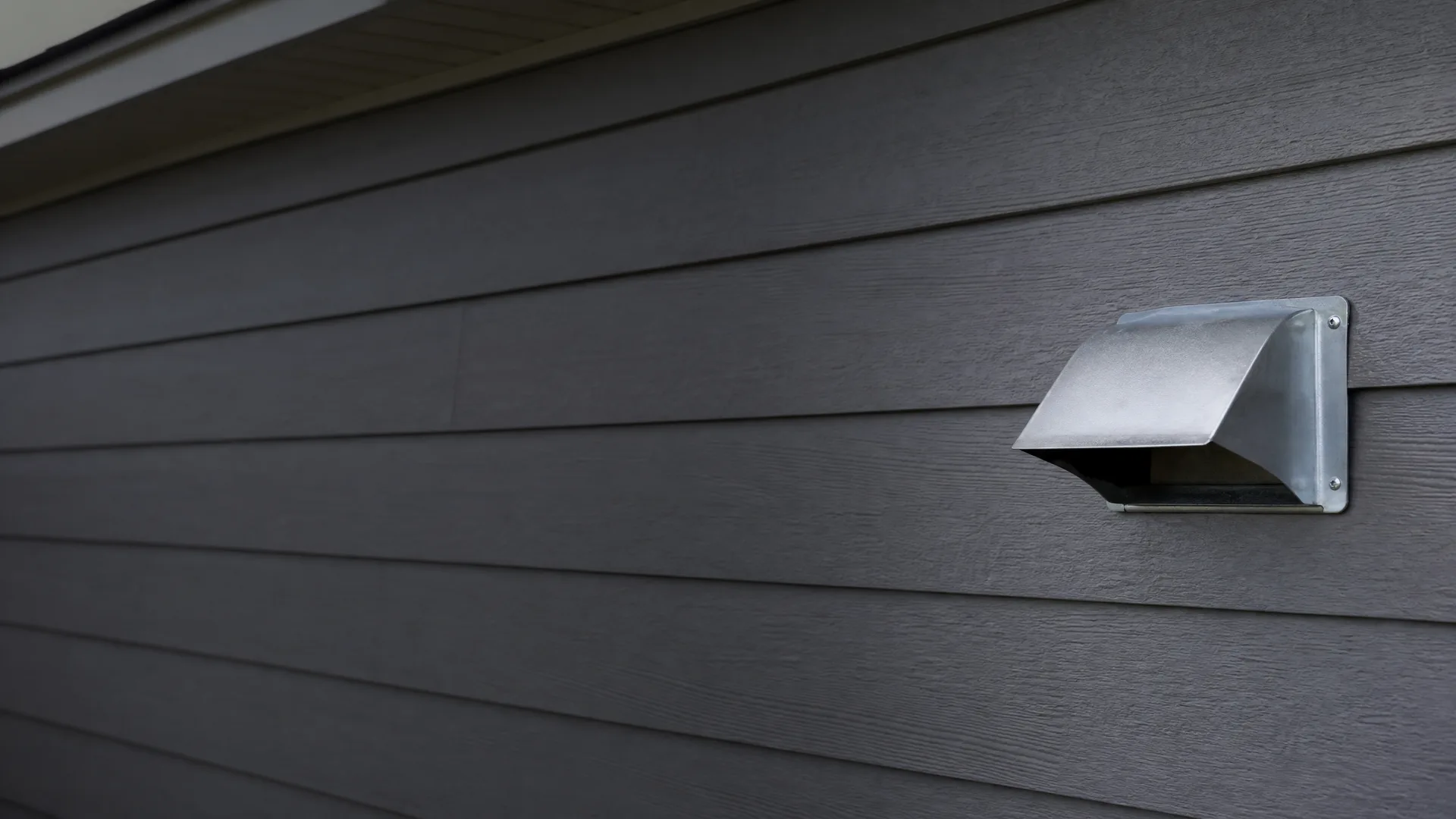
A metal hooded exterior vent cover mounted on dark gray horizontal lap siding, photographed at an angle along the wall.

The right pro for this job

One request and the dryer vent cleaning stops waiting on you.

Duct and vent cleaningMissouri
Step 1 of 3

What kind of equipment?